
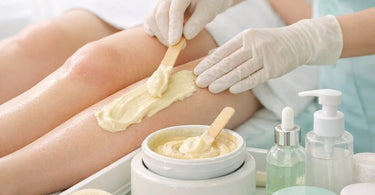
Elevate client care with this gem of wisdom: waxing clients with sensitive skin doesn’t have to feel like defusing a bomb while riding a unicycle. We’ve all been there—you’ve got a new client in the chair, she tells you her skin reacts to everything, and suddenly your perfectly planned Brazilian feels like a high-stakes game of Operation. But fear not, fellow estheticians and waxing warriors! At Pure Spa Direct, we believe that with the right products, a little preparation, and a dash of humor, you can turn even the most reactive skin into a smooth, happy canvas. Let’s dive into the holy trinity of waxing sensitive skin: choosing the right wax, the non-negotiable patch test, and the service tweaks that will make you your client’s hero.
Product Selection: The Goldilocks Principle of Waxing
When it comes to sensitive skin, not all wax is created equal. You can’t just grab any old pot of goo and hope for the best. You need to be a wax connoisseur, a curator of calm, a… okay, we’ll stop. But seriously, the formulation matters. Look for waxes that are rosin-free and hypoallergenic. Rosin (also known as colophony) is a common adhesive ingredient in many waxes, but it’s also a frequent offender when it comes to allergic reactions and irritation .
One standout option that has been making our estheticians do a happy dance is the Spa Choice Purple Rosin Free Multidirection Hard Wax. This Italian-made gem is specifically formulated for very sensitive skin. It boasts a dense, creamy texture and is completely unscented, which is a godsend for clients who react to fragrance. Plus, its vibrant purple hue isn’t just for Instagram; it provides a high contrast against all skin tones, ensuring you see exactly where you’re applying wax, which means less overlap and less irritation .
But wait, there’s more! If you’re a fan of beads (and who isn’t? They look like magical sprinkles of hair-removing fairy dust), check out the Plum Smooth Plum Pearls Hard Wax Beads. Infused with plum seed oil, these beads melt at a lower temperature, which significantly reduces the risk of burning or irritating delicate skin. They adhere to the hair, not the skin, making the removal process less ouch and more ahhh . For those who prefer a classic, we adore the ItalWax line, particularly the Pink Pearl, which combines gentle, Italian-engineered performance with a pretty hue that clients love . And let's not forget the pros at Lycon, whose LYCODream Hybrid Hard Wax is like a spa treatment and a wax rolled into one, with nourishing ingredients that leave skin feeling cared for .
When shopping for your professional waxing supplies, consider investing in bulk wax deals. It’s economical and ensures you never run out of your favorite formulas. And remember to stock up on professional wax warmers that offer precise temperature control to keep your gentle waxes at their optimal, skin-saving temperature.
Patch Testing: Because You're a Professional, Not a Psychic
Okay, let’s talk about the step that some professionals skip, but absolutely should not: the patch test. Think of it as a first date for wax and skin. You wouldn’t move in together without knowing if they leave the toilet seat up, right? The same logic applies. A patch test is a simple, low-risk way to predict how a client’s skin will react to your chosen products .
Allergy patch testing is a standard procedure used by dermatologists to identify substances that cause allergic contact dermatitis, a type of delayed allergic reaction . For us in the waxing world, it’s our crystal ball. By applying a small amount of the wax (and any pre- or post-products you plan to use) to a discreet area, like behind the ear or inside the elbow, and waiting 24 to 48 hours, you can see if any redness, swelling, or itching develops .
This isn’t just about covering your behind (though it does that, too). It’s about building trust with your client. When you say, “I want to test this on your skin first to make sure you love it as much as I do,” you’re not just being cautious; you’re being a hero. You’re showing you care more about their well-being than the clock. It’s also an excellent opportunity to review their medical history. Many medications, like Retin-A, Accutane, or even some antibiotics and blood thinners, can make the skin hyper-reactive and more prone to lifting . A simple question about what they’re using can save you both a world of hurt.
So, make patch testing a standard part of your intake process. Have them come in a few days before their first full service, or do it at the beginning of their appointment while you consult. Pair it with a fun chat about your favorite pre and post-waxing products and maybe a little retail therapy with some luxurious sugar scrubs for home care.
Service Modifications: Tweaking Your Technique for Tender Skin
So you’ve chosen a gentle, rosin-free wax like the fantastic Berodin or the sensitive-skin superstar Waxness, and your patch test came back clear. High five! But your job isn’t done yet. Now you need to modify your service to be as gentle as a butterfly with a degree in relaxation therapy.
First, the prep. Cleanse the area with a mild, alcohol-free pre-wax cleanser. Alcohol can strip the skin and exacerbate sensitivity. Instead, use a calming pre-wax oil. This creates a barrier between the skin and the wax, allowing the wax to grip the hair and not the live skin cells. It’s like applying a primer before foundation—it just makes everything go smoother.
Second, the application. When working with sensitive skin, less is more. Apply the wax in thin, even layers in the direction of hair growth. Keep your application area small and controlled. You want to be precise, not aggressive. And for the love of all that is holy, check the temperature! Sensitive skin is often more reactive to heat. Your wax should be warm and honey-like, not hot-enough-to-fry-an-egg. A good quality warmer, like those from Oakworks or Earthlite, can help maintain a consistent, safe temperature.
Third, the removal. This is where the magic happens—or where it all goes wrong. Hold the skin taut. Seriously, tauter than you think you need to. Then, remove the wax with a swift, parallel-to-the-skin flick in the opposite direction of hair growth. And whatever you do, don’t go over the same area twice. If you missed a spot, stop. Move on. You can come back with tweezers or a soft wax for tweaking later. Over-waxing is a one-way ticket to Irritation City.
Finally, the aftercare. This is your victory lap. Soothe the skin immediately with a post-wax product designed to cool and calm. Look for ingredients like aloe, chamomile, or azulene . Apply a gentle, fragrance-free oil or lotion. And then, have the talk. Advise them to avoid heat for the next 24 hours: no hot yoga, no tanning beds, no scalding showers. Recommend they use a gentle, physical exfoliant like a soft body brush or a mild scrub (like a salt scrub or sugar scrub) after a few days to prevent ingrowns. And of course, send them home with some ingrown hair products to keep their skin in top shape between appointments.
The Grand Finale: Happy Skin, Happy Clients, Happy You
Waxing sensitive skin clients doesn’t have to be a nerve-wracking experience. With the right products in your arsenal, a diligent patch testing protocol, and a few simple service tweaks, you can provide a comfortable, effective service that will have your clients singing your praises from the rooftops. And let’s be honest, in the world of beauty, a client with happy skin is a client who tips well and brings you wine. It’s a win-win.
At Pure Spa Direct, we’re here to support you with the best equipment, apparel, and supplies to make every service a success. So go forth, conquer those sensitive-skin waxes, and remember: when in doubt, patch test it out. And maybe keep a stress ball handy, just in case.
)