
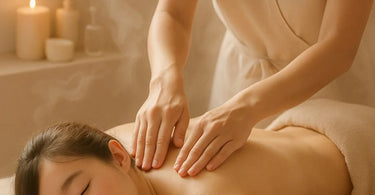
Upgrade your toolkit today... and by toolkit, I mean your hands, your intuition, and your ability to decode the fascinating language of the human body. We all know the best spa professionals are part artist, part scientist, and part mind reader. But the real magic—the kind that turns a simple rubdown into a transformative experience—lies in what you’re feeling for beneath your fingertips. Is it the dense, ropy texture of a stubborn knot? The surprising heat radiating from an inflamed area? Or the restricted, sticky movement of fascia that’s seen better days? Learning to interpret these subtle cues is like getting a secret text message from your client’s body, telling you exactly what it needs. And let’s be honest, it’s way more reliable than trying to interpret “just a little more pressure” from someone who thinks stubbing their toe is a 2 on the pain scale.
Your touch is your most powerful diagnostic tool. Before a client even speaks, their tissue is telling a story of stress, repetition, and old injuries. By tuning into the three key pillars—tissue density, temperature, and movement—you can move from providing a generic service to delivering a truly personalized therapeutic experience. This isn’t just about fixing a bad back; it’s about listening with your hands and responding with intelligent technique. Ready to become fluent in the language of touch? Let’s dive into what you should really be feeling for.
The First Clue: Decoding Tissue Density & Texture
Place your hands on a client’s back. What do you feel? Is it soft and pliable, or does it have areas that feel more like unbaked bread dough? Tissue density is your first major clue. Healthy muscle should have a resilient, springy quality. When you encounter an area that feels hard, ropy, or granular, you’ve likely found a trigger point or an area of chronic tension—those little bundles of drama where the muscle has decided to cling to stress like a toddler to a candy bar.
These dense areas aren’t just random; they form in response to overuse, poor posture, or emotional stress. Your job is to assess their size, depth, and temperament. A superficial, “crunchy” feeling might indicate fascial adhesions, while a deep, isolated knot in a shoulder muscle tells a tale of long hours at a computer or carrying a world’s worth of worries. The key is to use this information to guide your pressure and technique. Jumping straight into deep work on cold, dense tissue is a recipe for client discomfort. Always start with broader, warming strokes to increase circulation and begin softening the area, just like you’d warm up butter before spreading it.
Your equipment plays a huge supporting role here. The surface your client lies on must complement your touch. A table with high-density, multi-layer foam provides the perfect balance of cushion and support, allowing the client’s body to relax fully so you can better access those deeper layers without pushing them into a hard base. An unsupportive table fights you every step of the way. For mobile therapists, a sturdy Portable Massage Table with a reliable weight capacity is non-negotiable for delivering consistent, effective pressure wherever you work.
The Thermal Map: What Temperature Tells You
Now, pay attention to the heat. Your hands are excellent thermometers. Generalized warmth over a large area, like the lower back, often indicates increased blood flow—maybe from recent activity or inflammation. A small, pinpoint spot of intense heat, however, can be a red flag for acute inflammation or a fresh injury. Conversely, an area that feels cooler than the surrounding tissue might point to reduced circulation, chronic tension, or even nerve involvement.
This thermal intel directly informs your treatment strategy. For that warm, inflamed area, gentle, soothing techniques and perhaps even avoiding direct pressure initially might be best. For the cool, stagnant area, your goal is to bring warmth and life back in. This is where the artistry of your touch combines with smart tools. Using a Massage Table Warmer from the start of the session creates a foundational comfort that helps muscles let go more easily. Incorporating warming modalities like Hot Stone Massage or using a heated Body Wrap Heating Blanket can be transformative for clients who feel perpetually cold or hold deep-seated tension.
Temperature is also a fantastic feedback tool during the treatment. As you work on a knot, you might feel the localized heat begin to dissipate, signaling a release of tension and improved circulation. That’s your signal that you’re making progress. It’s like the muscle is finally sighing in relief and letting go of the heat it was holding onto.
The Language of Movement: Assessing Glide & Restriction
This is where you move from static assessment to dynamic exploration. Tissue isn’t meant to be stuck; it’s designed to glide smoothly. Apply a gentle shearing force with your palm or fingers, moving the skin and superficial fascia over the muscle layers below. Does it move freely, like silk on silk? Or does it feel sticky, tacky, or restricted, like tape being pulled off skin?
Restricted glide is a hallmark of fascial adhesion. Fascia is the body’s connective tissue web, and when it gets dehydrated or stressed, it can literally stick together, limiting range of motion and creating tension patterns. Feeling for this movement (or lack thereof) helps you pinpoint areas that need myofascial release techniques. Using tools like Massage Bolsters to position the client optimally can put tissues on a gentle stretch, making these restrictions easier for you to find and address.
Assessing movement also applies to joint mobility. As you work near a shoulder or hip, gently move the limb through its range of motion, feeling for hitches, grinding, or stiffness. The information you gather from touch combined with client feedback (“Does this movement recreate your pain?”) is invaluable. It turns your massage from a passive experience into an active collaboration, showing the client you’re not just rubbing muscles, you’re investigating the root cause of their discomfort.
Putting It All Together: From Assessment to Award-Winning Treatment
So, you’ve scanned with your hands: you found density in the right trapezius, a slight heat in the left lumbar region, and restricted glide across the upper back. Now what? This is where you create your treatment plan on the fly.
- Warm & Connect: Begin with broad, fluid strokes using a quality Massage Oil or Lotion. This isn’t just protocol; it’s your chance to confirm your initial assessment and establish therapeutic trust. You’re literally getting the lay of the land.
- Address the Findings: Target the dense, knotty areas with focused, sustained pressure. Use your thumbs, knuckles, or forearms, working at a 45-degree angle to the muscle fibers. For the sticky fascia, incorporate myofascial release or long, gliding strokes with more drag to encourage layers to separate. For the cool, stagnant area, spend extra time with friction and compression to generate therapeutic warmth.
- Integrate & Harmonize: After working on specific trouble spots, return to full-length, integrating strokes. This helps the nervous system register the changes you’ve made and prevents the body from immediately recoiling back into its old, familiar pattern of tension. It’s like hitting “save” on the document you just edited.
- Empower with Aftercare: The treatment doesn’t end when they sit up. Based on what you felt, your advice is gold. For heat and inflammation, suggest cool packs. For chronic stiffness and coolness, recommend warm baths or a home-use heating pad. This personalized touch shows you were truly listening—with your hands.
The Pro’s Setup: Equipping Your Hands for Success
Your skilled hands are the stars, but they need a great supporting cast. Investing in professional-grade equipment isn’t a luxury; it’s what allows your skills to shine. It starts with the foundation: a solid Massage Table. Look for high-density foam that won’t bottom out, a sturdy frame with a high working weight capacity, and a stable, adjustable base. Your body mechanics depend on a table at the right height, and your client’s ability to relax depends on its comfort.
Enhance the sensory experience with thoughtful additions. A Diffuser and Essential Oils can calm the mind, making the body more receptive to touch. A Towel Steamer provides the ultimate luxury touch with warm, moist towels for cleansing or draping. And never underestimate the power of pristine Hygienic Table Paper and fresh Spa Bedding—they silently communicate your professionalism and care.
Finally, take care of your most important tools: you. Using proper body mechanics, staying hydrated, and even getting regular bodywork yourself keeps your touch sensitive and your energy high. You can’t read a body if your own is screaming in pain.
Listen, Feel, Transform
Mastering the art of feeling—for density, temperature, and movement—is what separates a good technician from a true healer. It transforms your service from a commodity into an irreplaceable experience. Clients may not know the technical terms for what you’re doing, but they will absolutely feel the difference. They’ll feel seen, understood, and cared for on a level that goes beyond words. They’ll become loyal advocates for your business because you offered them something no algorithm or gadget ever can: deeply attentive, intelligent, and responsive human touch.
So the next time a client lies down on your table, take a quiet moment. Listen with your hands. Ask the tissue what it has to say. Then, use your incredible skill to answer. Your hands are your secret weapon, and now you know exactly what they should be feeling for.
%20-%20The%20Professional's%20Guide%20to%20Reading%20the%20Body)