
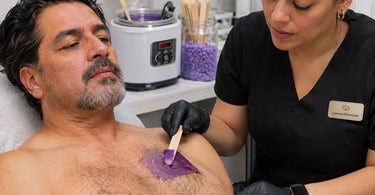
Upgrade your game plan... because even the most talented waxing professional cannot convince hard wax to grab hair that simply is not ready. You can have the perfect technique, a gorgeous treatment room, and a warmer filled with premium professional hard wax, but if your client's hair is too short, the results may still be disappointing. And if the hair is excessively long? Well, that can turn a straightforward appointment into an unnecessarily uncomfortable adventure. Understanding the ideal hair length for hard waxing is one of those small professional details that makes an enormous difference in service quality, client comfort, and the overall efficiency of your waxing business.
So, what is the best hair length for hard waxing? For most body waxing services, the ideal starting point is approximately 1/4 inch, or 6 millimeters, roughly the length of a grain of rice. Hair measuring between 1/4 and 1/2 inch generally provides a practical working range for many hard wax applications. However, hair texture, treatment area, wax formulation, and skin condition all influence what works best.
For professional estheticians, knowing these differences helps prevent unnecessary repeat applications, reduce hair breakage, and deliver the smooth results clients expect.
Why Hair Length Matters So Much With Hard Wax
Hard wax works by surrounding and gripping the hair as the applied wax cools and sets. Unlike traditional soft wax, which is generally removed with a fabric or paper strip, hard wax becomes firm enough to remove without a separate strip.
For successful removal, the wax must establish sufficient contact with the hair shaft. When the hair is long enough, the wax can envelop it and provide the grip needed to remove it from the follicle.
When the hair is too short, there may not be enough exposed shaft for the wax to hold effectively. The result can be missed hairs, broken hairs, uneven removal, or additional applications that increase treatment time.
Excessively long hair creates another challenge. Longer strands may become tangled, bend under the wax, or produce additional pulling sensations during application and removal. This can increase discomfort and make precise removal more difficult.
The professional goal is not simply to remove as much hair as possible. It is to achieve effective hair removal while respecting the client's skin and minimizing unnecessary manipulation.
The Sweet Spot: Why 1/4 Inch Is the Professional Standard
Approximately 1/4 inch is the most widely recommended starting length for routine body waxing. At this length, many professional hard wax formulations can establish a secure grip without requiring excessive hair growth.
For clients who struggle to visualize measurements, the grain-of-rice comparison is particularly useful. Of course, nobody needs to arrive at the salon carrying a ruler and a snack-sized bag of rice.
Here is a practical way to evaluate different lengths during a professional consultation.
Less than 1/8 inch: Hair is generally too short for dependable removal with many standard hard wax formulations. Some specialized products may capture certain shorter hairs, but performance varies.
Between 1/8 and 1/4 inch: Certain fine hairs or specialized wax formulations may respond successfully. However, the risk of incomplete removal is higher, especially with coarse or recently shaved hair.
Approximately 1/4 inch: This is the preferred starting point for most routine body waxing treatments, including bikini, underarm, and many facial services.
Between 1/4 and 1/2 inch: This is a useful working range for many body areas, particularly when hair growth is uneven or the hair is naturally coarse.
Longer than 1/2 inch: Waxing may still be possible, but professional trimming can improve application control and client comfort. The decision should depend on the treatment area, hair density, and manufacturer's directions.
These measurements are guidelines rather than absolute rules. The technician should always evaluate actual hair growth and follow the instructions for the specific wax being used.
What Happens When Hair Is Too Short for Hard Waxing?
Short hair is one of the most common reasons a professional waxing appointment produces patchy results.
Imagine a client who shaved four days ago and arrives expecting perfectly smooth legs or a flawless Brazilian. Unfortunately, optimism does not make hair grow faster.
When the exposed hair shaft is too short, even a quality hard wax may struggle to grip it securely. Some hairs may release successfully while others remain behind.
This can create several professional challenges:
Incomplete removal: Shorter hairs may remain visible after the initial application.
Increased treatment time: The technician may spend additional time addressing missed areas.
Additional skin exposure: Repeated waxing over the same area can contribute to irritation or skin injury.
Uneven regrowth: Some hairs are removed while others remain, making the final appearance less uniform.
Reduced client satisfaction: Clients may incorrectly assume the wax or technician was ineffective.
Rather than repeatedly applying wax to hair that is not ready, explain the limitation and consider rescheduling the service. A professional who knows when not to wax demonstrates good judgment and protects the client relationship.
Can Hard Wax Remove Hair Shorter Than 1/4 Inch?
Yes, some professional hard wax formulations are designed to grip relatively short or fine hair. However, this capability should not be interpreted as a guarantee that every short hair can be removed safely or successfully.
Different waxes have different flexibility, adhesion characteristics, setting times, and application requirements.
For example, certain modern film waxes can be applied in controlled layers and may capture shorter hairs more effectively than some traditional formulations.
Professionals interested in these options can explore ItalWax professional waxes, Cirepil waxing products, and Berodin waxing products to compare formulations and manufacturer recommendations.
The important distinction is between a wax that can sometimes capture shorter hair and a wax that reliably removes all short hair under every condition.
Hair thickness, growth direction, skin preparation, product temperature, and application technique still affect the result.
Can Hair Be Too Long for Hard Waxing?
Absolutely. More hair does not automatically mean better waxing.
When hair becomes excessively long, it may fold over, overlap neighboring strands, or create unnecessary tension during removal. The wax can still grip it, but the service may become less comfortable or more difficult to control.
Long hair can also make it challenging to identify growth direction, particularly in areas where several growth patterns intersect.
For an especially overgrown area, careful trimming before waxing may improve both application and removal.
Professional hair trimmers or appropriate sanitary trimming tools can help prepare the area when needed.
However, avoid trimming hair too close to the skin. Cutting it below the recommended length defeats the purpose and may leave insufficient hair for effective wax adhesion.
When trimming, use clean, properly maintained tools and follow appropriate sanitation procedures. For intimate areas, maintain client privacy, explain each step, and use tools suitable for the treatment.
Ideal Hair Length for Different Hard Waxing Services
Although 1/4 inch is a useful general guideline, the best working length can vary by body area.
Brazilian and Bikini Waxing
For Brazilian and bikini waxing, approximately 1/4 to 1/2 inch is a practical target.
Pubic hair is often coarse, dense, and multidirectional, making proper length particularly important. Hair that is too short may resist removal, while excessively long hair can increase pulling and discomfort.
Before beginning a Brazilian service, assess growth patterns rather than assuming every section behaves identically.
Work in appropriately sized sections, maintain proper skin support, and follow the wax manufacturer's application instructions.
For professional treatment supplies, explore Waxing Supplies for Professionals, including products designed for precision work on sensitive areas.
Underarm Waxing
Underarm hair generally responds well when it reaches approximately 1/4 inch.
One common challenge is that underarm hair frequently grows in multiple directions. The upper portion may grow differently from the lower portion, making one large application less effective.
Divide the area into manageable sections when necessary, carefully observe the growth direction, and use an appropriate removal technique for the chosen wax.
Hair that is too short can be especially difficult to capture around natural folds and curved surfaces.
Facial Waxing and Eyebrows
Facial waxing requires a more individualized approach.
Fine facial hairs may sometimes be removable at shorter lengths, especially with formulations designed for precision facial services. Eyebrow shaping also involves selectively removing hairs that may not all reach 1/4 inch.
However, facial skin can be particularly vulnerable to irritation or lifting, especially when clients use retinoids, exfoliating acids, or other treatments that affect skin sensitivity.
Always screen for relevant skincare products, medications, recent procedures, and contraindications before proceeding.
Professionals can compare facial hard wax options specifically intended for delicate areas.
Legs, Arms, and Larger Body Areas
For legs and arms, approximately 1/4 inch is a reliable starting point.
Because these areas cover more surface area, even small differences in hair length can affect overall treatment efficiency.
Some professionals prefer soft wax for larger body areas, while others use hard wax based on the client's skin sensitivity, hair characteristics, and service preferences.
Both stripless hard wax and soft strip wax have roles in professional hair removal. The best choice depends on the service rather than a universal rule.
How Long Should Clients Wait After Shaving Before Hard Waxing?
This is one of the most useful questions to answer before a client arrives for an appointment.
Many clients need approximately two to four weeks after shaving to develop sufficient growth for effective waxing. However, the exact timing varies substantially with individual hair growth rates, the treatment area, and how closely the hair was shaved.
Some clients reach 1/4 inch relatively quickly. Others need additional time.
Instead of promising that every client will be ready after exactly fourteen days, explain the desired hair length and encourage them to check their growth before scheduling.
A helpful client instruction might be: Allow your hair to grow until it is approximately the length of a grain of rice, and avoid shaving between appointments.
That simple explanation can prevent awkward surprises when a client arrives with hair that is barely visible.
How Often Should Clients Schedule Hard Waxing Appointments?
Many professional body waxing clients schedule appointments approximately every four to six weeks, although individual regrowth patterns may support shorter or longer intervals.
The ideal schedule is influenced by the body area, hair growth cycle, previous hair removal methods, and personal preferences.
Hair grows through different biological stages, which means not every follicle produces visible hair simultaneously.
During a client's first few appointments, the hair may appear at noticeably different lengths because previous shaving and natural growth patterns have created uneven regrowth.
Consistent waxing appointments may help establish a more predictable maintenance routine, but they do not guarantee that every hair will grow at the same speed or that hair will permanently become thinner.
Encourage clients to avoid shaving between visits when their goal is consistent waxing results.
Professional Preparation: Hair Length Is Only Half the Equation
Even perfectly grown hair can produce disappointing results when the skin is inadequately prepared.
A successful hard waxing service begins with a proper consultation, an examination of the treatment area, and appropriate cleansing.
Assess the skin: Look for irritation, broken skin, sunburn, active inflammation, and other conditions that may make waxing inappropriate.
Review products and medications: Ask about relevant topical retinoids, prescription treatments, recent exfoliating procedures, and other potential contraindications. Follow professional guidance and refer uncertain cases for medical clearance.
Cleanse the treatment area: Remove makeup, perspiration, oils, and product buildup with a suitable professional cleanser.
Prepare according to the wax system: Some hard wax products call for a light application of specific pre-wax oil or other preparation products. Others have different requirements.
Check wax temperature: Follow manufacturer instructions, use an appropriate warmer, and verify that the wax is at a safe working temperature before application.
Maintain skin tension: Proper support and controlled removal are essential to professional technique.
Explore Pre & Post-Waxing Products for professional preparation and finishing supplies.
The Importance of Choosing the Right Hard Wax
Professional wax selection is another important factor in working successfully with different hair lengths.
A product intended for coarse bikini hair may have different handling characteristics from one developed for fine facial hair.
When comparing hard wax formulas, consider flexibility, working temperature, setting speed, application thickness, grip characteristics, and suitability for the intended treatment area.
Flexible waxes may be useful on curved or mobile areas, while products with different setting characteristics may better suit particular service techniques.
Explore professional collections such as Waxness, Lycon, and Starpil to evaluate product options and manufacturer guidance.
Pure Spa Direct supplies professional waxing products from multiple manufacturers, allowing licensed beauty professionals to compare solutions for their particular service menus. The company distributes these products rather than manufacturing the wax itself.
Professional Waxing Tools That Support Better Results
The right wax formula deserves equally thoughtful equipment selection.
A dependable professional wax warmer helps maintain the working temperature required by the wax manufacturer.
Appropriately sized wax spatulas and applicators support controlled placement and application thickness, particularly around smaller treatment areas.
Sanitation supplies, gloves, disposable materials, and treatment surface protection are also essential components of a professional waxing station.
Use a fresh disposable applicator for each dip into a shared wax pot, following applicable sanitation rules. Double-dipping is never an acceptable shortcut in professional waxing.
Additional essentials include protective gloves and hygienic table paper.
Good equipment cannot compensate for inadequate hair growth, but it can help technicians perform consistent, efficient services once the hair is ready.
Common Mistakes Professionals Should Avoid
Even experienced estheticians occasionally encounter difficult hair growth patterns. The important thing is recognizing problems before they lead to unnecessary skin irritation.
Waxing too soon after shaving: Clients may request an appointment before adequate growth has developed. Explain expectations rather than promising a result that the hair length cannot support.
Overworking the same section: Repeated applications over a stubborn area can increase irritation and the risk of skin injury. Follow product instructions and stop when the skin shows signs of stress.
Ignoring hair direction: Hair growth can change direction across very small areas. Evaluate each section individually.
Using an unsuitable wax: Not every formula is appropriate for every body area or hair texture.
Skipping the consultation: Hair length is only one part of determining whether a client is suitable for treatment.
Failing to explain aftercare: Clients who receive inadequate guidance may experience avoidable irritation or use unsuitable products immediately after waxing.
Professional waxing is a balance of technique, judgment, and communication. Speed matters, but protecting the client's skin matters more.
How to Explain Ideal Hair Length to Clients Without Confusing Them
Client education is one of the easiest ways to improve appointment readiness.
Rather than asking clients to remember precise measurements, use simple comparisons and consistent language.
For example, explain that hair should generally be about 1/4 inch long, approximately the length of a grain of rice.
Clarify that shaving immediately before an appointment prevents the wax from gripping the hair effectively.
For clients with especially long hair, explain that the technician can assess whether trimming is appropriate.
Consider adding this information to appointment confirmations, online booking instructions, consultation forms, and pre-appointment messages.
A brief educational message can reduce appointment delays and improve the likelihood that clients arrive ready for treatment.
It can also prevent the classic treatment-room conversation where a client announces that she shaved yesterday because she wanted to look presentable for her waxing appointment. A thoughtful explanation beforehand saves everyone from that particular misunderstanding.
Aftercare Matters Just as Much as Proper Hair Length
Once the waxing service is complete, appropriate aftercare supports client comfort and helps reduce avoidable irritation.
Advise clients to follow the aftercare directions appropriate to the wax system, treatment area, and individual skin condition.
Common recommendations include avoiding excessive heat, friction, vigorous exercise, and potentially irritating products immediately after waxing, particularly when the skin remains sensitive.
Clients should avoid picking at the treated area and should keep freshly waxed skin clean.
After the skin has settled, suitable exfoliation and moisturizing routines may help manage buildup and reduce some ingrown-hair concerns. Timing should be individualized, and exfoliation should not begin while skin is still irritated.
Professionals can explore Ingrown Hair Products for appropriate retail recommendations and aftercare options.
Persistent inflammation, significant skin injury, or signs of infection warrant medical evaluation rather than additional cosmetic treatment.
Frequently Asked Questions About Hard Waxing Hair Length
Is 1/4 inch long enough for a Brazilian wax?
Yes. Approximately 1/4 inch is a common minimum target for Brazilian waxing, although some coarse or unevenly grown hair may benefit from additional length.
Can hard wax remove 1/8-inch hair?
Some specialized formulations may remove certain hairs at this length, particularly fine hair. However, 1/8 inch is not a dependable universal recommendation for complete body hair removal.
Is 1/2 inch too long for hard waxing?
Not necessarily. Many waxing professionals can work successfully with hair around 1/2 inch. Longer or particularly dense hair may benefit from trimming when appropriate.
Should clients trim their hair before an appointment?
Usually, clients should avoid aggressive trimming at home. A professional can evaluate hair length and determine whether trimming is necessary.
Does thicker hair require more length?
Coarse hair often responds well around the standard 1/4-inch starting point, but density, growth direction, and wax formulation may affect the ideal working length. Some coarse or uneven growth benefits from slightly more length.
How long should clients stop shaving before waxing?
Approximately two to four weeks is a useful planning estimate for many clients, but hair growth varies. The actual length is more important than the number of days.
Does hard wax hurt less when hair is the correct length?
Appropriate length may help reduce unnecessary pulling, breakage, and repeat applications. However, waxing can still be uncomfortable, and pain varies with body area, technique, and individual sensitivity.
The Bottom Line: Better Hair Length Means Better Hard Waxing Appointments
For most professional hard waxing services, approximately 1/4 inch of hair growth is the ideal starting point, with 1/4 to 1/2 inch offering a useful working range for many body areas.
Hair that is too short can compromise the wax's ability to grip, while excessively long hair can increase pulling and make removal less controlled. Choosing the appropriate length, using a suitable professional wax, and preparing the skin correctly all contribute to better results.
For estheticians and salon owners, the biggest opportunity is often client education. Explain the preferred hair length before appointments, establish realistic expectations, and consistently evaluate each treatment area rather than relying on a single rule for every client.
Whether you are refining a Brazilian waxing service, improving underarm waxing efficiency, or upgrading your professional treatment supplies, Pure Spa Direct offers access to professional waxing supplies, equipment, and products from established waxing brands.
Because smooth results should come from thoughtful preparation and excellent technique, not from crossing your fingers and hoping that yesterday's stubble is ready for a miracle.
