
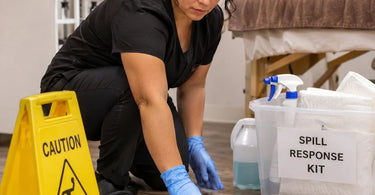
The must-have product for every salon, spa, nail studio, and beauty business might not be a glamorous new treatment machine or the latest must-have serum. It might actually be a well-stocked spill response kit paired with a clear, practical plan for handling accidents. Because even the most organized salon can experience a tipped bottle of acetone, a leaking massage oil container, or an unfortunate encounter between a stylist's elbow and an expensive bottle of hair color. A salon supply spill response plan helps your team protect clients, prevent injuries, reduce property damage, and get back to providing fabulous services without turning a minor accident into a major production.
Spills are part of working with professional beauty supplies. What matters is how quickly and safely your team responds. A proper plan identifies potential hazards, assigns responsibilities, establishes cleanup procedures, and ensures everyone knows when a spill requires professional assistance rather than a handful of paper towels and optimism.
Why Every Salon Needs a Written Spill Response Plan
A busy beauty business handles an impressive variety of liquids, powders, creams, solvents, disinfectants, and treatment products. Each presents different handling concerns. A little spilled water creates a slipping hazard, while an overturned container of nail monomer or solvent may introduce flammable vapors and potentially harmful chemical exposure.
A written response plan removes guesswork during these situations. It explains which spills trained employees may safely address, which require evacuation or specialized assistance, and how to protect clients and nearby workstations.
Beyond immediate safety, an effective plan supports consistent employee training, inventory protection, regulatory compliance, and professional service standards. It also helps salon owners maintain documentation when an incident leads to employee exposure, damaged equipment, or insurance questions.
Most importantly, a response plan should reflect the actual products and hazards in your business. A hair salon, nail studio, waxing center, and massage practice may all need different spill procedures.
1. Start With a Complete Salon Chemical and Supply Inventory
Before deciding how to clean up a spill, identify what might spill in the first place. Walk through your treatment rooms, workstations, supply shelves, mixing areas, and backbar storage spaces.
Common products to evaluate include:
- Hair color and lighteners: Color developers, oxidizers, bleach powders, permanent dyes, and chemical treatment solutions.
- Nail service chemicals: Acetone, nail polish remover, acrylic liquids, primers, adhesives, and gel-related products.
- Waxing products: Hard wax, soft wax, pre-wax cleansers, post-wax oils, and equipment-cleaning solutions.
- Massage products: Oils, lotions, creams, essential oils, and slippery treatment preparations.
- Skincare supplies: Exfoliating solutions, facial treatment chemicals, concentrated ingredients, and disinfectants.
- Cleaning products: Surface disinfectants, detergents, sanitizing chemicals, and other maintenance supplies.
For example, a salon regularly stocking Hair Bleaches and Lighteners should account for powder dispersion, oxidizer exposure, and product-specific cleanup instructions. A nail studio using Acrylic Nail Supplies needs additional attention to flammable liquids and ventilation.
Document each product's name, storage location, primary hazards, and applicable safety information. Update the inventory whenever new chemical products or treatment categories enter the business.
2. Make Safety Data Sheets Easy to Access
A Safety Data Sheet, commonly called an SDS, is one of the most valuable references in a chemical spill response plan. These documents provide product-specific information about hazards, first aid, storage, protective equipment, and accidental releases.
Employees should know where to find the SDS for every hazardous chemical they use. Maintain accessible records in accordance with applicable workplace requirements, whether through a clearly organized binder, an electronic system, or another reliably available method.
Several SDS sections are particularly useful during spill planning:
- Section 2: Hazard identification, including important warning information.
- Section 4: First-aid measures for accidental exposure.
- Section 5: Fire-fighting measures and relevant fire hazards.
- Section 6: Accidental release measures, including containment and cleanup guidance.
- Section 7: Handling and storage requirements.
- Section 8: Exposure controls and recommended personal protective equipment.
- Section 13: Disposal considerations, where provided, alongside applicable waste regulations.
Remember that a product marketed for beauty treatments is not automatically harmless when spilled, inhaled, or mixed with another substance. Professional products should always be handled according to their specific safety information.
3. Establish a Simple First-Response Procedure
During an unexpected spill, employees need clear instructions that are easy to remember under pressure.
A practical salon spill response sequence includes:
- Stop the activity. Pause the affected service and keep people away from the spill.
- Identify the material. Check the container label and appropriate SDS before attempting cleanup.
- Assess the danger. Consider chemical toxicity, flammability, airborne dust, strong vapors, spill size, and potential exposure.
- Protect clients and staff. Restrict access and relocate anyone who may be at risk.
- Contact the designated responder. Notify the manager or trained employee responsible for evaluating the situation.
- Follow the approved cleanup procedure. Only employees who are appropriately trained and equipped should handle spills within the scope of their training.
- Document the incident. Record what happened, what was done, and whether additional action is necessary.
Employees must never assume that every spill can be handled internally. Unknown chemicals, significant releases, dangerous vapor concentrations, uncontrolled flammable hazards, and situations involving injury may require evacuation and emergency assistance.
Designate a clear emergency contact process, including when to call 911, contact the appropriate emergency responders, or seek guidance from a qualified hazardous materials professional.
4. Build a Spill Response Kit Around Your Actual Risks
A spill kit should contain materials appropriate for the substances your salon handles. One universal collection of cleaning supplies is not necessarily suitable for every chemical.
Depending on product hazards and the manufacturer's recommendations, a designated kit may include:
- Absorbent pads or materials rated for the relevant substances.
- Chemical-resistant gloves selected for specific exposure hazards.
- Appropriate splash-resistant eye protection.
- Protective aprons or other required clothing.
- Compatible cleanup tools and collection containers.
- Warning signs and temporary barriers.
- Suitable, properly labeled waste containers.
- Instructions, emergency contact information, and access to relevant SDS documents.
Respirators or other specialized protective equipment must only be included as part of a properly established workplace protection program where required. A basic dust mask is not a substitute for protection against hazardous chemical vapors.
Businesses can review their existing inventory of Protective Gloves and Masks for Salon and Spa Professionals when organizing protective supplies. However, always verify chemical compatibility and appropriate protection levels before selecting any product for spill response.
Store the kit in a clearly marked, accessible location outside the most likely spill zone. Inspect contents regularly and replace used, damaged, or expired materials promptly.
5. Create Different Procedures for Different Types of Spills
Not all salon spills should receive the same treatment. The response should depend on the material, quantity, hazards, and applicable SDS instructions.
Flammable Nail Liquids and Solvents
Acetone, some nail polish removers, and certain acrylic nail liquids can present serious fire and vapor hazards. Employees should immediately restrict access, avoid ignition sources, and follow established emergency procedures. Do not operate electrical switches or equipment in a potentially flammable atmosphere unless doing so is known to be safe.
Only trained, properly equipped personnel should attempt cleanup when the product guidance and workplace procedures permit it. Never use an ordinary household vacuum on flammable liquid spills.
Salon owners using Professional Nail Care Collections should pay particular attention to chemical storage, compatible spill materials, ventilation, and waste handling.
Hair Color, Developers, and Lightening Powders
Color spills can create staining problems, but protecting people comes before protecting countertops. Developers and lighteners may contain oxidizing ingredients, and some powders can create inhalation hazards when disturbed.
Follow the product SDS for containment, protective equipment, and approved cleaning methods. Avoid sweeping or brushing hazardous powders in ways that disperse dust. Never combine spilled lighteners or developers with other salon chemicals in an attempt to neutralize them.
Keep mixing stations organized and use stable, appropriately sized containers. Reviewing your Mixing Bowls and dispensing procedures can help reduce preventable accidents.
Wax, Massage Oil, and Slippery Treatment Products
A small amount of massage oil on a tile floor can create a surprisingly effective skating rink. Unfortunately, involuntary salon figure skating is rarely part of the service menu.
Restrict access to slippery areas immediately. Follow product instructions and use compatible methods to remove residues before returning the area to service. Hot wax requires additional burn precautions, and employees should not touch or scrape hot material without appropriate protection and instructions.
Businesses offering Massage Oils, Lotions, and Creams for Therapists or Waxing Supplies for Professionals should develop specific procedures for slippery floors, contaminated linens, and accidental contact with heated materials.
Cleaning Chemicals and Disinfectants
Disinfectants and other cleaning products deserve special attention because incompatible mixtures can release dangerous gases or produce other hazardous reactions.
Never mix bleach with ammonia, acids, or other cleaning agents. Do not assume that adding water, vinegar, or another household ingredient is a safe way to neutralize an unknown spill.
When organizing Professional Cleaners and Disinfectants for Salons and Spas, separate incompatible chemicals according to their labels and SDS storage requirements.
6. Explain When Employees Must Evacuate Instead of Cleaning
One of the most important parts of a spill response plan is knowing when not to clean.
Employees should stop work, withdraw from the affected area, and follow emergency procedures when conditions suggest an uncontrolled or potentially dangerous release.
Examples include an unidentified chemical, spreading vapors, breathing difficulty, a large flammable spill, a reaction between incompatible substances, or a situation requiring specialized respiratory protection.
Your written plan should identify who has authority to order an evacuation, which exits to use, where employees and clients should assemble, and who will contact emergency services.
Do not permit employees to reenter an unsafe area simply to rescue equipment or inventory. That expensive treatment chair is replaceable. Your team is not.
Emergency response duties must also be consistent with applicable occupational safety requirements. Employees expected to respond to hazardous chemical emergencies may require additional training beyond ordinary salon cleanup instruction.
7. Include First-Aid and Exposure Procedures
A spill becomes more urgent when chemicals contact someone's eyes, skin, clothing, or respiratory system.
Your response plan should explain how to recognize possible exposure, locate first-aid instructions, access appropriate emergency washing facilities, and contact medical professionals or emergency services.
Different products require different first-aid measures. Employees should consult the relevant SDS and follow product-specific instructions rather than relying on a single universal treatment.
Document the location of emergency washing equipment, first-aid supplies, emergency contact numbers, and any necessary medical response instructions.
Where workplace hazards require emergency eyewash or shower facilities, ensure the equipment meets applicable requirements and remains readily accessible.
Managers should also establish procedures for reporting employee exposures and obtaining medical evaluation when indicated.
8. Develop Safe Chemical Waste Disposal Rules
Cleaning the floor is only half the job. The remaining contaminated pads, towels, gloves, liquids, and damaged containers may still present hazards.
Clearly describe how employees should identify, collect, label, temporarily store, and arrange disposal of spill-related waste.
Never assume that chemicals or contaminated materials can go into ordinary trash or down the drain. Flammable solvents, certain nail products, and other hazardous materials may require specific waste containers and regulated disposal arrangements.
Check applicable federal, state, and local waste requirements, along with manufacturer guidance. Your salon's waste classification and disposal obligations can vary by substance, quantity, and location.
Keep incompatible wastes separate and use appropriate containers with secure closures. A container labeled simply as leftover stuff is not a satisfactory chemical management system, no matter how beautifully the label is handwritten.
9. Assign Responsibilities Before an Accident Happens
A plan works best when everyone knows their role.
Identify a manager or safety coordinator responsible for maintaining the document, inspecting spill supplies, updating product information, and arranging employee training.
Service providers should know how to recognize hazards, stop work, protect clients, report spills, and avoid cleanup activities beyond their training.
Reception personnel may need instructions for redirecting customers, managing appointments, keeping exits clear, and contacting emergency services.
Owners or designated managers should oversee incident reporting, required notifications, waste disposal coordination, and decisions about reopening affected areas.
Make responsibilities clear for every shift, including evenings, weekends, and times when the primary manager is unavailable.
10. Protect Clients and Maintain Professional Communication
A spill may happen in the middle of a treatment, consultation, or fully booked afternoon. Your response plan should address client communication without sacrificing safety.
Employees should know how to pause services, direct clients away from affected areas, explain delays calmly, and provide appropriate assistance if someone has been exposed or injured.
For example, an accidental product release near a manicure station might require temporarily relocating clients, isolating nearby workstations, and postponing services until the area has been appropriately evaluated.
Avoid minimizing uncertain chemical hazards or promising that an area is safe before a qualified person has determined that normal operations can resume.
Clear communication demonstrates professionalism and helps prevent confusion, unnecessary exposure, and avoidable disruption.
11. Design Your Storage Areas to Prevent Spills
The best spill response is preventing the accident altogether.
Review how chemical products move between receiving, storage, mixing, and service areas. Heavy containers should be secured against tipping, incompatible products should be separated, and containers should remain appropriately labeled and closed.
Consider practical improvements such as secondary containment, compatible dispensing systems, stable shelving, protective trays where appropriate, and keeping unnecessary product quantities away from active workstations.
Professionals purchasing bulk treatment supplies should pay special attention to the additional exposure and handling risks created by transferring products from large containers.
For organizing properly labeled professional supplies, explore Bottles and Jars while ensuring any selected container is approved or compatible for its intended contents. Not every cosmetic dispensing bottle is appropriate for hazardous chemicals.
Keep aisles clear, inspect bottles for damage, and check storage areas for leaks. These simple habits can prevent everything from ruined inventory to a customer slipping near the backbar.
12. Train Employees and Practice Realistic Scenarios
Even a beautifully written plan has limited value if nobody knows where it lives.
Train employees during onboarding, when new hazards are introduced, and whenever procedures change. Provide additional instruction and refresher training as necessary to meet applicable requirements and keep skills current.
Useful practice scenarios include a small massage oil spill near a treatment table, a leaking bottle discovered in storage, a broken container of hair developer, and a solvent spill with strong odors in a nail service area.
During practice, ask employees to explain what they would do, where they would locate the relevant SDS, who they would notify, and when they would leave the area.
Keep exercises safe. Never deliberately release chemicals to simulate an incident.
A quick tabletop discussion can reveal missing instructions, unfamiliar equipment, and communication problems before a real emergency occurs.
13. Create an Incident Report and Follow-Up Process
After a spill is resolved, document the event and identify opportunities to prevent a repeat.
A useful incident report includes:
- Date, time, and exact location.
- Product name and estimated quantity released.
- Known or suspected hazards.
- Employees and clients potentially affected.
- Immediate protective actions taken.
- Whether emergency or medical assistance was requested.
- Cleanup methods and waste handling arrangements.
- Equipment or property damage.
- Corrective actions and responsible personnel.
Review patterns rather than treating every spill as an isolated mistake. Repeated leaks may indicate poor container selection. Frequent mixing-station accidents could suggest overcrowded counters or impractical workflow arrangements.
Keep records according to applicable workplace requirements and company policies. Required injury, exposure, environmental, or incident reporting may involve additional documentation.
14. Use a Salon Spill Response Checklist
A concise checklist helps owners turn a lengthy policy into an everyday management tool.
- Inventory: All relevant chemical products and hazards have been identified.
- Safety information: Employees can access current SDS documents.
- Responsibilities: Each shift has designated reporting and emergency contacts.
- Response instructions: Staff know how to isolate an area and recognize when cleanup is unsafe.
- Protective equipment: Suitable equipment is available for authorized tasks.
- Spill supplies: Compatible absorbents, containers, and warning materials are stocked where needed.
- Emergency procedures: Evacuation, first aid, and emergency contact instructions are clear.
- Waste handling: Chemical waste collection and disposal procedures reflect applicable rules.
- Training: Employees understand their responsibilities and applicable limitations.
- Documentation: Spill incidents are reviewed and corrective actions are tracked.
- Maintenance: The plan is updated when products, services, equipment, or workplace conditions change.
Consider posting a short response summary in supply rooms and keeping complete instructions available in your employee safety documentation. A readable one-page guide can be extremely helpful during a hectic service day.
15. Keep Your Salon Supply Program Organized and Ready
Spill preparedness should be part of a larger salon supply management strategy. Organized inventory, appropriate protective equipment, compatible storage containers, and well-maintained cleaning supplies make daily operations easier while supporting safer work habits.
Professionals can explore Must-Have Supplies for Salon and Spa Business Success and Spa Essentials for Professionals when reviewing everyday operational needs.
Pure Spa Direct supplies professional beauty, salon, spa, nail, waxing, and massage products from a broad selection of manufacturers. As a distributor, Pure Spa Direct helps professionals source the supplies they use in their businesses, while chemical-specific handling instructions should always come from the appropriate manufacturer documentation and applicable safety requirements.
Regular purchasing reviews also provide a convenient opportunity to evaluate product labels, storage practices, protective supplies, and the condition of frequently handled containers.
Frequently Asked Questions About Salon Spill Response Plans
Does a Small Salon Really Need a Spill Response Plan?
Even small salons can benefit from written procedures. A single treatment room may contain flammable solvents, disinfectants, chemical developers, or slippery treatment oils. The appropriate level of documentation, employee training, and emergency planning depends on the workplace hazards and applicable regulations.
Can Employees Use Regular Towels to Clean Up Chemical Spills?
Not automatically. Ordinary towels may be incompatible with certain substances, may spread contamination, or may create additional fire and disposal hazards. Use cleanup materials specified by the product SDS and your workplace procedures. Contaminated reusable textiles should never be returned to normal laundry without confirming that this is safe and permitted.
How Often Should a Salon Review Its Spill Response Plan?
Review the plan whenever you introduce new chemical products, change treatment services, modify storage arrangements, experience a significant incident, or identify a problem during training. A scheduled annual review is a useful management practice, although some applicable standards or workplace conditions may require additional action sooner.
What Is the Difference Between a Routine Spill and a Chemical Emergency?
A routine incidental spill is one that appropriately trained employees can safely control using established procedures and available protective equipment without creating a significant emergency hazard. Releases that are uncontrolled, pose serious exposure or fire risks, or require specialized emergency response must be handled differently. Spill size alone does not determine whether a situation is safe.
Should Every Employee Be Responsible for Chemical Cleanup?
No. Every employee should understand basic hazard recognition, reporting, client protection, and evacuation instructions. Cleanup responsibilities should be limited to workers with the appropriate training, equipment, and authorization for the specific situation. Employees who are not qualified to respond should not attempt hazardous cleanup.
A Safer Salon Starts Before the Spill
A successful salon supply spill response plan is not about expecting disaster around every corner. It is about preparing for realistic situations so your team can respond calmly, consistently, and safely.
Start by identifying the products you use, organizing SDS information, defining emergency boundaries, selecting appropriate protective supplies, and training employees on clear responsibilities. Add sensible storage practices, waste disposal procedures, and regular reviews to keep the plan relevant as your business grows.
Your salon should be remembered for beautiful hair, flawless nails, relaxing massages, and exceptional client care, not for the afternoon an overturned bottle turned the treatment floor into an accidental slip-and-slide. A little preparation today can make a significant difference when the unexpected happens tomorrow.
