
Stay ahead in a competitive world... where clients are increasingly savvy about their wellness needs. They're not just looking for a quick escape; they're investing in their health. Understanding the distinct roles of relaxation massage and rehabilitative massage is crucial for tailoring your services and maximizing your booking sheet. It's the difference between offering a lovely, fluffy cloud of an experience and being a bona fide muscle-healing superhero. Let's untangle these two modalities so you can explain them to clients with confidence and watch your service menu become the talk of the town.
Think of it this way: one is a vacation for the senses, and the other is physical therapy's more zen cousin. Both are incredibly valuable, but confusing them is like offering a client a facial when they came in for a brow tint—everyone ends up a little disappointed. So, grab your favorite massage lotion, and let's dive into the wonderful world of kneading, pressing, and healing.
The "Ahhhh" Factor: Unpacking Relaxation Massage
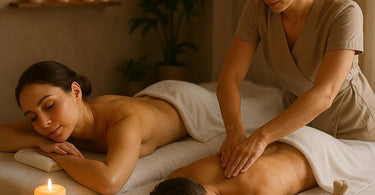
Relaxation massage, often called Swedish massage, is what most people picture when they hear the word "spa." The goal here is simple yet profound: to reduce stress, promote overall relaxation, and create a feeling of blissful well-being. This is the massage you get after a brutal week at work, when your brain feels like a browser with 100 tabs open. The techniques are generally broad, flowing, and gentle-to-moderate in pressure. We're talking long, gliding strokes (effleurage), kneading (petrissage), and maybe some gentle stretching. The ambiance is key—think soft lighting, calming music, and perhaps the subtle scent of aromatherapy wafting from a diffuser.
Clients seeking relaxation aren't usually coming in with a specific "ouch" spot. They're seeking a reset. The benefits are primarily related to the nervous system: lowering cortisol levels, improving sleep, and boosting mood. It's about maintenance and prevention. Every client can benefit from a relaxation massage, making it the bread-and-butter service for many spas. To elevate this experience, ensure you have the right tools, like a comfortable massage table, a cozy table warmer, and plush towels.
The "Ooh, That's the Spot" Specialist: Demystifying Rehabilitative Massage
Rehabilitative massage, on the other hand, is goal-oriented. This is the MVP for clients who come in pointing to a specific area and saying, "This. Fix this." Also known as therapeutic or clinical massage, it focuses on addressing specific musculoskeletal issues, such as chronic pain, limited range of motion, injury recovery, or postural problems. The pressure is typically deeper and more focused, targeting the underlying layers of muscle and connective tissue (deep tissue).
A therapist performing rehabilitative massage is like a detective. They'll conduct an assessment, palpate to find adhesions or trigger points, and use advanced techniques like myofascial release, trigger point therapy, or cross-fiber friction. It's not always a "relaxing" experience in the traditional sense; sometimes it's intense and can even be momentarily uncomfortable as the therapist works to release tension and restore function. The payoff, however, is immense: pain relief, improved mobility, and faster healing. This requires specialized knowledge and might involve tools from your TheraTools collection, such as massage stones for hot and cold therapy.
Side-by-Side: Your Quick-Reference Cheat Sheet
Let's break it down in a way you can explain to your clients over the phone:
Primary Goal:
Relaxation: Reduce stress, promote general wellness.
Rehabilitative: Alleviate pain, restore function, address injury.
Pressure & Techniques:
Relaxation: Light to moderate; flowing, broad strokes.
Rehabilitative: Moderate to deep; focused, specific techniques.
Client Focus:
Relaxation: The whole person's state of mind and body.
Rehabilitative: A specific problem area (e.g., stiff neck, tight IT band).
Outcome:
Relaxation: Feeling calm, de-stressed, and rejuvenated.
Rehabilitative: Reduced pain, increased mobility, functional improvement.
Perfect For:
Relaxation: Regular maintenance, stress relief, a treat.
Rehabilitative: Post-injury, chronic pain, specific physical issues.
Why Your Business Needs to Master Both
Offering only one type of massage is like a nail tech only offering one color of nail polish—you're leaving money on the table! By clearly differentiating these services on your menu, you attract a wider clientele. The client seeking stress relief might be intimidated by the term "deep tissue," while the client with a rotator cuff strain will be disappointed by a light Swedish massage.
Train your reception staff to ask key questions when booking: "Are you looking for overall relaxation today, or are we focusing on a specific area of tension or pain?" This simple question ensures the client is matched with the right therapist and service, leading to higher satisfaction, better results, and increased loyalty. It also allows you to showcase the expertise of your team. You might have a therapist who is a wizard at serenity-inducing relaxation and another who excels in clinical, rehabilitative work.
Stocking Your Arsenal: Products for Every Modality
Equipping your treatment room properly is non-negotiable. For relaxation massage, you'll want silky-smooth massage lotions that glide effortlessly, high-quality essential oils for ambiance, and supportive massage bolsters. Brands like Bon Vital' and Biotone are industry favorites.
For rehabilitative work, you might need grippier creams for deeper friction work, hot stone kits for penetrating heat, or even tools for cupping therapy. Having a sturdy, adjustable table from a brand like Earthlite or Oakworks is essential for applying the proper biomechanics during deeper work.
Blending the Lines: The Magic of Integrative Massage
The best massage therapists often blend these approaches. A session might start with gentle, relaxing strokes to calm the nervous system and warm the tissue before moving into deeper, more focused work on a problem area. It might end with soothing strokes to integrate the changes and leave the client feeling both worked-on and wonderfully relaxed. This integrative approach provides the ultimate client experience, addressing both immediate pain and the stress that often accompanies it.
By understanding and communicating the difference between relaxation and rehabilitative massage, you position your spa or salon as a knowledgeable, client-centric destination. You're not just selling time on a table; you're providing targeted solutions. So, update your service menus, train your team, and get ready to meet every client's needs with expertise and care.
)