
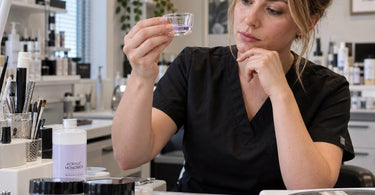
Success is built on great choices... and in a busy nail salon, even something as simple as where you place your monomer dish can make a surprisingly big difference. Professionals working with Acrylic Nail Supplies may notice that liquid seems to disappear noticeably faster at one station than another, even when technicians are performing similar services. No, your monomer is not plotting an escape while nobody is looking; temperature, airflow, exposed surface area, workstation layout, and day-to-day handling can all affect how quickly a volatile liquid evaporates.
Understanding these differences matters because unnecessary evaporation means more than topping off the dappen dish a little sooner. It can increase product consumption, change how consistently technicians work with their liquid-and-powder system, and add unnecessary vapor to the salon environment. The goal is not to stop evaporation by reducing ventilation. Proper ventilation remains important whenever professional nail products are being used. Instead, smart workstation design can help technicians avoid unnecessary exposure of monomer while maintaining appropriate airflow around the service area.
Why Does Acrylic Monomer Evaporate at All?
Professional acrylic systems rely on a liquid monomer combined with polymer powder to create the workable bead technicians sculpt into enhancements. Many professional nail liquids are formulated primarily with methacrylate monomers such as ethyl methacrylate, commonly called EMA. These liquids are volatile, meaning molecules naturally leave the liquid surface and enter the surrounding air.
That process happens continuously whenever the container or dappen dish is open. The faster molecules can move away from the liquid surface, the faster additional molecules can escape. This is why two technicians using the same product can experience different rates of loss simply because their workstations have different environmental conditions.
If acrylic services are a major part of your menu, keeping a well-organized selection of acrylic monomer, powders, brushes, dishes, and supporting products also makes it easier to maintain consistent service protocols from station to station.
Temperature Can Make One Station Much Thirstier Than Another
Temperature is one of the biggest variables to examine. As a volatile liquid becomes warmer, evaporation generally increases. A nail station sitting in direct afternoon sunlight, underneath a warm task lamp, near a heating vent, or beside equipment that gives off heat can behave differently from a workstation several feet away.
This can be sneaky. The salon may feel perfectly comfortable overall while one tabletop is consistently warmer because sunlight hits it between 2:00 and 4:00 p.m. Another station might sit directly below bright lighting that adds localized warmth. The technician at the warmer table may assume she is simply using more liquid, when part of the difference may be environmental.
For consistent acrylic performance, avoid storing bulk monomer where it is exposed to direct sunlight or unnecessary heat. Follow the product manufacturer's storage directions and keep containers properly closed when they are not actively being used.
Airflow Can Dramatically Change What Happens at the Table
Moving air carries vapor away from an exposed liquid surface, allowing more liquid to evaporate. That means a station positioned directly in the path of an HVAC supply vent, portable fan, doorway draft, or other strong air current may lose monomer faster than a quieter station.
Here is the important distinction: the solution is absolutely not to shut down appropriate ventilation just to save a few drops of product. Professional nail salons need effective ventilation strategies to help control airborne chemical exposures. Local exhaust systems and properly designed salon ventilation serve an important purpose. Product conservation should come from reducing unnecessary open exposure, not from trapping vapors around technicians and clients.
If one station seems dramatically different, look at the direction of the airflow. A blast of conditioned air aimed directly across a dappen dish is different from thoughtfully designed ventilation intended to capture contaminants near their source.
Your Dappen Dish May Be Part of the Mystery
Surface area matters too. Pour the same amount of liquid into a narrow container and a wide, shallow container, and the wider container exposes more liquid surface to the air. More exposed surface generally creates more opportunity for evaporation.
This is why workstation consistency can improve when technicians use similar dappen dishes and similar filling practices. One technician working from a compact dish while another fills a wide vessel nearly to the edge may see noticeably different product consumption over a full day.
A practical approach is to dispense only the amount reasonably needed for the service, then add more when necessary. Pouring a giant lake of monomer at 9:00 a.m. because the appointment book looks terrifyingly full may feel efficient, but leaving excess liquid exposed through multiple services can create needless waste.
Leaving the Dish Open Between Clients Adds Up
A few minutes here and there may not seem important, but salon days are built from hundreds of little minutes. If a monomer dish stays open while the technician checks a client out, disinfects the station, answers a question, waits for the next appointment, reorganizes supplies, or debates where her favorite acrylic brush disappeared to, evaporation continues.
Develop a workstation routine that minimizes unnecessary open time while following the manufacturer's directions and your salon's safety procedures. Bulk containers should be recapped promptly after dispensing. Do not leave bottles sitting open beside the workstation throughout the service day.
Organizing Stylish and Functional Nail Salon Furniture Essentials so frequently used supplies are accessible can make these routines much easier. Good organization is not just pretty enough for an Instagram reel; it can support safer and more consistent professional habits.
Direct Sunlight Is a Bigger Deal Than It Looks
A gorgeous window station sounds dreamy until the afternoon sun turns the tabletop into a miniature greenhouse. Direct sunlight can warm bottles, dishes, tools, and the work surface itself. Even if the room thermostat stays at the same setting, the temperature right where the monomer sits may rise.
Watch stations at different times of day. Morning conditions may be completely different from afternoon conditions. If sunlight repeatedly reaches stored chemicals or the active service area, consider adjusting workstation placement, using appropriate window coverings, or relocating product storage while still maintaining good lighting for detailed nail work.
For precision without relying on a hot or poorly positioned lamp, professionals can explore LED Bright Lamps and select lighting appropriate for their workstation and service needs.
Do Not Confuse Stronger Odor With A Better Acrylic System
Nail technicians sometimes judge monomer by odor because smell is immediately noticeable, but odor intensity is not a reliable measure of product quality, performance, or safety. Different professional systems can have different formulations and working characteristics. Products should be selected and used according to their intended professional system rather than mixed or substituted based on smell, evaporation rate, or guesswork.
Whenever possible, follow the manufacturer's instructions for the monomer, polymer powder, brush technique, storage, and liquid-to-powder ratio. Mixing unrelated acrylic components can change working behavior and may produce results the manufacturers never intended.
Workstation Placement Can Create Hidden Differences
If your salon has multiple manicure stations, compare their locations. Is one beside the front door? Is another underneath an HVAC vent? Does one receive afternoon sun? Is a portable fan used nearby? Is one technician positioned beside a frequently opened back door? Is another station surrounded by equipment that generates warmth?
This is where a little detective work pays off. Instead of immediately assuming a technician is overusing product, compare the physical environments first. Nail tables can look identical while behaving very differently from an airflow and temperature standpoint.
Professional Nail Tables and Manicure Stations should be arranged with ergonomics, lighting, ventilation, electrical access, sanitation, workflow, and chemical handling in mind. The prettiest layout is not always the most functional layout, especially when a station accidentally lands directly beneath the salon's version of a wind tunnel.
Ventilation Is About Exposure Control, Not Preserving Monomer
This point deserves its own section because reducing ventilation to slow evaporation would be the wrong tradeoff. Acrylic nail liquids release vapors during use, and professional salons should prioritize ventilation and exposure-control practices appropriate for nail services. Effective local exhaust can help capture airborne contaminants closer to the workstation instead of allowing them to spread through the breathing zone and salon.
Technicians should also review product Safety Data Sheets, manufacturer instructions, applicable licensing requirements, and workplace safety guidance. Properly designed ventilation, good housekeeping, closed chemical containers, sensible dispensing practices, and appropriate personal protective practices work together. There is no single magic gadget that replaces a complete professional safety routine.
Standardize Acrylic Stations for More Predictable Product Use
If several technicians perform acrylic services, standardization makes troubleshooting much easier. Consider giving each station similar dishes, storage containers, dispensing procedures, lighting arrangements, and workstation organization. Keep bulk containers properly closed and stored according to product directions. Train technicians to dispense sensible service quantities instead of automatically filling dishes to the same high level regardless of the appointment.
It also helps to maintain consistent access to essentials such as Nail Brushes & Tools, Nail Files & Buffers, and other professional acrylic supplies. When every workstation follows roughly the same setup, unusual product consumption becomes much easier to identify.
Watch for Changes Before Blaming the Product
If a bottle suddenly seems to disappear faster than normal, ask what changed. Did the salon switch HVAC settings for the season? Was a station moved? Did someone install a stronger fan? Is a new light producing more heat? Are technicians using a wider dish? Are containers being left open longer during busy periods? Has the salon become significantly warmer?
Simple observation can solve plenty of mysteries. Compare the same product at two workstations during similar service conditions. Check whether one location feels warmer or draftier. Look at how long dishes remain uncovered and how much liquid is being dispensed at a time. Small differences multiplied across five appointments a day and hundreds of appointments a year can become meaningful product usage.
Build a Smarter Acrylic Workflow
The most practical approach is a balanced one: keep appropriate ventilation working, avoid unnecessary heat and direct sunlight, prevent strong drafts from blowing directly across open dishes when workstation design allows, use appropriately sized containers, minimize unnecessary open time, and close bulk bottles promptly after dispensing.
Professional nail services become easier to manage when supplies and procedures are intentional rather than improvised. Pure Spa Direct distributes a broad range of Professional Nail Care Collections for salon professionals, including products used to build organized, service-ready nail stations.
So, why does acrylic monomer evaporate faster in some workstations than others? Usually it is not one dramatic culprit wearing a tiny villain cape. It is the combined effect of temperature, moving air, exposed surface area, workstation placement, storage, and handling habits. Control the variables you reasonably can, keep safety and ventilation at the center of the setup, and your acrylic station can become more consistent, efficient, and pleasantly less mysterious.
