
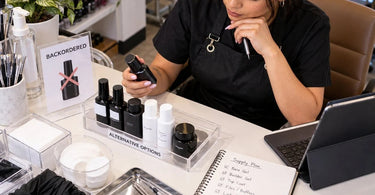
Make every choice a smart one... especially when one innocent little backorder threatens to turn tomorrow's fully booked schedule into an elaborate game of professional beauty supply Tetris. For spas, salons, waxing studios, nail salons, massage practices, brow bars, and barber shops, a missing product is rarely just a missing product. It can affect an entire service protocol, which is why having a substitution plan for essential salon and spa supplies is one of those wonderfully unglamorous business habits that can save a very glamorous day.
Backorders happen for all kinds of reasons. Manufacturers may experience production delays, distributors may be waiting on incoming inventory, demand can unexpectedly spike, packaging can change, or a favorite professional item can temporarily disappear just when everyone on the team has decided they absolutely cannot live without it. You cannot prevent every supply interruption, but you can decide whether the interruption causes chaos.
A substitution plan gives your team approved alternatives before they are needed. Instead of discovering at 9:03 a.m. that the product required for the 9:00 appointment is unavailable, everyone already knows what can replace it, what cannot replace it, and whether the service protocol needs to be adjusted. That is the difference between a small inventory hiccup and a morning worthy of its own reality show.
Backorders Become Bigger Problems When Supplies Are Tied to Services
Professional beauty inventory is different from ordinary office inventory because many products directly support scheduled services. Running out of printer paper is annoying. Running out of the specific consumable needed to perform a booked treatment can affect revenue, timing, staff confidence, and the client experience all at once.
Consider a waxing studio. A technician may routinely use a particular hard wax, pre-wax cleanser, post-wax product, applicator, and glove for every appointment. If one item becomes unavailable, simply grabbing something vaguely similar is not necessarily the right answer. The backup should be evaluated in advance for compatibility with the service, treatment area, technique, equipment, manufacturer directions, and the professional's training.
That is why businesses that regularly order Waxing Supplies for Professionals, Professional Nail Care Collections, Professional Massage & Wellness Products, or Premium Skincare Products for Spas and Salons benefit from identifying alternatives before an essential item lands on backorder.
Start With Your Supplies That Can Stop a Service
Not every product needs an emergency backup. Prioritize supplies whose absence could prevent a treatment from being performed or substantially change the expected service.
Create a simple list of your most operationally important items. Depending on the business, that might include gloves, cotton products, applicators, wax, massage lubricant, facial consumables, nail files, disinfectants, table paper, towels, lash supplies, color supplies, or treatment-specific products.
High-use basics deserve special attention because they can disappear surprisingly quickly. A busy practice might move through Professional Cotton, Sponges, and Wipes for Salons & Spas, Applicators & Spatulas, Protective Gloves & Masks for Salon and Spa Professionals, and Hygienic Table Paper for Waxing, Spa & Massage Tables much faster than anyone notices until somebody opens the final box. Surprise! It is inventory hide-and-seek, and the inventory has won.
Choose Substitutes by Function, Not Just Appearance
The safest substitution plan is not a list of products that look similar. It is a list of alternatives that have been deliberately reviewed for the intended professional use.
For each critical item, document what matters about it. That might include size, material, texture, viscosity, application method, treatment purpose, equipment compatibility, processing requirements, ingredients, packaging format, or manufacturer instructions. Those details make it much easier to identify a realistic alternative.
For example, a massage practice looking for an alternative lubricant should think about the techniques being performed and the amount of glide or absorption required rather than simply choosing another bottle labeled massage lotion. Browsing Massage Oils, Lotions, and Creams for Therapists can reveal different formats, but the professional still needs to select an appropriate product for the specific treatment and follow its directions.
The same idea applies to nails, waxing, skincare, and hair services. Products that appear interchangeable from across the stockroom may perform very differently once the appointment begins.
Create a Primary, Backup, and Emergency Option
A practical substitution system can be surprisingly simple. For every business-critical supply, identify the preferred item, an approved backup, and, where appropriate, a second alternative.
Your list might read something like this: Primary product A. Approved substitute B. Secondary substitute C. Notes on any protocol differences. That is vastly more useful than a sticky note saying "buy more wax" attached to an empty shelf.
Businesses with large service menus can organize the list by department or treatment. Keep separate sections for facials, waxing, massage, nails, hair, lashes, brows, and sanitation. A nail salon could map alternatives across Manicure Essentials and Pedicure Supplies, while an esthetics practice might organize backups among Advanced Facial Treatment Products for Salons & Spas.
Do Not Wait Until Quantity Reaches Zero
A substitution plan works even better when it is combined with sensible reorder points. If a supply takes time to replenish, waiting until the last unit is opened before ordering again leaves no room for delayed shipments or backorders.
Look at average usage, upcoming appointment volume, typical supplier lead time, and the operational importance of the item. Faster-moving essentials generally deserve earlier reorder triggers than products used occasionally.
This does not mean filling every closet to the ceiling. Overstocking has its own disadvantages, especially for products with expiration dates, storage requirements, or changing demand. The goal is enough visibility and buffer to notice risk while you still have choices.
Regular physical inventory counts remain useful even if your business uses inventory software. The number in a system is only helpful when it resembles what is actually sitting on the shelf.
Separate Brand Loyalty From Service Requirements
Professionals often develop strong preferences for specific brands, and for good reason. Familiar products create predictable workflows. However, a substitution plan helps distinguish between "this is our favorite" and "this is the only product that can be used for this service."
For categories with multiple professional options, keeping an approved secondary brand can create valuable flexibility. Waxing businesses, for example, may work with products from established professional lines such as ItalWax, Berodin, Cirepil, or Starpil. That does not mean products should be swapped casually. It means businesses can evaluate suitable alternatives before inventory pressure forces a rushed decision.
The same principle works with professional nail, skincare, massage, and hair products. Approval should happen while everyone is calm, stocked, and capable of making a thoughtful decision rather than while a client is already in the treatment room.
Remember the Tiny Supplies That Cause Surprisingly Big Problems
Everyone notices when a major piece of equipment is unavailable. Tiny consumables are sneakier.
A spa can own beautiful treatment tables, sophisticated equipment, and enough skincare to moisturize a small civilization, yet still have trouble performing a service because the correct disposable applicator is gone. That is why substitution planning should cover the inexpensive supporting supplies as carefully as the headline products.
Review items such as cotton rounds, gauze, sponges, spatulas, wipes, gloves, table coverings, mixing containers, towels, and sanitation products. Browse categories such as Compressed Sponges, Mixing Bowls, and High-Quality Towels when planning backups for everyday treatment support.
The humble disposable may not get a glamorous product shot on the service menu, but try running out of it on Saturday afternoon.
Make Sure the Team Knows the Plan
A substitution list hidden in an owner's email inbox is technically a plan, but only in the same way that a treadmill covered in laundry is technically exercise equipment.
Put the information where employees can actually use it. Depending on the business, that might mean a shared inventory document, purchasing system, printed treatment manual, or notes within standard operating procedures.
Include enough detail to prevent improvisation. Staff should know which substitutes are approved, where they are stored, whether the service steps change, and who should be consulted when neither the primary nor backup product is available.
When a substitute affects treatment timing, application, ingredients, or another meaningful part of the service, professionals should review the product instructions and determine whether any client communication or protocol adjustment is appropriate before use.
Test Important Alternatives Before You Need Them
The worst time to discover that a substitute behaves differently is halfway through a fully booked day.
For products that materially affect a service, evaluate backups in advance according to the manufacturer's directions and your professional protocols. Make notes about application characteristics, timing, cleanup, equipment compatibility, or other relevant differences.
If an item is not a suitable replacement, document that too. A good substitution plan includes boundaries. Sometimes the correct response to a backorder is not to substitute at all but to reorder another approved item, modify service availability, or wait for the required product.
Use Backorders as Useful Inventory Data
A backorder is inconvenient, but repeated backorders can also reveal where your purchasing system needs improvement.
If the same category repeatedly becomes urgent, review how much you use, how early you reorder, whether you depend too heavily on one exact SKU, and whether your backup choices are adequate. High-volume consumables may need larger buffers or more frequent review. Specialty products may simply need a clearly documented alternative.
You can also maintain a short watch list of products currently difficult to replenish. Checking that list before promotions, busy seasons, bridal weekends, holiday periods, or large appointment blocks makes it easier to protect service continuity.
A Substitution Plan Protects More Than Inventory
The biggest benefit is not having extra products sitting around. It is having fewer preventable disruptions.
An organized plan can help purchasing teams order calmly, service providers work confidently, and managers respond to shortages without turning every backorder into an emergency. It also encourages a healthier inventory habit: knowing what you use, what is essential, how quickly it moves, and what alternatives are genuinely acceptable.
Professional operators can start by identifying the ten supplies that would create the biggest headache if they vanished tomorrow. Check current quantities, establish reorder points, select approved alternatives, and document those choices. Then repeat the process until the most important areas of the business are covered.
Backorders may always be part of ordering professional supplies. Panic does not have to be. With a little planning, the dreaded "temporarily unavailable" message becomes a cue to use the backup plan instead of a cue for everyone to dramatically stare at the stockroom shelf.
