
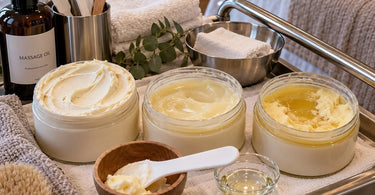
Your best work starts with the best tools... and sometimes, those tools include a beautifully rich body butter that makes skin feel absolutely amazing. But what happens when that perfectly fluffy, creamy product suddenly looks more like melted frosting after spending a few hours in a warm treatment room? If you have ever opened a jar expecting a luxurious whipped texture and discovered an oily puddle instead, you are definitely not alone. Body butters are wonderful additions to professional spa services, but their texture can be surprisingly sensitive to temperature. Understanding why body butters melt or change consistency helps estheticians, massage therapists, and spa owners protect their products, maintain consistent treatments, and avoid an awkward moment when that beautiful butter decides to become soup.
Warm treatment rooms are designed for client comfort. Heated tables, cozy blankets, soothing lighting, and carefully controlled warmth help create the relaxing atmosphere clients love. Unfortunately, the same environment that makes a client feel like royalty can turn certain body butters into temperamental little divas. The good news is that a few smart storage habits and product selection strategies can help keep your treatments running smoothly.
Why Do Body Butters Melt in Warm Treatment Rooms?
Body butters typically contain rich plant-derived fats such as shea butter, cocoa butter, mango butter, and various nourishing oils. These ingredients give the finished product its characteristic richness, spreadability, and moisturizing feel. Unlike plain water-based lotions, many traditional body butters depend heavily on the physical structure of fats to maintain their consistency.
As temperatures rise, some of those fats begin to soften or melt. The exact temperature depends on the ingredients, their proportions, and the overall formulation. Rather than having one universal melting point, many body butter formulas soften gradually across a range of temperatures.
This means a treatment room does not have to feel excessively hot for a product to change. A jar sitting near a warming device, sunny window, or heated massage table may experience substantially more warmth than the room thermostat suggests.
Products made with different combinations of butters, oils, waxes, and stabilizing ingredients can behave very differently. One formula may maintain a firm texture, while another becomes noticeably softer under the same conditions.
Shea Butter, Cocoa Butter, and Mango Butter Behave Differently
Not all botanical butters respond to warmth in exactly the same way. The ingredients used in professional Spa Body Treatments influence how products feel during application and how well they retain their original texture during storage.
Shea butter: Popular for its rich, conditioning feel, shea butter contains a mixture of fats that can soften with warmth. It can also develop a grainy texture after certain heating and cooling cycles. The precise behavior depends on the type of shea butter and the finished formulation.
Cocoa butter: Generally firmer than many soft botanical butters at typical room temperatures, cocoa butter helps provide structure in certain formulations. However, it can still soften or melt when exposed to sufficient warmth, and its crystal structure can change during temperature fluctuations.
Mango butter: Often appreciated for its smooth feel and versatility in body products, mango butter also responds to temperature changes. Its behavior depends on how it has been processed and combined with other ingredients.
Added oils: Liquid oils can improve spreadability and change the richness of a formula. Their proportion also affects how soft a body butter becomes in a warm environment.
The important lesson for spa professionals is that ingredient names alone do not guarantee a particular storage temperature or texture. Always follow the finished product manufacturer's storage and handling instructions.
Why Body Butter Sometimes Turns Grainy After Cooling
Melting is only part of the story. Perhaps you have noticed a body butter that was once silky smooth developing tiny, gritty particles. It may look normal at first glance, but during application, the texture feels slightly sandy.
This can happen because certain plant fats crystallize as they cool. When a body butter warms enough to alter its internal fat structure and then cools again, the fats may recrystallize differently.
Instead of forming many small, evenly distributed crystals, some fats can form larger crystals that create a grainy sensation. Shea-rich formulations can be particularly susceptible to this behavior.
Temperature fluctuations during manufacturing, transportation, storage, or daily treatment room use may contribute to the problem. The composition of the formula and its original cooling process also matter.
Graininess does not automatically mean a product is contaminated or spoiled. However, it does mean the original texture has changed, and the product may no longer deliver the application experience clients expect. Because texture alone cannot establish product safety, professionals should evaluate the item against manufacturer guidance rather than assuming it is suitable for continued service use.
The Treatment Room Heat Sources You Might Be Overlooking
Your treatment room may feel perfectly comfortable, but individual areas can become much warmer than expected. These small temperature differences are often enough to affect sensitive products.
Massage table warmers: A heated table creates a cozy client experience, but storing body butter directly on or beside heated surfaces can expose it to unnecessary warmth. Keep products separated from Massage Table Warmers & Toppers for Client Comfort.
Hot towel equipment: Professional Towel Steamers are fantastic for treatment preparation, but their surrounding surfaces and nearby storage areas may become warm during operation.
Hot stone equipment: Therapists incorporating Hot Stones and Warmers should maintain a separate, appropriately cool area for temperature-sensitive creams and body butters.
Sunlight: A beautiful treatment room window may add atmosphere, but direct sunlight can warm product jars quickly. Even containers on an otherwise cool shelf can experience localized heat.
Cabinets and enclosed storage: Poor ventilation, nearby equipment, and enclosed shelving can allow heat to accumulate. A closed cabinet is not automatically a temperature-controlled environment.
Delivery and shipping: Sometimes texture changes begin before the product reaches your treatment room. Packages exposed to high temperatures during transportation may arrive softer or with an altered consistency.
A useful practice is to observe the temperatures in actual product storage locations, not simply rely on the reading from the main thermostat.
What Happens to Whipped Body Butter in the Heat?
Whipped body butters are especially interesting because their luxurious texture often comes from air incorporated into a fat-based mixture. That airy structure makes the product feel light and elegant even when the ingredients themselves are rich.
Unfortunately, warmth can cause the fat structure supporting those tiny air pockets to soften. As the product loses firmness, some of the trapped air may escape, reducing its volume and causing the mixture to collapse.
Imagine carefully preparing a gorgeous bowl of whipped frosting and placing it next to a warm oven. You probably would not expect it to remain picture-perfect. Your whipped body butter deserves similar consideration.
After melting and cooling, a whipped butter may become denser or firmer than it was originally. Some formulas can also develop uneven textures or visible oil separation.
For professional services, that matters because changes in consistency can affect how easily the product spreads, how much a therapist dispenses, and how predictable the application feels.
Does Melting Mean the Body Butter Has Gone Bad?
Not necessarily. Melting is a physical change, and some products can soften without immediately becoming unsafe. However, a change in texture should never be treated as proof that a product remains safe or suitable for professional use.
Heat can also contribute to chemical changes over time, including oxidation of certain oils. Repeated handling, inappropriate storage, contamination, and prolonged exposure to unfavorable conditions can create additional concerns.
Watch for unusual or rancid odors, unexpected discoloration, visible contamination, damaged packaging, or changes that do not match the manufacturer's description of normal product behavior.
If a product has separated, developed an unfamiliar smell, or undergone substantial temperature exposure, check the manufacturer's handling recommendations before using it on clients. Discard products that appear contaminated, fall outside approved storage conditions, or cannot be verified as suitable for use.
One especially important distinction is that water-containing body creams and emulsified butters have different formulation and preservation considerations than completely anhydrous butters. Never assume that a melted cream can simply be stirred back together and returned to service.
How to Store Body Butters Properly in a Professional Spa
Preventing texture changes is generally easier than trying to correct them. A practical storage system can help preserve product quality while keeping everything convenient for your staff.
Choose a consistently cool location. Store inventory within the temperature range recommended by the manufacturer. Avoid placing products near windows, radiators, towel warmers, heated tables, or other heat sources.
Keep lids securely closed. Proper closure helps limit exposure to air, moisture, and environmental contamination. Use clean, appropriate dispensing practices for products packaged in jars.
Separate backstock from working supplies. Keep larger containers in suitable storage and bring only the amount needed for the service into the treatment area, following the product's handling instructions.
Use appropriate dispensing tools. Clean Applicators & Spatulas can help prevent direct hand contact with shared product containers. Follow sanitation requirements and never return dispensed product to its original jar.
Monitor temperatures. An inexpensive thermometer can help identify storage shelves that become unexpectedly warm during operating hours.
Rotate inventory. Use a first-in, first-out approach while respecting expiration dates and period-after-opening instructions where applicable.
Check deliveries. Inspect newly delivered products for leakage, separation, damaged containers, and unexpected texture changes before adding them to treatment room inventory.
Well-organized Bottles & Jars may also support cleaner service preparation, provided the containers are compatible with the formula and repackaging is permitted by the manufacturer.
Should You Refrigerate Body Butter?
It can be tempting to solve every warm-weather skincare problem by placing the product in a refrigerator. After all, cold butter is firm butter, right?
Unfortunately, cosmetic formulations are more complicated than the butter in your kitchen.
Some body butters tolerate cool storage well, while others may become excessively hard, experience condensation problems, or develop undesirable texture changes when moved repeatedly between cold and warm environments.
Refrigeration may also affect emulsified formulas differently from anhydrous products. Repeated temperature swings can create problems even when each individual storage location seems reasonable.
Unless the manufacturer recommends refrigeration, do not automatically assume it is the best solution. Consistent, appropriate storage is generally preferable to dramatic changes between a cold refrigerator and a warm treatment room.
Can You Fix Body Butter That Has Melted or Separated?
The answer depends on the formulation, the severity of the change, and the manufacturer's instructions.
An unopened, anhydrous butter that softens temporarily may return to a solid consistency after cooling, but that does not guarantee its original texture will return. Graininess or changes in whipped volume may remain.
For professional use, avoid improvising fixes such as reheating, microwave melting, adding extra oils, or whipping commercial products again unless the manufacturer specifically authorizes that process.
These adjustments can change the intended formulation, introduce contamination, affect product stability, or make the item unsuitable for its original professional use.
If a product has visibly separated, the safest operational choice is to hold it out of service until the supplier or manufacturer provides appropriate guidance.
Remember, clients expect a controlled, professional treatment experience. Your service room is not the ideal place to conduct an experimental cosmetic chemistry project five minutes before an appointment.
Choosing Body Butter for Warm Treatment Rooms
When shopping for professional body butters, consider more than fragrance and ingredient appeal. Texture stability, packaging, application method, and manufacturer storage instructions can all affect daily usability.
For body treatments that require smooth application over larger areas, consider whether a butter, cream, lotion, or oil best supports your technique.
A rich body butter may be ideal for a finishing treatment emphasizing luxurious skin conditioning, while a professional massage cream or lotion might offer a more suitable combination of glide, absorption, and consistency for extended bodywork.
Explore Massage Oils, Lotions, and Creams for Therapists when comparing products for different massage techniques and treatment durations.
Professional spas may also incorporate body butters into exfoliation and hydration services alongside complementary products from the Sugar Scrubs collection.
Look for formulas with manufacturer guidance that matches your actual working environment. If your spa regularly operates at warmer temperatures, ask about suitable storage conditions and expected texture changes before purchasing larger quantities.
How Temperature Changes Can Affect Client Experience
Texture is not merely a cosmetic detail. It plays an important role in how a treatment feels to the client and how efficiently a professional delivers the service.
A body butter that is too firm may be difficult to scoop and spread. A product that becomes excessively liquid may dispense more quickly than expected, creating unnecessary waste or leaving an inconsistent amount on the skin.
Graininess can also be noticeable during application. Even if the material softens against warm skin, unexpected particles may interrupt the smooth, relaxing sensation that clients associate with a premium spa experience.
Consistency also matters for staff training. When a product behaves predictably, therapists can develop reliable application methods and portion sizes.
When the same product changes dramatically throughout the day, those routines become harder to maintain. Suddenly, one therapist needs a tiny scoop while another needs a towel to rescue the treatment cart.
Maintaining stable storage conditions helps keep both the product and the service experience more predictable.
Simple Ways to Reduce Product Waste
For busy spas, salons, and massage practices, wasted product is not just frustrating. It directly affects operating costs.
Start by evaluating how much body butter your team actually uses during each service. Smaller working quantities can reduce the amount of inventory exposed to treatment room heat.
Use suitable storage and dispensing systems that minimize unnecessary exposure and repeated handling. Keep backup products in their original packaging until needed whenever practical.
Staff should also know what to do when they discover unusual separation, graininess, or other changes. A simple procedure for removing questionable products from service can prevent inconsistent treatment experiences.
Consider keeping a basic log of product condition, storage location, and any temperature-related problems. If one particular shelf consistently causes trouble, you may discover the issue is environmental rather than specific to the butter.
When buying wholesale, remember that purchasing a larger quantity only saves money when the inventory remains usable. Choose realistic order volumes and storage arrangements that fit your business.
Build a Better Body Treatment Setup With Pure Spa Direct
Creating a luxurious professional body treatment is about more than choosing a lovely moisturizer. The supplies surrounding that moisturizer help determine whether the service is efficient, sanitary, comfortable, and consistent.
Pure Spa Direct supplies professional spas, salons, estheticians, and massage therapists with a broad selection of treatment products and equipment from established industry brands.
Explore Spa Essentials for Professionals for everyday service supplies, or browse Professional Massage & Wellness Products when building out a body treatment menu.
For skincare-focused services, the Premium Skincare Products for Spas and Salons collection offers additional options to consider when selecting products for different treatment needs.
You can also search for shea butter products, body moisturizers, and massage creams to compare professional-use choices.
Because Pure Spa Direct distributes products from multiple manufacturers, always review the specific product's storage requirements, ingredients, and directions rather than assuming all body butters should be handled identically.
The Bottom Line: Keep the Treatment Room Cozy and the Body Butter Consistent
Body butters melt or change texture in warm treatment rooms because the natural fats and other ingredients that give them their rich consistency respond to temperature. Heat can soften the product, weaken whipped structures, and contribute to separation. Repeated warming and cooling may also change how certain fats crystallize, sometimes creating an unexpectedly grainy texture.
For professionals, the best approach is prevention: follow manufacturer storage instructions, avoid localized heat sources, monitor the actual environment where products are kept, and select formulas suited to your services.
Pay attention to any unexpected changes and never assume that remelting or remixing a commercial product is an appropriate fix. Good product handling protects your inventory, supports staff consistency, and helps maintain the polished client experience that keeps appointments running beautifully.
Your treatment room should be warm and welcoming. Your body butter, on the other hand, should stay exactly as creamy and dependable as its manufacturer intended. Save the melting moments for your clients' stress, not your product jars.
