
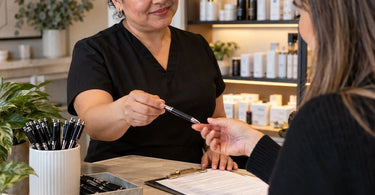
Get ahead with this smart buy... because sometimes the smallest details in your spa or salon make the biggest impression, and that includes the humble pen sitting beside your client intake forms. You have invested in beautiful treatment rooms, fabulous products, comfortable furniture, and a reception area that practically whispers relaxation, but what happens when a new client reaches for a pen that has already traveled through twelve other hands? Suddenly, that gorgeous first impression has a tiny hygiene question mark attached to it. A clean pen strategy may sound hilariously specific, but for busy spa, salon, waxing, massage, and beauty professionals, it is one of those wonderfully simple operational upgrades that makes daily life smoother. And no, you do not need to hire a Director of Pen Management. Although, admittedly, the business cards would be fabulous.
Client intake paperwork is often one of the first physical interactions a guest has with your business. Before the facial begins, before the massage table works its magic, and before the eyebrow transformation of the century, there is usually some paperwork to complete. That means pens, clipboards, counters, and forms become part of your customer experience. A thoughtful process helps your reception team maintain a tidy environment, reduces unnecessary sharing of frequently handled objects, and makes the entire check-in experience feel more intentional.
Why Client Intake Forms Create a Surprisingly Busy Touchpoint
Think about how many things happen around a reception desk on a typical Saturday. New clients complete consultation forms. Returning guests update information. Someone signs a consent form before a waxing appointment. Another client fills out a massage health history. A guest borrows a pen to write down a product recommendation. Meanwhile, your receptionist is managing appointments, answering phones, processing payments, and somehow remaining cheerful through all of it.
Now consider the pen. It gets picked up, set down, borrowed, transferred to another desk, returned to the counter, and occasionally disappears into the mysterious dimension where salon hair clips and bobby pins live.
Pens are shared, high-touch objects. Like other frequently handled items, they can collect dirt and microorganisms through ordinary use. This does not mean every shared pen is dangerous, and it certainly does not mean you need to panic over every signature. It means pens deserve a practical place in your overall cleaning and hygiene procedures.
For professional service businesses that already pay attention to treatment tools, workstations, and sanitation procedures, extending that awareness to the front desk makes excellent operational sense.
The Clean Pen and Used Pen System That Actually Works
One of the easiest approaches is a two-container system. Designate one container for pens ready for client use and another for pens that have been handled and need cleaning. The arrangement is simple enough for new employees to understand immediately and organized enough to prevent the classic reception-desk guessing game.
Imagine two attractive containers beside your intake paperwork. One is clearly labeled Clean Pens, while the other says Used Pens. Guests select a ready-to-use pen, complete their paperwork, and place the pen in the used container when finished. Reception staff then process those pens according to the business's cleaning procedure before returning them to circulation.
The most important part is maintaining the separation. If used pens are routinely dropped back into the clean container, the system becomes decorative rather than useful. Beautiful containers are lovely, but they cannot compensate for a process nobody follows.
Choose containers with smooth, washable surfaces that are easy to maintain. You can explore Bottles & Jars and other practical storage options when organizing your reception supplies. Select sizes and materials suitable for the intended purpose, and make sure the containers themselves are included in routine cleaning.
Choose Pens That Are Easy to Clean
Not all pens are equally practical for shared reception use. That beautiful pen with the fuzzy pom-pom, rhinestone-encrusted barrel, and seven dangling charms might be adorable, but cleaning around all those decorations can be a headache. Save the elaborate stationery for your personal desk and choose simpler designs for client paperwork.
Smooth plastic or other nonporous barrels are generally easier to wipe than fabric-wrapped, textured, or heavily decorated pens. Retractable pens can also eliminate removable caps, although the buttons and grooves still require attention during cleaning.
Before purchasing a large quantity, verify that your selected pens tolerate the cleaning products and procedures you intend to use. Some inks, coatings, rubber grips, and decorative finishes can deteriorate when exposed to certain chemicals.
A good shared pen should write smoothly, feel comfortable, and survive your cleaning routine without becoming sticky, cracked, or illegible. Because nobody wants a pen that leaves more residue on a client's hand than ink on the form.
Cleaning and Disinfecting Are Not the Same Thing
This distinction matters when developing a realistic front-desk hygiene procedure. Cleaning removes dirt and other material from a surface, while disinfecting uses an appropriate product to kill certain microorganisms according to its label claims. These are related but different processes.
For many routine situations in public-facing businesses, regular cleaning of frequently touched surfaces is an important baseline practice. Additional disinfection may be appropriate depending on the circumstances, local requirements, and the business's risk assessment.
If you choose to disinfect reusable pens, select a product that is appropriate for the material and specifically labeled for the intended surface and application. Follow all manufacturer instructions, including cleaning requirements, application method, precautions, and the required wet contact time.
A quick swipe with a disinfectant wipe is not automatically equivalent to completed disinfection. The treated surface must remain wet for the contact time specified on the product label, and the pen should not be returned to client use until the required procedure is complete.
Professional businesses can explore Professional Cleaners & Disinfectants for Salons and Spas when selecting suitable supplies. Always verify the specific product label and material compatibility rather than assuming that any disinfectant is appropriate for every pen.
Make the System Fit Your Actual Reception Workflow
A cleaning strategy only works consistently when it fits the pace of your business. If your receptionist has twenty appointments arriving within fifteen minutes, a system that requires complicated handling after every signature probably will not last through the morning rush.
Instead, create a straightforward routine that employees can follow even when the appointment book looks like a game of Tetris.
Keep enough ready-to-use pens available for your busiest expected check-in period. Designate a location away from the client-facing counter where used pens can be processed. Assign responsibility for checking pen availability and cleaning supplies at opening, during busy periods, and before closing.
Staff should also understand what to do when a pen becomes visibly dirty, is damaged, or cannot be cleaned appropriately. Such items should be removed from circulation rather than returned to the ready-to-use supply.
Most importantly, avoid creating an unnecessary bottleneck. Used pens can be collected and processed in organized batches when the cleaning procedure and operating conditions permit. The goal is a reliable workflow, not turning the receptionist into a full-time pen technician.
Do Not Forget Clipboards and Writing Surfaces
Here is where even a well-designed clean pen strategy can fall apart. You provide a freshly prepared pen, then hand your client a clipboard that has traveled through the reception area all afternoon without anyone considering its cleaning schedule.
Client intake paperwork involves more than the writing instrument. Clipboards, counters, tablet stands, signature pads, and other frequently touched surfaces may also need regular attention.
Choose clipboards with durable, wipeable surfaces when possible. Avoid materials or finishes that cannot tolerate your intended cleaning procedures. Include reception counters, reusable writing boards, and other shared items in your documented housekeeping routine.
Paper forms themselves should be handled in a way that protects personal information and avoids unnecessary contact with used materials. Keep unused forms organized, provide adequate writing space, and establish a consistent process for collecting completed paperwork.
Remember that intake documents may contain health histories, medications, allergies, and other sensitive personal details. Store them securely and follow applicable privacy and recordkeeping requirements. A clean reception experience should also be a discreet one.
Why a Neat Check-In Area Builds Client Confidence
Clients notice more than professionals sometimes realize. They notice whether the reception counter is cluttered, whether paperwork is organized, and whether staff appear prepared for their arrival.
A clean pen system communicates attention to detail without requiring an elaborate explanation. It fits naturally into the same thoughtful experience created by fresh linens, organized workstations, and a welcoming greeting.
That matters especially in services where clients are already thinking about hygiene and personal comfort. Waxing clients want confidence in the professionalism of their treatment environment. Massage clients appreciate an orderly, relaxing check-in experience. Nail clients may notice how well the entire business handles shared tools and surfaces.
Your front-desk habits should support the standards you maintain throughout the business. Organizing reception hygiene alongside your broader assortment of Spa Essentials for Professionals makes it easier to create a consistent environment from the entrance to the treatment room.
Of course, clean pens alone cannot establish that a spa or salon is hygienic. They are one small part of a much larger program involving staff training, appropriate products, hand hygiene, cleaning procedures, and compliance with applicable professional requirements.
Client Intake Forms Are Also a Great Time to Encourage Hand Hygiene
Instead of treating pen cleaning as a standalone task, connect it with your existing hand hygiene practices.
Provide convenient access to appropriate hand hygiene supplies where practical. Encourage employees to clean their hands at appropriate times, particularly after activities that may contaminate them and before returning to tasks that require clean hands.
Guests may appreciate a conveniently placed hand sanitizer dispenser, although hand sanitizer is not a substitute for proper handwashing in every situation. Staff should follow applicable workplace procedures, and treatment professionals must continue observing the hand hygiene requirements appropriate to their services.
Consider positioning hand hygiene supplies so guests can access them without having to reach across private paperwork or interrupt the receptionist. Small layout decisions make a difference in how smoothly people move through your reception area.
If your business provides waxing, skincare, nail, or massage services, front-desk hygiene should complement the stricter sanitation and infection-control procedures applicable to your actual treatments. Never substitute a general housekeeping routine for required professional infection-control measures.
Paper Forms Versus Digital Intake: Do You Still Need Pens?
Digital intake systems can reduce the amount of shared stationery your business uses, and they may simplify appointment preparation when clients complete forms before arriving.
However, digital systems do not eliminate every shared-surface concern. Tablets, touchscreens, styluses, and electronic signature devices may still pass between users. These devices require cleaning procedures that follow their manufacturers' instructions and protect sensitive electronics.
Some clients also prefer traditional paper forms. Others may need assistance with digital technology, experience accessibility challenges, or simply arrive without completing their online paperwork.
Maintaining a small supply of clean, functional pens gives your team a dependable backup. A hybrid system can provide convenience without making check-in difficult for clients who prefer a different format.
Whether you operate entirely on paper, primarily through digital intake, or somewhere in between, focus on the actual objects clients handle. Practical hygiene is about the workflow, not whether the form arrives on a clipboard or a screen.
How Many Pens Should a Busy Spa or Salon Keep Available?
There is no universal magic number, but you can estimate a sensible starting inventory by examining appointment volume and peak arrival patterns.
Consider a spa that expects eight clients to arrive during its busiest fifteen-minute window. Providing ten to twelve ready-to-use pens might offer a reasonable starting buffer, assuming most guests need one and used pens are collected separately. A higher-volume operation or a business with lengthy paperwork may need more.
Test the system for a week and observe whether staff regularly run short. Increase the supply when necessary, and replace pens that stop writing reliably or become difficult to maintain.
Bulk purchasing can simplify restocking, but do not confuse the lowest unit price with the best operational value. An inexpensive pen that fails constantly or cannot tolerate appropriate cleaning may create more work than it saves.
Keep your inventory organized with other front-desk necessities, including intake paperwork, appointment materials, and reception supplies. The best supply system is one your team can replenish without a treasure hunt through three cabinets and a mysterious drawer labeled Miscellaneous.
Train Every Team Member on One Simple Procedure
Even the smartest organizational idea can unravel if different employees follow different rules.
Write a brief standard operating procedure explaining where ready-to-use pens belong, where used pens go, who handles cleaning, which products and methods are approved, and when pens can return to circulation.
Include the routine in new-employee orientation and review it periodically with existing staff. Training should be short, practical, and easy to repeat.
Consider placing a discreet reminder at the staff workstation. A simple instruction such as Return Used Pens to Designated Container can help reinforce the routine without covering your elegant reception area in warning signs.
If your business operates multiple locations, use consistent labeling and procedures where appropriate. Consistency makes staff training easier and helps employees moving between locations understand expectations.
It is also worth checking your state cosmetology or barbering board requirements and any other applicable sanitation rules. Local and professional requirements can vary, and your written procedures should always reflect the obligations of your specific business.
Make the Reception Setup Attractive Without Making It Complicated
A practical hygiene system does not have to look clinical or uninviting. You can integrate it into a polished spa or salon reception design with thoughtfully chosen accessories and clear, attractive labels.
Choose containers that complement your decor while remaining suitable for regular cleaning. Keep the ready-to-use pen supply next to the client paperwork, and position the used-pen container where it will be obvious after the form is completed.
A dedicated check-in surface can make the experience feel more organized. Explore Reception Furniture if you are refreshing the layout of your front desk or designing a new spa or salon.
Make sure the writing area has comfortable lighting, sufficient room for forms, and a stable surface. Clients should not have to balance intake documents on a handbag while trying to complete their medical history.
For reception areas where space is limited, consider compact containers, a designated paperwork tray, and a small supply of backup pens stored behind the counter. You do not need a huge workstation to create an efficient process.
Sometimes a few thoughtfully arranged accessories accomplish more than an expensive reception makeover.
Common Clean Pen Strategy Mistakes to Avoid
One frequent mistake is labeling a container Clean Pens without establishing a reliable procedure for keeping the contents ready for use. Another is allowing staff to place used pens directly back into circulation when the desk becomes busy.
Using an incompatible cleaning product can also damage pen surfaces or create unnecessary chemical exposure. Follow product directions, avoid mixing chemicals, and never assume that a spray or wipe is suitable for every material.
Another problem is overlooking the containers themselves. If your pen holders are frequently handled or visibly dirty, include them in the cleaning routine as appropriate.
Finally, do not make the system so complicated that employees abandon it. A manageable procedure followed consistently is more useful than an elaborate plan that only works on the quietest Tuesday of the month.
Build a Better Client Experience One Small Detail at a Time
At Pure Spa Direct, we know that professional spa and salon operations depend on far more than the products used during treatments. As a wholesale distributor serving beauty and wellness professionals, we understand that everyday supplies, cleaning products, organization, and functional furniture all contribute to a smoother workday.
Whether you are stocking a boutique facial studio, a busy waxing salon, a massage practice, a nail salon, or a full-service beauty destination, your reception area deserves the same thoughtful attention as your treatment rooms.
Explore our Must-Have Supplies for Salon & Spa Business Success along with professional cleaning products, storage solutions, and reception essentials to support a more organized business.
A clean pen strategy will not transform your revenue overnight, eliminate every hygiene concern, or magically make clients arrive on time. If only that last one were possible! But it can reduce unnecessary confusion, support a more organized front desk, and reinforce a thoughtful approach to client care.
The next time someone completes an intake form at your reception desk, consider the entire experience from their perspective. Is the pen easy to find? Is the writing surface clean and comfortable? Is the paperwork handled professionally? Does your team know exactly what happens to the pen afterward?
Those are small questions with wonderfully practical answers. And in a business where the details matter, even a humble pen deserves its moment to shine.
