
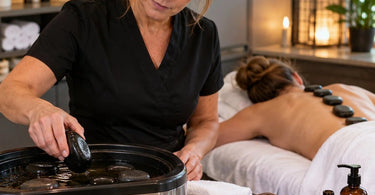
Get the results you've always wanted... starting with a hot stone massage that stays wonderfully warm instead of turning into a temperature guessing game halfway through the treatment. Professional hot stones and warmers are designed to help massage therapists deliver controlled, soothing heat, but even a beautifully prepared set of stones can cool at surprisingly different rates once placed on the treatment table. One stone may remain pleasantly warm while its neighbor feels like it has been vacationing in the refrigerator. Understanding why hot stones cool unevenly helps spa professionals improve treatment consistency, organize their workflow, and deliver a more comfortable client experience.
Uneven stone cooling is not necessarily a sign of defective equipment or poor-quality stones. It is often the predictable result of differences in stone size, material, surface contact, room conditions, and handling techniques. The good news? Most temperature inconsistencies can be reduced with thoughtful preparation and a few practical changes to the treatment routine.
Why Do Hot Stones Cool at Different Rates?
Hot stones lose heat through several physical processes. Heat moves from the stone into anything cooler that touches it, including towels, treatment linens, the therapist's hands, and the client's body. Stones also release warmth into the surrounding air through convection and thermal radiation.
The speed of cooling depends on how much thermal energy the stone contains and how quickly that energy escapes. A thick, heavy stone generally stores more heat than a small, thin stone of the same material heated to the same temperature. However, surface area, shape, density, and the temperature of surrounding materials also matter.
Imagine placing a large oval basalt stone beside a small facial stone on the same folded towel. Both begin at a similar temperature, but the smaller stone may cool much more quickly because it has less stored thermal energy relative to its exposed surface area.
This explains why a collection of stones that leaves the warmer together does not necessarily stay at the same temperature throughout a massage.
1. Stone Size and Thickness Make a Big Difference
One of the most common reasons hot stones cool unevenly is simply that they are different sizes. Larger stones have greater mass and generally retain useful warmth longer than smaller stones made from the same material.
Small stones are often selected for delicate or detailed massage work, while larger stones may be used for broader muscle groups. Each size has a different thermal behavior.
Consider three examples:
- Large oval stones: Their greater mass can provide a longer-lasting supply of warmth.
- Medium palm stones: These often offer a practical balance between comfortable handling and heat retention.
- Small detail stones: Their limited mass can cause them to lose useful warmth relatively quickly.
Thickness also plays a role. A thin stone may reach a uniform temperature more quickly during preparation but can cool faster after removal from the warmer.
For better consistency, organize stones by size and intended use. Rather than expecting every stone to behave identically, develop separate timing expectations for different categories.
2. The Type of Stone Affects Heat Retention
Not all massage stones have the same physical properties. Density, specific heat capacity, and thermal conductivity influence how readily a stone absorbs, stores, and releases energy.
Basalt is commonly selected for professional hot stone massage because it is durable, smooth when properly finished, and well suited to retaining and transferring warmth during treatment.
However, even basalt stones can vary in shape, density, and dimensions. A mixed collection containing different stone materials may display more noticeable temperature differences.
When shopping for basalt massage stones, consider choosing a coordinated professional set with consistent shapes and sizes for corresponding treatment areas.
A matched pair of stones can make simultaneous techniques easier to manage. Although identical dimensions cannot guarantee identical temperatures, they reduce one source of variation.
Inspect stones regularly for cracks, chips, rough edges, or other signs of damage. Damaged stones should be removed from service according to the manufacturer's recommendations.
3. Treatment Table Linens Can Pull Heat Away
The surface beneath a hot stone plays a surprisingly important role in cooling.
When a warm stone rests against a cooler towel or sheet, heat transfers from the stone into the fabric. The rate of transfer depends on the material, temperature difference, moisture content, and actual contact area.
A thick, dry towel, a thin sheet, and a damp treatment cloth can behave differently. Damp fabric often transfers heat more readily than dry fabric because moisture changes the thermal properties of the material.
That means two stones placed on different parts of the same treatment table may cool at noticeably different rates if the underlying linens are not equally dry or arranged consistently.
Professional salon and spa bedding can help maintain a comfortable, organized treatment environment, but therapists should understand how different layers affect temperature.
Use a consistent staging surface for stones awaiting treatment. Keep placement areas dry and prepare the same number of towel layers when comparing cooling behavior.
Remember that insulation is not a substitute for temperature control. A stone that is too hot can still cause a burn through fabric, particularly when left in one location.
4. Contact With the Treatment Table Changes Cooling Speed
A flat stone resting firmly against a cooler surface may transfer heat differently from a rounded stone touching the surface at only a few points.
The amount of physical contact matters because heat conducts through the areas where materials touch.
For example, a broad oval stone resting on a flat towel may have substantially more contact area than a rounded stone positioned on a folded edge.
Table construction, padding, and coverings can also influence the overall thermal environment. A treatment table with thick upholstery and several fabric layers may behave differently from a lightly padded portable table.
Therapists using massage tables and chairs should evaluate their entire setup rather than focusing only on the stones themselves.
Establish one designated, stable staging location for stones during a treatment. Avoid scattering heated stones across surfaces with different temperatures or coverings.
5. Air Conditioning and Drafts Accelerate Heat Loss
Many spas maintain comfortably cool treatment rooms. Clients appreciate a refreshing environment, but uncovered warm stones may lose heat faster when exposed to moving air.
Air movement increases convective heat transfer by carrying warmed air away from the stone's surface.
A stone sitting directly beneath an air-conditioning vent may therefore cool faster than an identical stone positioned away from the airflow.
Ceiling fans, portable fans, and frequently opened treatment room doors can contribute to the same effect.
Check the location of your stone staging area relative to ventilation equipment. Keep prepared stones away from direct drafts when practical, and avoid placing heaters or hot stones where cords, water, or hot surfaces create hazards.
There is no need to transform the massage room into a tropical greenhouse. A comfortable treatment temperature and a properly managed stone warmer are a much better combination.
6. Uneven Heating Can Create Uneven Cooling
Sometimes the problem starts before the stones ever reach the treatment table.
If stones are heated inconsistently, they may begin the service at different internal temperatures. Two stones can feel similarly warm at the surface while containing different amounts of stored thermal energy.
This may occur when stones of significantly different sizes are heated for the same amount of time, or when the warming process does not allow adequate temperature equalization.
Water-heated professional stone systems also require attention to proper water level, temperature control, and positioning. Follow the specific heater manufacturer's instructions for loading and heating stones.
Professional hot stone massage heaters provide a controlled warming environment when operated correctly.
Use a suitable thermometer to verify the heating medium or equipment temperature as directed by the manufacturer. Always assess individual stones before application rather than assuming the heater setting guarantees a safe stone temperature.
Never improvise with microwaves, kitchen ovens, hot plates, or ordinary household appliances that are not approved for professional stone heating.
7. Stones Used During Massage Lose Heat Differently
A stone resting on a towel and a stone being actively used for massage are exposed to different conditions.
During massage, the stone repeatedly contacts the client's skin and the therapist's hand. Heat moves into both, gradually reducing the stone's temperature.
Movement, contact pressure, treatment duration, and the amount of surface contact can influence heat transfer.
A stone used continuously over a broad treatment area may lose useful warmth sooner than one that has remained unused in an appropriate holding location.
The use of massage oils, lotions, and creams can also influence how a stone glides and contacts the skin. Lubricants should be selected for the treatment technique and client, not used as a substitute for safe heat management.
For professional workflow, plan to exchange cooling stones for appropriately heated replacements when necessary. This is usually more effective than trying to stretch the usefulness of one stone beyond its comfortable temperature range.
8. Stone Placement Timing Creates Temperature Differences
Picture a busy massage therapist preparing six stones for the next phase of treatment.
The first stone is removed from the warmer and placed on a prepared staging surface. Then the therapist adjusts a towel, checks the client's positioning, reaches for massage oil, and selects the remaining stones.
By the time the sixth stone is ready, the first has already been cooling for a longer period.
This difference may be significant with smaller stones or in a cool room.
The solution is not to rush. Instead, improve the order of preparation.
Keep stones in their approved temperature-controlled warmer until they are needed. Organize your sequence in advance and remove only the stones required for the immediate technique.
Safe, efficient preparation reduces unnecessary time spent cooling on the treatment table.
9. Wet Stones and Damp Towels Affect Cooling
Moisture is another easily overlooked factor.
A stone removed from a water-based heater may carry water droplets. As moisture evaporates, it absorbs energy from the stone and surrounding environment.
Evaporative cooling can contribute to temperature changes, especially when air is moving across the surface.
Water remaining on a stone can also dampen nearby towels and alter how heat is transferred to the underlying surface.
Follow the equipment manufacturer's guidance for safely removing stones and managing surface moisture. Use appropriate tools rather than reaching bare hands into hot water.
Keeping the staging area consistently dry also helps reduce unwanted variability.
Between clients, clean and disinfect reusable stones according to the stone and disinfectant manufacturers' instructions, including required contact times. Cleaning procedures should be incorporated into the professional turnaround workflow rather than rushed during treatment.
10. A Stone That Feels Warm May Still Be Unsafe
Temperature consistency matters, but client safety is always the priority.
A stone's ability to cause a burn depends on its temperature, contact duration, location, client sensitivity, and whether an appropriate barrier is used.
Clients may not immediately recognize excessive heat, particularly when a stone is placed over fabric. A towel can delay the sensation of heat without eliminating the possibility of injury.
Professional hot stone protocols should include proper client screening, stone temperature checks, active monitoring, and clear communication throughout the treatment.
Use an appropriate protective barrier whenever stones are placed in a stationary position, and never leave hot stones resting unattended on a client.
Extra caution is necessary for clients with reduced temperature sensation, impaired circulation, fragile or compromised skin, certain medical conditions, or medications that affect heat perception. Some clients may not be suitable candidates for hot stone treatment.
Check the stone's temperature using approved procedures before client contact. The ability to hold a stone comfortably can be one useful warning check, but it is not a precise measurement or a guarantee of safety.
If a client reports excessive heat, pain, or discomfort, remove the stone immediately and assess the situation. Never encourage a client to tolerate uncomfortable heat in pursuit of better results.
How to Keep Hot Stones at a More Consistent Temperature
A structured preparation routine can make hot stone services much easier to manage.
Step 1: Organize stones by size. Separate larger body stones, medium massage stones, and smaller detail stones so the therapist can anticipate their different cooling behaviors.
Step 2: Inspect the equipment. Confirm that the professional warmer is clean, functional, positioned safely, and operating according to the manufacturer's instructions.
Step 3: Allow proper heating time. Give stones sufficient time to reach a suitable temperature, accounting for differences in size and material.
Step 4: Verify temperatures. Check the warmer as required and test individual stones before application. Never rely solely on a thermostat setting.
Step 5: Prepare the treatment table. Arrange dry towels, linens, and other supplies before removing heated stones.
Step 6: Limit unnecessary exposure. Keep stones in the approved warmer until needed instead of displaying an entire collection on the table.
Step 7: Rotate stones thoughtfully. Exchange stones that have lost their useful warmth for properly heated replacements rather than attempting to compensate with excessive pressure or prolonged contact.
Step 8: Monitor the client. Ask about comfort, observe the skin, and adjust the technique or discontinue heat when appropriate.
These habits support more consistent services without making the treatment feel overly technical or mechanical.
Does a Massage Table Warmer Keep Hot Stones Warm?
A massage table warmer can help create a comfortable treatment surface for clients, but it should not be used to heat or reheat massage stones unless its manufacturer expressly approves that use.
Most table warmers are intended to warm the treatment surface, not to deliver the controlled heating required for stone massage.
Similarly, heated blankets, towel warmers, and other spa heating equipment should not be treated as interchangeable with dedicated stone heaters.
Each type of equipment serves a different purpose and operates under different safety considerations.
For hot stone massage, use a professional stone heating system designed for the stones and application method involved.
Choosing Supplies for Reliable Hot Stone Services
Equipment selection can influence how smoothly a therapist manages temperature, timing, and treatment transitions.
When reviewing hot and cold massage therapy products, consider more than the number of stones included in a kit.
Look for stone shapes that suit your treatment techniques, useful size combinations, smooth finishes, and equipment with clearly documented operating instructions.
A professional massage setup may benefit from:
- A dedicated hot stone heater with appropriate temperature controls.
- A coordinated collection of smooth, professional massage stones.
- A suitable thermometer and safe stone-handling accessories.
- Clean, dry treatment linens and protective barriers.
- Compatible massage lubricants for the techniques being performed.
- Backup stones that allow efficient rotation during longer sessions.
- Approved cleaning and disinfection supplies for reusable equipment.
Explore professional massage and wellness products to build a treatment room setup that supports both therapist efficiency and client comfort.
Pure Spa Direct is a distributor of professional spa, salon, and wellness supplies, offering professionals access to equipment and treatment essentials from a variety of manufacturers.
Common Hot Stone Cooling Mistakes to Avoid
Even experienced massage professionals can develop small habits that lead to inconsistent stone temperatures.
Leaving every stone on the table at once: This exposes the entire collection to room air and potentially different surface conditions before the stones are needed.
Expecting all stone sizes to cool equally: Small detail stones and larger body stones naturally behave differently.
Ignoring room airflow: Direct air-conditioning drafts can remove warmth faster than expected.
Using damp staging towels: Moisture can change heat transfer and create additional cooling variability.
Assuming the heater display measures every stone: A heater's displayed temperature may represent its control system or heating medium rather than the actual temperature of each stone.
Using a table warmer as a stone heater: Equipment intended for client comfort is not automatically suitable for heating stones.
Trying to fix cooling by overheating: Starting with excessively hot stones is dangerous and does not solve the underlying workflow problem.
The smartest solution is usually better temperature management, not more heat.
Troubleshooting Stones That Cool Too Quickly
If hot stones repeatedly become cool before they can be used, investigate the treatment environment systematically.
Start by comparing two clean, undamaged stones of the same material, size, and shape. Heat them according to the manufacturer's instructions and verify that both begin at appropriate, comparable temperatures.
Place them on identical dry staging materials in a safe area away from clients. Observe whether one location produces noticeably faster cooling, using appropriate temperature measurement methods.
If both stones cool similarly, the original problem may have involved different stone sizes, materials, or starting temperatures.
If cooling varies considerably by location, inspect drafts, moisture, and contact surfaces.
If the problem begins inside the warmer, review the manufacturer's loading instructions, temperature-control guidance, and maintenance requirements.
Do not compensate for suspected equipment malfunction by increasing the temperature. Remove faulty equipment from service and arrange appropriate inspection or replacement.
A simple treatment-room checklist can help staff identify recurring patterns without relying on guesswork.
Frequently Asked Questions About Hot Stone Cooling
Why do small hot stones cool faster than large stones?
Smaller stones generally contain less thermal energy relative to their exposed surface area. As a result, they often lose useful warmth more quickly than larger stones of the same material.
Do basalt massage stones hold heat better?
Basalt is widely used in hot stone massage because its physical properties make it suitable for retaining and transferring warmth. Actual performance still depends on the individual stone's mass, shape, composition, and surrounding conditions.
Why does one stone stay warmer on the towel?
Differences in stone size, initial temperature, contact area, towel thickness, moisture, and airflow can explain why one stone remains warmer than another.
Should hot stones be left on the treatment table before massage?
It is generally better to keep stones in their approved temperature-controlled warmer until needed. Extended staging allows unnecessary heat loss and may produce inconsistent temperatures.
Can a damp towel make a hot stone cool faster?
Yes. Moisture changes heat transfer, and evaporation can remove additional thermal energy. Consistently dry staging materials are preferable for predictable handling.
Should therapists make the stones hotter so they last longer?
No. Excessive starting temperatures increase burn risk. Instead, improve workflow, verify heater performance, and rotate stones safely when needed.
Can hot stone massage be performed on every client?
No. Client screening is essential. Certain medical conditions, reduced temperature sensation, skin problems, and other risk factors may require modifying or avoiding heated stone treatments.
Build a Better Hot Stone Massage Experience
Uneven cooling does not have to interrupt the rhythm of a professional hot stone service. Once therapists understand how stone size, material, table surfaces, moisture, airflow, and treatment timing affect heat loss, they can make simple adjustments that improve consistency.
Matching similar stones, preparing dry linens, using dedicated heating equipment, and planning a sensible rotation sequence all help create a smoother workflow.
Most importantly, safe temperatures and client feedback should always guide the treatment. The goal is controlled, comfortable warmth, not keeping stones hot for the longest possible time.
For professional hot stone equipment, massage accessories, treatment linens, and other essentials, explore Pure Spa Direct's selection of hot stone massage supplies and spa essentials for professionals. With the right supplies and a thoughtful routine, your next hot stone service can feel beautifully coordinated from the first warm stone to the final relaxing movement. Your stones may not have identical personalities, but at least they can learn to work as a team.
