
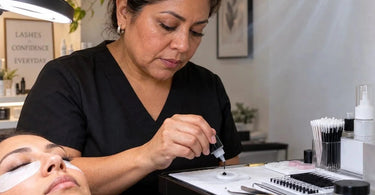
Boost revenue with this staple... a dependable lash adhesive that performs consistently from the first appointment to the last. But what happens when your favorite glue suddenly develops an attitude because your lash bed is sitting underneath an air conditioning vent? One minute, your extensions are bonding beautifully, and the next, your adhesive is acting like it has somewhere more important to be. Before you blame your technique, your tweezers, or Mercury being in retrograde, take a look at the airflow above your treatment area. That innocent little AC vent could be changing the temperature, humidity, and drying conditions around your adhesive without you realizing it.
For professional lash artists, understanding why lash adhesive behaves differently near air conditioning vents is about more than solving an annoying application mystery. It is about protecting retention, maintaining appointment efficiency, reducing wasted supplies, and delivering the consistent results clients expect. The good news? You probably do not need to declare war on your air conditioner. You simply need to understand how moving air affects adhesive chemistry and make a few smart adjustments to your lash studio setup.
Why Does Air Conditioning Affect Lash Adhesive?
Most traditional professional eyelash extension adhesives contain cyanoacrylate, a fast-curing ingredient that reacts with moisture to form a bond. Unlike ordinary craft glue that primarily dries through evaporation, cyanoacrylate-based lash adhesive hardens through a moisture-triggered chemical reaction called polymerization.
This distinction matters because the moisture content of the surrounding air directly influences how quickly the adhesive begins curing. Temperature also influences the reaction and the way the liquid adhesive flows. When an AC vent sends conditioned air across your lash bed, it can change both conditions in the immediate application area.
Air conditioning commonly cools and dehumidifies indoor air. However, that does not mean every AC vent automatically causes slow-curing adhesive. The actual result depends on your room humidity, the temperature of the supplied air, the direction of airflow, and the adhesive formulation.
In other words, your adhesive is not necessarily being difficult. It may simply be responding to the environment you have created for it. Apparently, even lash glue has climate preferences.
The Hidden Difference Between Room Conditions and Lash Bed Conditions
Here is where things get interesting. Your salon thermostat might display a comfortable 72 degrees Fahrenheit, and your wall-mounted humidity monitor might show 50% relative humidity. Everything looks perfect, right?
Not necessarily.
The conditions around your lash adhesive can differ from those measured across the room. A treatment bed positioned directly beneath a ceiling vent may experience cooler moving air, while another bed several feet away sits in a relatively stable pocket of room air.
The adhesive drop on your lash tile and the adhesive being applied near the client's natural lashes may also experience different conditions. A nearby AC vent can change the movement of air around the drop, while client body warmth and moisture create additional local variations.
This explains why one lash station can behave beautifully while another station in the same salon produces frustrating results with the exact same adhesive.
It also explains why checking the room thermostat alone is not enough. For professional lash work, the microclimate around the adhesive matters.
How Air Conditioning Changes Humidity Around Your Lash Glue
Humidity is one of the biggest factors influencing traditional lash adhesive curing speed. When humidity is low, there is generally less moisture available to initiate the curing reaction. When humidity is high, the adhesive may begin curing more rapidly.
An AC system often removes moisture while cooling the salon. In a room that is already dry, prolonged air conditioning may push humidity below the adhesive manufacturer's recommended working range.
When this happens, technicians may notice adhesive that takes longer to grab, extensions that move during placement, or bonds that remain tacky longer than expected.
However, the opposite situation can occur in a humid salon. Air conditioning may actually improve adhesive performance by removing excess moisture and bringing the room closer to the recommended humidity range.
The important lesson is that AC is not automatically the villain. Poorly controlled or uneven environmental conditions are the real troublemakers.
Why Direct Airflow Can Make Lash Adhesive Feel Unpredictable
Temperature and humidity are important, but airflow deserves its own moment in the spotlight.
A ceiling vent blowing directly across your workstation creates changing local conditions. As the cooling system cycles on and off, the adhesive may be exposed to alternating periods of moving conditioned air and relatively still room air.
These changes can influence how the adhesive behaves during dipping, placement, and initial bonding.
Direct airflow can also disrupt the controlled working environment around your tools. Lightweight lash fans, loose fibers, and other small materials may become harder to manage when air continuously moves across the station.
In some cases, an adhesive drop may develop an altered consistency sooner than expected because of the combined influence of temperature, humidity, and exposure time. Since cyanoacrylate curing is not simply evaporation, airflow should not be treated as a magic drying tool.
If your adhesive behaves differently every time the compressor switches on, that changing airflow pattern deserves investigation.
Five Signs Your AC Vent May Be Affecting Lash Retention
Environmental problems can resemble application mistakes. Before switching adhesives or completely changing your technique, look for patterns that suggest the air conditioning system may be involved.
- Adhesive grab changes throughout the appointment: Extensions attach smoothly during one portion of the service but require additional holding time later.
- One lash station performs differently: A bed directly under a vent produces inconsistent results while another station using the same products does not.
- The adhesive drop changes unexpectedly: The glue feels different sooner than anticipated, even though your application routine has not changed.
- Retention complaints cluster around particular appointments: Clients serviced during heavy cooling periods appear to experience more problems than clients scheduled under steadier conditions.
- Humidity measurements fluctuate: A monitor positioned near the lash workstation shows noticeable changes as the HVAC system cycles.
None of these signs proves that the vent is responsible. Lash preparation, adhesive freshness, placement technique, client aftercare, and natural lash shedding can all influence retention. But when several clues appear together, checking the surrounding environment is a sensible first move.
What Temperature and Humidity Are Best for Lash Adhesive?
There is no universal temperature and humidity setting that guarantees perfect results for every professional eyelash extension adhesive.
Many conventional lash adhesives are designed to perform within moderately controlled indoor conditions, often somewhere around 68 to 75 degrees Fahrenheit and 40% to 60% relative humidity. However, individual products may specify substantially different operating ranges.
Always follow the exact temperature and humidity recommendations provided by your adhesive manufacturer rather than treating a general industry range as a universal rule.
Some products are formulated for faster application speeds, while others offer longer working times. Different adhesives may also respond differently to relatively dry or humid environments.
The goal is not to chase one magic number. It is to maintain a stable environment that falls within your particular adhesive's approved working range.
A digital hygrometer that measures both temperature and humidity is one of the most useful troubleshooting tools a professional lash artist can keep nearby. Place it close to the working area without blocking the vent or exposing it to unusual moisture sources.
Check readings before appointments and when the adhesive begins acting differently. A small environmental log can reveal patterns that are easy to miss during a busy workday.
Should You Position Your Lash Bed Directly Under an AC Vent?
Whenever practical, avoid positioning the lash application area directly in the path of strong supply-air movement.
Moving the treatment bed even a short distance can sometimes make the working environment more consistent. If relocating furniture is not practical, a properly designed HVAC vent deflector may help redirect airflow away from the client's face and adhesive station.
Do not block ventilation entirely or modify building HVAC equipment without appropriate guidance. Your salon still needs effective temperature control, ventilation, and comfortable air circulation.
Pay particular attention to where the airflow lands. Cold air blowing toward the client's eyes can create unnecessary discomfort, while air traveling directly across the lash tile may make adhesive handling less predictable.
The ideal treatment area should feel comfortable to the client while providing a controlled environment for the technician.
Comfortable clients tend to move less during services, which is another good reason to evaluate your room setup. Nobody wants to spend an entire lash fill shivering under a ceiling vent that thinks it is auditioning for an Arctic expedition.
How to Set Up an AC-Friendly Lash Workstation
You do not need an elaborate climate-control system to improve consistency. Start with practical changes that address the conditions surrounding your professional lash extensions and supplies.
1. Measure Conditions Where You Actually Work
Keep a reliable thermometer and hygrometer near your lash station. Measurements taken near the application area are more useful than readings from a thermostat across the salon.
Record the temperature and relative humidity before the appointment. If the AC begins running heavily and your adhesive feels different, check the readings again.
Over several appointments, you may discover that a particular vent or cooling schedule corresponds with changes in adhesive behavior.
2. Redirect Strong Airflow Away From the Client
Examine the direction of air movement when the HVAC system is actively cooling.
If air blows directly across the client's face or lash application zone, consider adjusting the vent direction or consulting building maintenance about an appropriate diffuser.
The objective is to maintain cooling without creating a concentrated stream of moving air over the working area.
3. Keep Your Adhesive Drop Away From Direct Drafts
Position your lash glue holder or adhesive palette where conditions are relatively stable.
Follow the adhesive manufacturer's instructions for dispensing and refreshing drops. Do not assume that an adhesive drop remains usable simply because it still looks liquid.
A drop that has begun changing consistency or behaving unpredictably should be replaced rather than repeatedly worked back into service.
4. Control Humidity Carefully
If measurements consistently fall below the adhesive's recommended range, a properly maintained room humidifier may help.
If humidity is too high, an air conditioner or dehumidifier may improve the environment.
Avoid placing humidifiers directly beside the adhesive, directing mist toward the client's face, or using uncontrolled moisture to force curing. Excess moisture can cause rapid surface curing and compromise placement.
The safest approach is gradual room-level adjustment supported by actual measurements.
5. Match Adhesive Working Time to Your Technique
A fast-setting adhesive can be excellent for an experienced technician working under suitable conditions. It may be less forgiving when the environment changes unexpectedly.
Review the working-time specifications of the professional lash extension glue you use.
If room conditions vary seasonally, consider discussing suitable formulations with the manufacturer or supplier rather than choosing solely based on the fastest advertised drying time.
Faster is not always better. Your adhesive needs enough working time to form proper contact between the extension and the natural lash.
Why the Same Lash Adhesive May Behave Differently in Summer and Winter
Seasonal changes can dramatically alter the conditions inside a lash studio.
During summer, outdoor humidity may be high while an air conditioning system continuously removes moisture from indoor air. A busy salon with frequent door openings may experience additional fluctuations as humid outside air enters.
During winter, heating systems can create relatively dry indoor conditions. Even if your AC is not running, warm air distribution and low humidity may influence adhesive curing.
In spring and fall, HVAC systems may cycle less frequently, creating conditions that feel different from those experienced during peak cooling or heating months.
This means a lash artist who enjoys beautiful retention in April may encounter unexpected difficulties in August without changing a single product.
Before declaring that your favorite glue has suddenly betrayed you, review the seasonal environment.
A simple record of temperature, humidity, adhesive batch, application date, and retention observations can make future troubleshooting much easier.
Does Cold Air Make Lash Glue Cure Faster or Slower?
Cooler temperatures generally slow the chemical curing reaction of conventional cyanoacrylate adhesives, although the actual outcome depends on humidity and the particular formulation.
Lower temperatures can also influence adhesive viscosity, sometimes making the glue feel thicker or less fluid.
At the same time, cold air affects relative humidity differently depending on how much moisture it contains. Cooling air without removing moisture can raise its relative humidity, while air conditioning that condenses and removes water can reduce indoor moisture levels.
That is why it is inaccurate to say that every cold AC vent will automatically make lash glue dry faster or slower.
The more useful question is whether the air arriving at your lash station is changing the temperature and humidity outside your adhesive's intended operating range.
Measure those conditions instead of guessing from how chilly the room feels.
Can AC Airflow Cause Premature Adhesive Curing?
It can contribute to conditions associated with premature curing, especially when local humidity is elevated or environmental conditions are unstable.
However, direct airflow alone does not guarantee faster cyanoacrylate curing. Moisture availability, temperature, adhesive formulation, and the time between dispensing and placement all matter.
If adhesive begins setting before the extension has made full contact with the natural lash, the resulting bond may be incomplete. An extension might initially appear attached but fail to deliver the retention expected from proper application.
Changing to an even faster adhesive without identifying the problem can make matters worse.
Instead, evaluate the microclimate, refresh the adhesive drop as directed, confirm proper lash preparation, and observe whether the problem improves after reducing the direct draft.
How to Troubleshoot Lash Adhesive Problems During an Appointment
When your adhesive starts behaving strangely halfway through a service, resist the temptation to change five things simultaneously.
Begin by observing the adhesive. Is it grabbing too quickly, taking longer than expected, thickening, or allowing extensions to shift?
Next, read your hygrometer and thermometer. Compare those numbers with the adhesive manufacturer's recommended working conditions.
Check whether the AC is currently blowing across the workspace. If so, determine whether airflow can be redirected safely without compromising room ventilation.
Inspect the adhesive drop and replace it if needed. Confirm that the bottle has been handled and stored according to its instructions.
Then evaluate the fundamentals: natural lash cleanliness, appropriate adhesive quantity, isolation, attachment area, and placement technique.
Make one adjustment at a time and watch for a meaningful improvement.
This method helps distinguish environmental problems from product or technique issues. It also prevents the classic salon troubleshooting spiral in which the adhesive, tweezers, lash tape, and entire room layout all get blamed before lunch.
Professional Lash Supplies That Support Better Consistency
Reliable lash services depend on the complete working system, not only the adhesive bottle.
Professionals can explore lash and brow service supplies for essential products that support everyday treatments and efficient workstation organization.
For extension services, the Premium Lash Extensions & Supplies for Pros collection is a useful starting point for building a professional lash inventory.
Depending on your service menu, you may also need lash tweezers, under-eye pads, lash primer, and lash cleansing brushes.
Good workstation lighting is important, too. Explore LED Bright Lamps for professional illumination that helps technicians see isolation and attachment details clearly.
Organizing products within easy reach can reduce unnecessary interruptions and help technicians maintain a consistent application rhythm.
Remember that proper climate control does not replace good products or technique. Instead, it helps suitable professional products perform more predictably under their intended conditions.
Why Environmental Consistency Matters for Salon Profitability
Inconsistent adhesive performance is not simply an inconvenience. For a busy lash studio, it can influence labor efficiency, product waste, and client satisfaction.
When extensions require repeated repositioning or replacement during application, appointment times may increase. When retention suffers, additional troubleshooting, client communication, and corrective appointments can consume valuable scheduling capacity.
Consider a studio completing six lash appointments per day. If avoidable environmental disruptions add just ten minutes to each service, that represents an additional hour of technician time across the day.
Over five business days, those interruptions could account for five hours of lost working capacity. That is time that might otherwise support a smoother schedule, better client experiences, or additional revenue-generating services.
These figures are simply an illustration, but the operational lesson is important: small inconsistencies can become expensive when repeated throughout the week.
Maintaining steady room conditions can help technicians reduce unnecessary troubleshooting and work more confidently.
Train Your Lash Team to Recognize Airflow Problems
For salons with multiple lash technicians, establishing a simple climate-control routine can improve consistency between stations.
Start by making environmental checks part of the appointment preparation process. Team members should understand the manufacturer's recommended adhesive range and know where to check temperature and humidity.
If the studio has multiple treatment beds, compare readings at each station during active cooling periods.
Encourage technicians to report adhesive changes without immediately assuming that the product is defective or that someone is applying extensions incorrectly.
Keep adhesive storage practices consistent, record opening dates when recommended, and review retention feedback alongside environmental observations.
A little team communication can prevent a lot of unnecessary product switching.
And if someone discovers that Station Three only misbehaves when the AC kicks into overdrive, congratulations. You may have found the problem without conducting an official investigation worthy of a television crime drama.
Frequently Asked Questions About Lash Adhesive and Air Conditioning
Can I Use a Fan to Make Lash Extension Adhesive Cure Faster?
Do not assume that blowing air directly onto conventional cyanoacrylate adhesive will accelerate its chemical curing. Air movement is not a substitute for the moisture-triggered reaction required for proper bonding.
Follow the adhesive manufacturer's curing and finishing instructions. If a fan is used for client comfort or air movement, it should not replace adequate room ventilation or appropriate exposure controls.
Is 50% Humidity Good for Eyelash Extension Glue?
Fifty percent relative humidity falls within the recommended working range of many conventional professional lash adhesives. However, the correct range depends on the specific product. Always check the manufacturer's instructions before deciding that any particular humidity reading is ideal.
Can Air Conditioning Cause Poor Lash Retention?
Air conditioning can contribute to inconsistent lash retention when it creates unsuitable temperature, humidity, or airflow conditions around the application area. It is not the only possible cause. Lash preparation, placement technique, adhesive handling, client habits, and natural lash shedding must also be considered.
Should I Turn Off the AC During Lash Appointments?
Usually, no. Completely turning off the air conditioning may cause the room to become too warm or humid, potentially creating a different adhesive problem. Maintaining stable temperature, humidity, and appropriate ventilation is generally more useful than switching the system off.
Where Should I Place My Lash Adhesive During a Service?
Keep the adhesive drop in a stable part of your workstation, away from direct vents, strong drafts, excessive heat, and direct sunlight. Follow manufacturer recommendations for dispensing surfaces, drop replacement, and bottle handling.
Can a Humidifier Fix Lash Glue Problems Caused by AC?
A humidifier may help if measured humidity is consistently below the adhesive's recommended operating range. It will not solve every adhesive problem, and excessive humidity can create new difficulties. Measure room conditions before adjusting them, and avoid directing moisture toward the adhesive or client's eyes.
Does Every Lash Glue Respond to AC the Same Way?
No. Adhesives differ in formulation, viscosity, intended application speed, and recommended environmental conditions. Conventional moisture-curing adhesives can also behave differently from specialty systems, including light-cured products that require their own application and safety procedures.
Build a Lash Studio Environment That Works With Your Adhesive
So, why does lash adhesive behave differently near air conditioning vents? Because the airflow can change the local conditions that influence adhesive curing, consistency, and application. Temperature, humidity, and airflow patterns may vary significantly from one treatment station to another, even when the salon thermostat suggests everything is perfectly normal.
For professional lash artists, the solution begins with awareness. Measure conditions near the working area, avoid strong drafts across the lash bed, follow manufacturer guidelines, refresh adhesive drops appropriately, and adjust the salon environment based on actual readings rather than assumptions.
When the environment is stable, your technique and professional products have a better opportunity to deliver consistent results.
Pure Spa Direct supplies professional beauty businesses with the tools and products needed to support efficient services. Explore our Lash & Brow Enhancement Services for Professionals collection, browse eyelash extension adhesives, and discover supplies that complement your salon's treatment menu.
Because your lash adhesive should be helping you create beautiful extensions, not starting a dramatic personal feud with the ceiling vent.
