
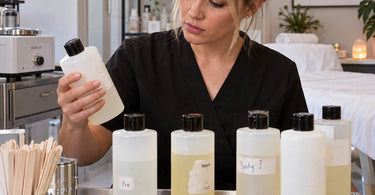
Start your journey to success today... by solving one of the sneakiest little problems hiding in your treatment room: mystery refill bottles! Picture this: Your esthetician reaches for a bottle of pre-wax cleanser, pauses, squints at the faded label, and suddenly realizes there are four nearly identical bottles sitting on the counter. Is that the cleanser, the post-wax oil, the massage lotion, or something nobody remembers pouring? Congratulations, your beautifully organized spa has accidentally created its own guessing game, and unfortunately, nobody wins a prize for choosing the wrong product. Refill bottles are incredibly convenient for busy salons, spas, waxing studios, nail salons, and massage practices, but without a clear labeling system, they can turn everyday services into an unnecessary adventure in confusion.
For beauty professionals, efficiency matters. Every treatment involves carefully selected products, precise techniques, and a schedule that rarely leaves room for detective work. The good news? A simple, consistent labeling system can prevent avoidable mistakes, improve workflow, support sanitation procedures, and make your treatment rooms feel considerably more professional. Let's explore why refill bottles cause so much confusion, what the risks really are, and how to create a practical organization system your entire team will actually use.
Why Refill Bottles Create Confusion Without a Clear Labeling System
Refillable containers are everywhere in professional beauty businesses. Estheticians transfer products into smaller containers for convenient application. Massage therapists use pump bottles to dispense lotions. Nail technicians organize liquids around their workstations. Waxing specialists keep pre-treatment and post-treatment solutions within easy reach.
These containers make perfect sense operationally. Purchasing larger professional sizes can reduce packaging waste and streamline product replenishment. Smaller dispensers are easier to handle during treatments, and coordinated bottles can make a workstation look tidy and polished.
But here's the problem: Once the original packaging disappears, so does the easiest way to identify what's inside.
Imagine three clear bottles containing colorless liquids. One holds skin cleanser, another contains a specialized surface cleaner, and the third holds water intended for an approved equipment application. Their appearance tells you almost nothing about their contents. Even products that look or smell similar can have completely different purposes, ingredients, and handling requirements.
Without readable labels, employees must rely on memory, bottle placement, color, or someone else's explanation. None of those methods is particularly reliable when the salon is busy, employees change shifts, or bottles get moved during cleaning.
A refill bottle should answer the question of what's inside immediately. If your team needs to conduct a miniature investigation before dispensing something, your labeling system needs attention.
The Mystery Bottle Problem Gets Worse During Busy Appointments
Consider a waxing studio on a fully booked Saturday. One technician is preparing a treatment room while another is finishing a service. A third employee restocks the workstation, moving several containers to make room for fresh supplies.
Now the bottle normally positioned beside the wax warmer has changed places. Its label says only PRE, while another bottle has a partially peeled sticker reading POST.
Which product is actually inside each container?
Suddenly, the team's workflow depends on assumptions instead of information. That hesitation might seem minor, but interruptions accumulate throughout a long day.
The same problem can affect massage rooms, facial treatment stations, shampoo areas, and manicure tables. Professionals often rely on familiar arrangements to move quickly. When containers are unlabeled or inconsistently labeled, that familiarity becomes a vulnerability.
Standardized labels are especially valuable for businesses with multiple treatment rooms or rotating staff. Instead of requiring everyone to memorize each workstation's unique arrangement, the system communicates the information directly.
Similar Bottles Can Hold Very Different Products
One of the biggest reasons refill bottle labeling matters is that appearance does not establish identity.
Take professional waxing products. A studio might stock Pre & Post-Waxing Products that include skin preparation cleansers, protective oils, residue removers, and soothing finishing products. Depending on the formulas, several might have a similar color or consistency.
However, each serves a different purpose in the waxing process. Accidentally selecting the wrong product could interfere with service preparation, leave unwanted residue, or create a poor client experience.
Massage therapists face a similar challenge with Massage Oils, Lotions, and Creams for Therapists. A lightweight oil, a richer cream, and a specialty lotion might all sit in matching pump bottles. Without labeling, a therapist could dispense the wrong formulation for the intended treatment or a client's documented preferences.
Even facial treatment rooms can become confusing when professional cleansers, toners, and treatment solutions are transferred into smaller containers. Different products may require different application methods, storage conditions, or precautions.
The takeaway is simple: Matching bottles are great for aesthetics, but matching bottles without matching identification standards are a recipe for confusion.
Unlabeled Bottles Can Create Real Safety Concerns
Let's move beyond inconvenience for a moment. Improperly labeled containers can create important workplace safety issues, especially when cleaning agents, disinfectants, or other hazardous chemicals are involved.
Professional salons and spas routinely use Professional Cleaners & Disinfectants for Salons and Spas as part of their sanitation procedures. These products must be handled according to their manufacturer instructions, appropriate safety information, and applicable regulations.
A surface disinfectant should never be mistaken for a product intended for direct skin application. Likewise, chemicals should not be combined simply because employees believe two partially filled bottles contain the same solution.
For hazardous chemicals covered by workplace hazard communication requirements, secondary containers generally need appropriate identification and hazard information. There is a limited exception for certain portable containers intended only for immediate use by the employee who transfers the chemical. Shared bottles used across shifts should not be treated as though that exception automatically applies.
Depending on the product and applicable rules, labels may need more than a simple product name. Businesses should follow current workplace labeling requirements, maintain access to relevant Safety Data Sheets, and train employees to recognize chemical hazards.
Never transfer a chemical into a beverage container, remove required hazard warnings without replacing them appropriately, or assume a decorative sticker satisfies regulatory requirements.
A cute little label is wonderful. A cute little label that also communicates the correct information is even better.
What Every Professional Refill Bottle Label Should Include
A useful labeling system should be easy to understand without forcing technicians to read an entire novel between appointments. The goal is to communicate the information necessary for correct identification, safe handling, and efficient use.
For routine professional product organization, consider recording the following information:
- Complete product name: Use the actual name rather than vague abbreviations such as CLEAN, OIL, or BLUE.
- Brand or manufacturer: Identify the original product when multiple brands or formulations are used.
- Product purpose: Clearly distinguish skin preparation products, finishing products, massage mediums, equipment solutions, and surface cleaners.
- Refill or preparation date: Document when the container was filled, particularly when product handling procedures require it.
- Expiration or discard date: Include dates when specified by the manufacturer or established through an approved preparation procedure.
- Dilution information: For products that permit dilution, identify the prepared concentration according to the manufacturer's instructions.
- Required hazard information: Include applicable warnings and workplace labeling elements for hazardous chemicals.
- Batch or lot information: Preserve traceability when necessary for the product, business procedures, or regulatory requirements.
Not every cosmetic dispenser requires every administrative detail. The appropriate label depends on the product and how it is used. Hazardous chemicals, prepared disinfectants, and specialized solutions may have additional labeling obligations.
For convenience, a spa can use a standardized label template with designated spaces for the product name, date, and other relevant details. This makes labels easier to prepare and easier for staff members to recognize.
Why Handwritten Labels Sometimes Create More Confusion
Handwritten labels can work beautifully when they're clear, consistent, durable, and updated correctly. Unfortunately, treatment rooms aren't always gentle environments for paper stickers and ordinary ink.
Moisture, oily hands, cleaning products, and repeated handling can cause labels to peel, smear, or fade. Before long, a bottle that originally said BODY LOTION might display something resembling B DY LOT ON.
Is it body lotion? Is it body wash? Is it a secret message from the previous shift?
This is why label durability matters just as much as label content.
Consider water-resistant labels compatible with the container and its contents. Printed labels can improve readability, especially when the same products appear throughout multiple treatment rooms. If using permanent markers, verify that the writing remains legible under normal operating conditions.
Whenever a label becomes damaged or unreadable, replace it promptly. If a bottle's contents cannot be positively identified, remove it from service and follow the appropriate procedure for identifying or disposing of the contents safely. Never rely on smelling or testing an unknown substance on skin to determine what it is.
Color Coding Helps, But It Should Never Replace Words
Color-coded labels are a fantastic visual organization tool. A busy technician can recognize a familiar color faster than reading several bottles one by one.
For example, a waxing studio might designate blue for skin preparation products and green for post-treatment products. A massage department could use another set of colors to distinguish categories of massage mediums.
But color alone is not enough.
Employees may interpret colors differently, labels can fade, and new team members may not know what each color represents. Certain lighting conditions can also make colors difficult to distinguish.
A better approach combines color coding with complete, readable text. The category color provides a quick visual cue, while the written label identifies the actual product.
For hazardous chemicals, decorative colors must never replace required warnings or hazard communication elements. A color system should support the necessary safety information, not conceal or simplify it away.
Choose Refill Containers That Make Labeling Easier
Building a reliable system starts with choosing suitable containers for the products your staff actually uses.
Pure Spa Direct offers a selection of Bottles & Jars for professional beauty and wellness settings. When selecting refillable containers, focus on functionality rather than appearance alone.
Look for bottles with enough smooth surface area to accommodate readable labels. Make sure the container material and dispensing mechanism are compatible with the intended formulation, and confirm that transferring the product is permitted by its manufacturer.
Pump bottles can be convenient for certain lotions and massage products. Spray bottles can be useful for appropriate solutions specifically approved for that delivery method. Squeeze bottles may suit certain treatment liquids, depending on their formulation and handling instructions.
Not all liquids belong in every type of container. Some formulations can degrade materials, react with components, clog dispensing mechanisms, or require storage in their original packaging. A generic bottle should never be assumed suitable for every chemical.
Searching for pump bottles, spray bottles, and plastic bottles can help you explore dispensing options for appropriate professional applications.
The best refill setup is one where the container, label, product, and application method all work together.
Stop Refilling Mystery Bottles With Mystery Products
Here's a surprisingly common operational mistake: An employee notices that a bottle is nearly empty, locates what appears to be the matching bulk product, and tops it off without verifying the contents.
That small shortcut can create a significant problem.
Even when two products seem identical, they might have different formulas, concentrations, expiration dates, or storage requirements. Mixing old and new contents may also compromise traceability or violate manufacturer instructions.
A stronger refill procedure requires employees to verify the product identity before replenishment. Staff should confirm that the bottle is approved for the product, inspect its condition, and follow the manufacturer's directions regarding cleaning, drying, refilling, or single-use restrictions.
Where appropriate, use a documented rotation process to avoid mixing batches. Do not top off disinfectant solutions or other preparations when their instructions require fresh mixing, replacement, or disposal.
Never assume that topping off a bottle is automatically sanitary or permitted. Product-specific directions always take priority.
And if someone says, "I'm pretty sure this is the same stuff," that is your cue to stop and verify before pouring.
Labeling Makes Inventory Management Much Easier
Refill bottle confusion doesn't just affect the person performing the treatment. It can also create headaches for salon owners and managers responsible for inventory.
Without clear identification, employees may accidentally open unnecessary backup containers, refill the wrong dispensers, or mistake partially filled bottles for products that need reordering.
A standardized system improves visibility. When the product name and refill date are easy to find, managers can identify which supplies are being used and where replenishment is necessary.
This matters especially for businesses purchasing professional products in bulk. Buying larger sizes can offer operational advantages, but those benefits disappear quickly when poorly managed refills contribute to waste.
Consider establishing one designated bulk storage area with clearly marked original containers. Pair each refillable dispenser with an approved source product and keep inventory records consistent.
For everyday operations, explore Must-Have Supplies for Salon & Spa Business Success to support a more organized professional environment.
Different Treatment Rooms Need Different Labeling Priorities
Not every service department handles the same products, which means your labeling system should reflect how your business operates.
Waxing rooms: Identify skin preparation products, approved finishing products, and cleaning solutions separately. Within your Waxing Supplies for Professionals, establish consistent placement and identification practices across workstations.
Facial treatment rooms: Clearly distinguish professional cleansers, toners, massage products, and specialized treatment preparations. Confirm storage and dispensing requirements before transferring anything from its original packaging. Browse Premium Skincare Products for Spas and Salons when reviewing your treatment inventory.
Massage rooms: Identify each massage medium by its full product name. Include relevant formulation distinctions so therapists can select the correct product for each service and client preference.
Nail stations: Keep compatible containers identified, and pay special attention to professional liquids with specific safety, ventilation, or packaging requirements. Products used alongside Acrylic Nail Supplies may require particularly careful handling.
Hair salons and barber shops: Never leave chemical preparations or transferred professional liquids in unidentified containers. Follow manufacturer instructions for mixing, application, storage, and disposal, particularly when working with Professional Hair Color and related chemical services.
Cleaning and sanitation stations: Separate surface-cleaning chemicals from all client treatment products. Maintain the necessary workplace labels, dilution details, and preparation information while following product-specific sanitation procedures.
The ideal approach is one standardized labeling policy with enough flexibility to address department-specific requirements.
How to Build a Simple Spa Refill Bottle Labeling System
Ready to eliminate mystery bottles from your business? You don't need an elaborate organizational overhaul. Start with a practical process that staff members can follow consistently.
- Audit every refill bottle. Walk through treatment rooms, supply closets, cleaning stations, and employee work areas. Identify containers with missing, incomplete, damaged, or inconsistent labels.
- Separate unidentified contents. Remove mystery containers from service. Follow appropriate workplace procedures for identification, handling, and disposal.
- Create a master product list. Record the complete names of routinely transferred products and the containers approved for their use.
- Design a consistent label format. Use readable text, durable materials, and designated fields for dates or hazard information where needed.
- Standardize refill procedures. Define who may refill containers, how contents must be verified, and what cleaning or replacement steps are required.
- Organize storage areas. Keep bulk supplies identifiable and arrange refill products to minimize selection errors.
- Train the entire team. Make sure every employee understands the labeling system, including temporary staff and new hires.
- Inspect labels regularly. Include container identification in routine workstation and sanitation checks.
Assign responsibility rather than assuming someone will handle it eventually. A weekly review can catch damaged labels and misplaced containers before they become bigger issues.
Most importantly, make compliance easy. Keep approved labels and appropriate writing supplies available where refilling takes place. If employees must search three cabinets for a replacement sticker, the system is unlikely to survive a hectic Saturday.
Train Your Team to Stop Guessing and Start Checking
Even the best labeling system depends on employee habits.
Team members should understand that product identification is not optional. If a label is unclear or missing, the container should not be used until its contents and suitability are properly verified.
Training should cover how to read labels, where to find original product information, how to access Safety Data Sheets when applicable, and when to notify a manager about an unidentified product.
Demonstrate the correct refill procedure using the actual products your business handles. This is much more effective than simply handing someone a policy and hoping they read it between appointments.
For multi-location salons or spas with several departments, use the same core labeling conventions throughout the business. A technician working in Room One should be able to identify the same product in Room Five without learning an entirely different system.
Encourage employees to report labeling problems immediately. A missing sticker should be treated as a normal maintenance issue that deserves prompt correction, not an opportunity to play detective.
Professional Organization Is Part of the Client Experience
Clients may never read every label in your treatment room, but they notice the overall environment.
Clean workstations, orderly supplies, and confident technicians contribute to a professional atmosphere. A practitioner who can identify and access the correct product without hesitation is better positioned to maintain an attentive, uninterrupted service.
Now imagine the opposite: A client is resting on the treatment table while the technician picks up three bottles, examines each one, and calls down the hallway asking who remembers what was poured into them.
Not exactly the luxurious escape your marketing promised.
Clear labeling helps prevent those awkward moments. It also gives employees more time to focus on treatment quality rather than searching for supplies.
Combine appropriate containers with organized Spa Essentials for Professionals and convenient access to Applicators & Spatulas to create workstations that support smoother services.
Common Refill Bottle Labeling Mistakes to Avoid
Even well-intentioned businesses can develop habits that undermine their organization efforts. Watch for these common problems:
- Using abbreviations only one employee understands: Labels should be clear to everyone who may handle the product.
- Identifying products by bottle color alone: Color can supplement written identification but should not replace it.
- Leaving old labels attached: Conflicting information can be more confusing than no label at all.
- Using temporary stickers indefinitely: Replace damaged or unsuitable labels with durable alternatives.
- Ignoring preparation dates: Record relevant dates whenever required by product instructions or established procedures.
- Assuming every bottle can be reused: Verify container compatibility and follow manufacturer guidance.
- Combining leftover products: Never mix products or batches without explicit manufacturer authorization.
- Keeping unknown solutions just in case: Unidentified contents do not become safer by sitting on a shelf for another month.
Remember that a labeling system only works when employees can trust the information. An attractive label containing the wrong product name is not an improvement.
Small Labeling Improvements Can Make a Big Operational Difference
Running a successful spa or salon requires attention to countless little details. Some directly affect treatment quality, while others influence efficiency, staff confidence, sanitation practices, and inventory control.
Refill bottle labeling touches all of these areas.
By identifying products consistently, verifying refills, and choosing appropriate containers, your team can reduce uncertainty during services. Managers gain clearer visibility into product handling, while technicians spend less time hunting for the right solution.
Start with your busiest treatment area. Review every bottle, remove unknown products from use, create labels that communicate the necessary information, and establish a simple maintenance routine. Once the process works, expand it throughout the business.
At Pure Spa Direct, we know professional beauty businesses need practical supplies that help keep daily operations running smoothly. As a distributor of professional spa, salon, massage, waxing, nail, and beauty supplies, we offer access to containers, treatment products, and organizational essentials suited to many different professional applications.
Explore our Bottles & Jars, find additional refill bottle options, and review the supplies your team uses most frequently.
Because your treatment room should be filled with beautifully organized professional products, not six suspiciously similar bottles and a staff-wide debate about which one contains what. Give every bottle a clear identity, keep your refill procedures consistent, and save the mysteries for your favorite television show!
