
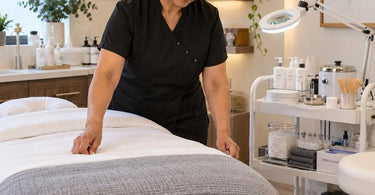
Success starts with this choice... deciding whether your treatment room is simply a place where services happen or a carefully maintained part of the client experience. Repeat clients may not consciously inventory every piece of spa furniture, folded towel, bolster, lamp, bottle, and decorative detail, but they become surprisingly familiar with the space after several visits. Move the table a few inches, change the blanket, replace the usual tray, or suddenly introduce a brighter light and somebody who has been coming every month for a year may notice before she has even put down her handbag. Familiarity is powerful, and apparently your regular clients have been quietly memorizing the room while everyone thought they were relaxing.
That attention is not necessarily criticism. In many cases, noticing small changes simply means clients have developed a strong mental picture of the experience they expect from your business. The room becomes part of the ritual. For spa, massage, waxing, facial, lash, brow, and other personal care services, creating thoughtful consistency can therefore support comfort while intentional improvements can make an established experience feel even better.
The Room Becomes Part of the Service
A professional service is experienced through far more than technique alone. Clients also encounter lighting, temperature, sound, fragrance, linens, furniture, equipment placement, cleanliness, organization, and dozens of other environmental cues. Collectively, these details create the setting in which the service takes place.
A first-time client has no personal baseline for comparison. She walks into the room and experiences everything as new. A repeat client is different. She already knows where the treatment table usually sits, how the room normally smells, whether the lighting is soft, where her belongings typically go, and perhaps even which blanket is normally placed across the table.
That existing reference point makes changes easier to detect. A new client sees a room. A longtime client sees her room, or at least the version of it that has become associated with her appointments.
Consistency Creates Familiarity
There is a reason successful service businesses develop setup routines. Consistency reduces unnecessary surprises. Clients know roughly what to expect, and professionals can work efficiently because tools and supplies are arranged predictably.
For example, a massage therapist who consistently prepares a table with clean Salon & Spa Bedding, an appropriately positioned Massage Bolster, and neatly organized products creates a recognizable visual standard. If the next appointment features a mismatched blanket, missing bolster, noticeably different table position, and cluttered counter, a repeat client may sense that something has changed even if she cannot immediately explain what.
The same principle applies in a facial room, waxing suite, nail area, lash room, or salon station. Familiar layouts become part of the client's expectations.
Small Changes Can Feel Bigger Than They Look
Professionals naturally view a room through an operational lens. Moving a cart twelve inches may seem trivial. Switching towels may simply reflect laundry rotation. Replacing a lamp may be a practical upgrade. A client experiences those changes differently because she is evaluating the space from the treatment table or chair rather than from the provider's workflow perspective.
Imagine a regular facial client accustomed to entering a softly illuminated treatment room. One afternoon she walks in and a new overhead light is dramatically brighter. Nothing about the facial protocol has changed, yet the atmosphere immediately feels different.
Or picture a waxing client whose usual room is exceptionally tidy. During her next visit, extra boxes and backup supplies are temporarily stacked in one corner. Those supplies may be perfectly clean and harmless, but because the client remembers a streamlined room, the temporary clutter stands out.
This is why seemingly minor room changes can have an outsized effect on repeat clients. Difference attracts attention.
Cleanliness Is Especially Noticeable
Few environmental details matter more in professional beauty and wellness settings than visible cleanliness and organization. Clients may not understand every sanitation procedure performed between appointments, but they can observe the condition of surfaces, linens, implements, containers, floors, carts, and furniture.
Maintaining an orderly supply of High-Quality Towels, fresh linens, disposable items, and appropriate Professional Cleaners & Disinfectants for Salons and Spas helps professionals support a consistent presentation alongside their required sanitation procedures.
Repeat clients can become particularly observant because they already know what your normal standard looks like. If the room is consistently immaculate, that standard becomes reassuringly ordinary. If something suddenly looks out of place, however, it can attract immediate attention.
In other words, becoming known for beautiful consistency creates a wonderful problem: people notice when you deviate from it.
Linens Have More Visual Impact Than You Might Think
Changing linens can transform a treatment room remarkably quickly. The color, texture, thickness, folding style, and arrangement of bedding occupy a large portion of the client's visual field, especially around massage and facial tables.
Suppose your standard setup includes crisp sheets, a plush blanket, and carefully rolled towels. Replacing everything with thinner or differently colored linens creates an obvious visual change even when the actual table has not moved.
Comfort accessories matter too. Massage Table Warmers & Toppers for Client Comfort, bolsters, blankets, face cradle covers, and towels can contribute both to physical comfort and to the room's overall appearance.
The goal is not to make every treatment room look like it has been frozen in time. Linens wear out. Seasons change. Businesses refresh their decor. The useful lesson is simply that large textile surfaces carry substantial visual weight, so even straightforward replacements may be obvious to regulars.
Lighting Can Completely Change the Mood
Lighting deserves special attention because it affects both professional visibility and client perception. Treatment providers need adequate illumination for their work, while clients often appreciate a more restful atmosphere during portions of a service.
Aesthetic professionals may rely on task lighting such as Magnifying Lights or LED Bright Lamps when precision is required. These functional lights can coexist with softer ambient lighting when the service allows it.
If you change bulbs, reposition lamps, or introduce a new fixture, test the room from the client's position. Lie on the table. Sit in the chair. Look toward the ceiling. That elegant new lamp might look fabulous while standing at the doorway and resemble an interrogation spotlight when viewed horizontally. Nobody booked a brow appointment expecting to confess where the missing office stapler went.
Clients Notice What They Touch
Visual changes receive plenty of attention, but tactile changes can be equally memorable. Clients physically interact with treatment tables, chairs, blankets, towels, headrests, bolsters, robes, and other surfaces throughout an appointment.
A change in padding, table height, towel texture, blanket weight, or chair positioning can therefore feel significant even when it looks subtle.
This makes furniture and equipment maintenance important. A professional Top-Quality Equipment & Furniture for Spas & Salons setup should support the service being performed while allowing the provider to maintain an organized, comfortable working environment.
If you replace an established table or chair, consider the client's experience in addition to specifications that matter operationally. Something as basic as how easily a client gets on and off the table can influence how she perceives the change.
Organization Communicates Preparation
An organized room can quietly communicate that the professional is prepared. Supplies are accessible, frequently used products have logical locations, and unnecessary clutter stays out of the treatment area.
Organization does not mean displaying every item you own. In fact, crowded surfaces can make a relatively large room feel surprisingly small. Keep the items required for the service accessible and use cabinets, drawers, shelving, or appropriate Bottles & Jars to create an efficient system for professional supplies.
Repeat clients often recognize changes in this organization because they watch the room's choreography over time. They see the esthetician reach for cotton. They notice where the massage therapist places lotion. They observe the nail professional preparing implements. Without trying, they learn the rhythm of the room.
Scent and Temperature Belong to the Setup Too
Room setup is not limited to furniture. Ambient conditions such as fragrance and temperature are part of the environment clients experience.
A client accustomed to a subtle aroma may immediately recognize a new scent. Professionals using Aromatherapy Supplies should remember that preferences and sensitivities vary considerably. More fragrance is not automatically more luxurious.
Temperature can be equally personal. Providers move around during services while clients may remain relatively still, partially dressed, or covered for extended periods. A room that feels comfortable to the professional may feel cool to the client. Maintaining access to appropriate linens and adjusting conditions within the needs of the service can help preserve comfort.
Intentional Changes Can Be Wonderful
The fact that clients notice changes is not an argument against changing anything. Quite the opposite. Thoughtful upgrades can give repeat clients evidence that the business is cared for and continually refined.
Replacing worn linens, upgrading aging furniture, improving lighting, introducing better storage, refreshing paint, or reorganizing equipment can make a familiar room feel renewed. The key distinction is between intentional improvement and accidental inconsistency.
An intentional change has a purpose. Maybe the new table provides better positioning options. Perhaps the cart has been moved so the provider can work more efficiently without interrupting the treatment. Maybe brighter task lighting improves visibility during precision services while still allowing softer lighting during relaxation portions.
Those changes support the experience rather than merely changing it.
Create a Standard Room Reset
One of the easiest ways to maintain consistency is to establish a room reset procedure between appointments. Rather than relying entirely on memory, create a straightforward sequence that returns the space to its preferred baseline.
The reset might include removing used materials, completing required cleaning and disinfection procedures, replacing table coverings, restocking disposables, checking towel quantities, arranging bolsters, returning bottles to designated positions, emptying appropriate waste containers, adjusting lighting, and confirming that client-facing surfaces look orderly.
Depending on the services performed, supplies such as Professional Cotton, Sponges, and Wipes for Salons & Spas, applicators, gloves, towels, treatment products, and disposable table coverings may need regular replenishment.
A standardized reset is particularly useful in businesses where multiple professionals share rooms. The goal is to prevent Room Three at 9:00 a.m. from looking like a serene treatment suite and Room Three at 4:30 p.m. from looking like it just hosted a tiny beauty-industry yard sale.
Photograph Your Ideal Setup
A simple reference photo can be surprisingly useful. Once a treatment room is arranged exactly as intended, photograph the setup from several useful angles. Staff can then compare the room against the reference after cleaning, restocking, or moving equipment.
This strategy works especially well for multi-room spas and salons where furniture, accessories, and supply placement should remain relatively consistent. It also helps when onboarding new team members who have not yet memorized where everything belongs.
The reference does not need to dictate every inch permanently. It establishes a baseline. When a change is deliberately made, update the reference so everyone works from the same current standard.
Use the Client's Perspective Before Opening the Door
Professionals naturally focus on whether they have the tools needed to perform the service. Add one more check before bringing in the client: view the room from her perspective.
Stand at the entrance. Sit in the client chair. Lie on the treatment table if appropriate. Look at what is directly visible. Is there clutter under the cart? Is a cord awkwardly crossing the floor? Is the light uncomfortable from that angle? Is the linen smooth? Does the room appear fully reset rather than merely technically ready?
This takes only a moment, but it can reveal details that disappear when you spend every day moving through the same workspace.
Familiarity Is a Compliment
If a repeat client notices that you changed the blanket, rearranged the room, purchased a new lamp, or moved the table, do not automatically interpret the observation negatively. Familiarity often means the client has spent enough time in your space for its details to become recognizable.
That is valuable information. Your environment is part of the experience she remembers.
The objective is not rigid sameness. Professional spaces must evolve. Equipment needs replacement, furniture wears, service menus change, and businesses grow. Instead, aim for dependable standards with thoughtful improvements. Keep the room clean, organized, comfortable, functional, and visually intentional.
Repeat clients will probably notice the little things anyway. Give them little things worth noticing.
