
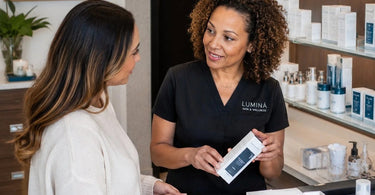
Start your journey to success today... Let's face it, we have all been there. You walk into a store, maybe for a quick brow wax, and suddenly you are being cornered about a 'revolutionary' eye cream that costs more than your weekly grocery budget. The salesperson is hovering, the pressure is palpable, and all you want to do is escape. It is awkward, it is uncomfortable, and as a beauty professional, you know it is the fastest way to lose a loyal client. In the high-stakes world of salons, spas, and barber shops, the pressure to upsell can be intense. But rewarding employees for high-pressure tactics is a one-way ticket to Burnout City, population: your top talent and their best clients. We are here to spill the tea on why the most successful businesses are ditching the hard sell in favor of a culture that rewards authentic, helpful recommendations. And trust us, your bottom line (and your clients' sanity) will thank you.
It is a tale as old as time (or at least as old as commission-based sales): the well-meaning manager offers a bonus for the most products sold, expecting a boost in revenue. Instead, they get a team of well-meaning (or not-so-well-meaning) professionals who start seeing clients not as people in need of a service, but as walking wallets. This is the classic perverse incentive, where the reward for a specific action actually encourages harmful or counterproductive behavior . You know the drill: the esthetician who pushes a premium skincare line on every single client, regardless of their skin type, or the nail tech who insists everyone needs a gel polish upgrade even when a regular polish is perfectly fine. It creates a high-pressure environment that is a major turn-off for clients. Studies have shown that when employees are driven purely by financial incentives for metrics like sales, they can exhibit more troublesome behavior, such as pressuring clients for positive reviews or focusing solely on the reward rather than the quality of the service . The result? A terrible experience for the client and a stressed-out, commission-driven staff. That is a lose-lose if we have ever seen one.
The Dark Side of the Hard Sell: Why Pressure Backfires
Let's get real for a moment. That knot in your stomach when you feel a client is just not interested in your up-sell? That is your intuition telling you that you are compromising the trust you have worked so hard to build. When a lash artist or hairstylist is incentivized purely by the number of add-ons they sell, their focus shifts from providing an exceptional experience to hitting a quota. This is a classic example of a 'perverse incentive.' As one expert put it, paying for a specific outcome, like the number of calls made, might cause employees to do exactly that and nothing else, or worse, do the bare minimum to get the reward . They are going for the quickest route to the prize, even if it means taking the low road . And in our world, the low road leads to bad reviews, zero tips, and a client who will cross the street to avoid making eye contact with your salon.
Think about the waxing specialist who is pressured to sell a post-wax serum to every single client. If they are pushing it on someone with sensitive, acne-prone skin (hey, it happens!), they are not only doing a disservice to the client but also setting them up for a bad reaction. That client is not coming back, and they are definitely telling their friends about their terrible experience. The pressure to make a sale actually sabotages the long-term relationship and the potential for repeat business. As a business owner, you need to ask yourself: "What are we actually incentivizing?" Is it genuine client care, or is it just a numbers game ?
The Sweet Spot: Rewarding the Right Recommendations
So, what is the alternative to this high-pressure doom loop? Simple: you flip the script. Instead of rewarding the outcome (the sale), you reward the behavior (the authentic, helpful recommendation). It is like the difference between a cheesy used car salesman and your best friend who genuinely thinks you would look amazing in that shade of red lipstick. One is trying to make a quick buck, and the other is just looking out for you. And let's be honest, we all want to be the best friend. The goal is to create a culture where your team feels empowered to connect with clients on a human level, listen to their needs, and offer solutions that genuinely solve a problem or fulfill a desire. This is where the magic happens.
This approach is a shift in mindset, from a transactional "I have to sell this" to a relational "I can help with that." Instead of giving your team a script for the hard sell, you give them the freedom to be curious, to ask questions, and to understand the client's lifestyle. Does your massage therapist have a client who complains about chronic back pain? Instead of pushing a random massage oil, they can have a genuine conversation about which products are best for muscle relief. Or maybe your colorist has a client who is concerned about damage? They can recommend a specific hair care regimen that genuinely protects their new color. This is how you build trust. And guess what? Trust leads to loyalty, and loyalty is the gift that keeps on giving. It leads to better reviews, higher tips, and a steady stream of referrals. According to one expert, you want your team to be giving authentic endorsements because they believe in your products and services, not because they are chasing a reward .
Creating a Culture of Connection, Not Commission
How do you build this dream team of authentic, non-pushy professionals? It is all about the culture you create. You need to stop thinking of your employees as order-takers or sales robots and start seeing them as relationship managers. This means investing in their training and empowerment. Encourage them to deepen their knowledge of the products you carry, from ItalWax to top-tier skincare lines like June Jacobs. The more they know, the more confident they will be in making recommendations that actually fit the client's needs. When a brow specialist can confidently explain why one product is better than another, it is not sales pressure; it is expertise.
In this new model, you want to reward the behaviors that drive this positive experience. Maybe you give a bonus for receiving a glowing review that specifically mentions a team member's helpful advice. Or you could tie incentives to positive client feedback and retention metrics. For example, you can reward a massage therapist for the number of clients who re-book, not for how many bottles of massage lotion they sell. According to experts, non-monetary rewards and recognition can be just as motivational as cash. Simple acknowledgments, like a 'Employee of the Month' plaque or a small, meaningful gift, can go a long way in building morale and a sense of purpose . It signals to your team that you value their contribution to the culture, not just their sales numbers.
Real Talk: From Transaction to Transformation
Let's talk about the real-world benefits. When you shift your focus from pressure to connection, you start to build a team that is not only happier and more motivated but also more profitable in the long run. This is the kind of culture that keeps your best estheticians, barbers, and nail techs from jumping ship to your competition. They feel valued for their expertise and their ability to build genuine client relationships. This is especially important in an industry where trust is everything. A client who feels seen and understood is a client for life. Think of it this way: a client who trusts your nail technician will follow them to the ends of the earth. They will buy whatever OPI or CND product they recommend, not because they were forced to, but because their tech is the expert. This loyalty is worth its weight in gold.
The compensation plan is a powerful tool, but it can create unintended consequences . One of the biggest pitfalls is that high-pressure tactics can create a transactional environment where employees feel they are in a 'contract' with the company, rather than a relationship . The goal is to build relationships: between you and your employees, and between your employees and their clients. When your team feels supported and valued, they are less likely to engage in the kind of pressure tactics that can kill a client relationship. They will feel secure in their role, which allows them to put the client's comfort and satisfaction first. It is a simple philosophy, but it is one that is often overlooked in the pursuit of immediate sales goals.
Practical Steps: Building Your Dream Team of Recommenders
So, how do you put this into practice? It starts with a few simple but powerful steps. First and foremost, education is key. Arm your team with the knowledge they need to make great recommendations. This could mean bringing in a rep from brands like ItalWax or Tuel Skincare to do a training session on product benefits and ingredients. When your team understands why a product is good, they can sell it with confidence and authenticity. Next, refocus your goals. Start tracking client retention, review scores, and overall client satisfaction. These are the metrics that reflect a healthy, client-centered business.
Finally, and this is the fun part, create a recognition system that celebrates the 'helpers' on your team. Did a spray tan artist go the extra mile to match a client's perfect shade? Give them a shoutout. Did your front desk team get a glowing review for their warmth and hospitality? Make them the star of the week. This kind of positive reinforcement is what builds a culture of caring. By implementing these strategies, you can steer your team toward the kind of behavior that actually drives your business forward: service, connection, and genuine care. It is a far cry from the high-pressure, numbers-driven approach that stresses everyone out and leaves no one satisfied.
In the end, the choice is clear. You can build a team that is constantly stressed about hitting a quota, or you can build a team of empowered experts who are passionate about helping their clients look and feel their best. One approach is a recipe for burnout and high turnover. The other is the key to a thriving, successful business with a loyal clientele and a team that loves coming to work. And let's be honest, who wouldn't want that? So, ditch the pressure, embrace the connection, and watch your business—and your team—flourish. At Pure Spa Direct, we are here to support you every step of the way with the best products and supplies to help you build the business of your dreams.
