
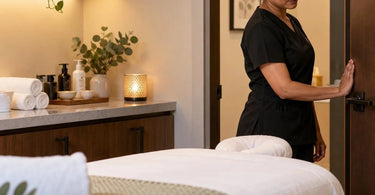
Quality drives growth with this tool... and sometimes the tool is not a fancy machine, a new modality, or a shiny piece of equipment. Sometimes it is simply a treatment room door that closes without announcing itself to the entire building. For spa and salon professionals, quiet door habits are one of those tiny operational details that clients may never compliment directly, yet they absolutely notice when the habit is missing. A peaceful facial, massage, waxing service, or body treatment can feel wonderfully immersive until somebody lets a door swing shut with a THUNK that could audition for a percussion section.
The treatment room is supposed to feel separate from the busy world outside it. Clients may be lying beneath soft Salon & Spa Bedding, enjoying aromatherapy, receiving massage, or settling into a skin treatment while the rest of the business continues moving around them. The door is literally the boundary between those two environments. How the team handles it matters.
A Quiet Door Is Part of the Service
Professionals spend enormous energy perfecting what happens after a client gets onto the treatment table. Lighting is adjusted. Music is selected. Towels are folded. Products are organized. The table temperature is checked. The room smells lovely without smelling like somebody spilled an entire lavender farm.
Then a staff member leaves the room and lets the door slam.
There goes the vibe.
A quiet closing habit should be treated as part of service execution, not merely good manners. If the goal of the service is comfort, privacy, relaxation, or focused personal care, every unnecessary interruption works against that goal. A sudden door impact can pull attention immediately away from the treatment, especially during services where the client has been resting quietly for several minutes.
This matters across treatment categories. A massage client may be deeply relaxed. A facial client may have her eyes covered. A waxing client may already be trying to stay calm. A lash client may be lying perfectly still. Nobody needs an unexpected door slam providing the complimentary adrenaline upgrade.
Sudden Noise Feels Louder in a Quiet Room
Treatment rooms are intentionally calm, which means sudden noises become especially noticeable. In a bustling reception area, a closing door may blend into conversation, phones, footsteps, and general activity. Inside a quiet room, that same sound can feel dramatically more intrusive.
Hard surfaces can make the situation worse. Tile, glass, cabinetry, mirrors, and other smooth materials can reflect sound rather than soften it. Even a beautifully designed room can become acoustically lively if nearly every surface is hard.
Soft materials help create a more comfortable environment. Towels, blankets, upholstered furnishings, curtains, and other textile elements naturally make a room feel and sound softer. Businesses already investing in High-Quality Towels, linens, bolsters, and comfortable furnishings should make sure staff behavior supports that same atmosphere.
The Client Should Not Hear the Building Working
Clients know intellectually that a spa or salon is a functioning business. Employees are walking around. Laundry is being handled. Appointments are starting. Products are being restocked. Reception is answering questions. Other guests are arriving.
They just do not need the full audio tour.
The best treatment environments create a feeling of separation from routine operations. Quiet closing habits help prevent hallway traffic from repeatedly intruding on that feeling. This becomes especially important when several treatment rooms share one corridor or when quiet services are located near louder zones.
If your business combines facials, waxing, massage, nails, hair, or other services under one roof, consider how sound travels between departments. Clippers, dryers, conversations, carts, phones, and closing doors can all become much more noticeable to someone lying quietly in another room.
Products from Spa Essentials for Professionals can help professionals create a polished treatment environment, but operational consistency finishes the job.
Quiet Closing Starts Before the Door Actually Closes
The easiest technique is wonderfully low tech: keep control of the door until it is fully closed.
Staff members often create noise because they push or pull a door and release it before the latch engages. Momentum handles the rest. That may save half a second, but it can turn an otherwise peaceful hallway into a sequence of little bangs throughout the day.
Instead, employees can maintain a hand on the handle, guide the door toward the frame, and gently engage the latch. It quickly becomes automatic once the behavior is practiced consistently.
The same principle applies when entering a room. Opening the door gently prevents hardware from striking a wall, stopper, cabinet, or piece of Luxury Spa Furniture. A calm entrance also feels more professional than swinging through the doorway like somebody has just announced free coffee in the break room.
Teach the Habit to Everyone, Not Just Providers
A treatment provider may understand the importance of quiet because she is directly responsible for the client experience inside the room. Other team members may not automatically make the same connection.
Reception staff, assistants, laundry personnel, managers, cleaning staff, and new employees may all travel through treatment corridors. Quiet zone expectations should therefore be part of general workplace training.
A simple standard can include guiding doors shut by hand, keeping hallway conversations low, avoiding shouted questions between rooms, moving carts carefully, and limiting unnecessary traffic near active treatments.
Make these behaviors routine rather than relying on somebody to whisper an emergency "Shhh!" whenever a guest is relaxing.
Check the Hardware Too
Sometimes employees are trying to be quiet and the door itself is fighting back.
A poorly adjusted closer may pull the door shut too aggressively. Loose hinges may create rattling or squeaking. A latch may require excessive force before it catches. Handles can loosen. Door stops may allow hardware to strike nearby surfaces. Gaps around doors can also allow hallway sounds to travel more easily between spaces.
Walk through the treatment area occasionally and operate each door the way a client or staff member would. Listen rather than simply look. A door that appears perfectly fine can reveal squeaks, rattles, clicks, scraping, or a surprisingly enthusiastic final slam.
Do not ask employees to compensate forever for hardware that needs adjustment. Routine facility maintenance is part of maintaining the atmosphere clients are paying for.
Think About Privacy, Not Just Relaxation
Quiet treatment rooms serve another important purpose: they create a stronger sense of privacy.
Clients may discuss skin concerns, body areas, personal preferences, comfort levels, or other information with a professional during an appointment. Even ordinary conversation can feel personal when someone is receiving a service.
Doors that close properly and staff members who keep corridor noise controlled reinforce the impression that the treatment space is genuinely separate. While quiet door habits are not a substitute for appropriate building design or professional acoustic solutions, they are an easy operational layer that supports discretion.
Businesses should occasionally test what can actually be heard from both sides of a closed treatment room door. Have one team member speak at a normal conversational level inside while another listens from the hall, then reverse the test. You may discover sound paths nobody notices during normal operations.
Do a Five Minute Sound Walk
One of the easiest operational audits costs nothing. Stand inside an unused treatment room, close the door, and have staff conduct normal activities outside.
Listen for doors. Listen for carts. Listen for voices. Listen for reception calls. Listen for cabinets, equipment, laundry movement, and footsteps. Then walk through the hallway while a colleague performs normal setup tasks inside the room.
This simple exercise can reveal surprisingly obvious improvements. Maybe one cabinet closes loudly. Maybe a rolling cart rattles. Maybe employees naturally gather for conversation outside Room 3. Maybe the treatment room door itself sounds like it is personally offended every time somebody closes it.
Once you know where interruptions originate, the team can make practical changes instead of guessing.
Protect the Quiet During Turnover
Room turnover is another moment when noise easily creeps upward. Everyone is moving quickly. Linens are changing. Supplies are being replenished. Containers are being opened. Tools are being returned to their stations.
Efficient does not have to mean loud.
Organizing frequently used treatment room supplies in predictable locations can reduce unnecessary cabinet opening, drawer searching, and hallway trips. Keep enough commonly used disposables and professional essentials available for the shift while following appropriate storage and sanitation practices.
A well organized room lets the provider reset smoothly without turning every appointment change into pit crew practice.
Furniture Placement Can Help Prevent Door Drama
Sometimes noise is caused by the relationship between the door and everything around it. A rolling cart parked too close can get bumped. A stool may end up in the swing path. A hamper may force employees to squeeze awkwardly through the opening. Hooks or hanging items may tap against the door whenever it moves.
Evaluate the doorway as part of your room layout. Professionals shopping for Top-Quality Equipment & Furniture for Spas & Salons should consider not only where equipment fits but also how staff will move through the room during an actual service.
Clear pathways make quiet movement easier and also help the room function more efficiently.
Match the Door Habit to the Entire Sensory Experience
Spa experiences are built from layers. Lighting, temperature, aroma, touch, music, linens, furniture, cleanliness, communication, and movement all influence how the room feels.
That is why something as mundane as a door can matter so much. The door is involved every time the provider enters, exits, retrieves something, escorts a client, or completes turnover. If its movement repeatedly creates noise, the interruption becomes part of the experience whether anyone intended it or not.
If you have carefully selected calming Aromatherapy Supplies, soothing music, comfortable linens, and attractive decor, let the doorway follow the same script.
Create a Quiet Zone Around Active Treatment Rooms
Businesses with multiple service areas can benefit from informally treating treatment corridors as quiet zones. The concept does not require everyone to creep around in socks communicating exclusively through interpretive dance.
It simply means lowering voices, avoiding unnecessary hallway conversations, controlling doors, handling equipment thoughtfully, and relocating louder discussions to appropriate spaces.
Small signs may help remind guests or team members, particularly in larger facilities. Staff training remains more important, however, because employees set the tone through repeated behavior.
Leadership matters here. If managers slam doors, shout down hallways, or hold animated conversations beside occupied treatment rooms, the official "quiet zone" policy will have approximately the authority of a decorative throw pillow.
Make Quiet Part of Opening Checks
Before the first appointment, include a quick treatment room check in the opening routine. Confirm that doors move smoothly, latches work, carts are positioned correctly, music levels are appropriate, and anything likely to rattle or fall has been secured.
Providers can also prepare commonly needed items before the client enters. For massage professionals, keeping Professional Massage & Wellness Products organized and accessible can reduce midservice trips. Estheticians can similarly stage appropriate skincare supplies and tools before beginning.
The fewer avoidable exits during the appointment, the fewer opportunities there are for doors, hallway sound, and outside activity to interrupt the treatment.
The Tiny Details Are Often the Luxury Details
Clients may not leave a review saying, "Five stars because the staff demonstrated superb door control." That would certainly be a memorable review, but probably not.
Instead, they describe the overall experience: peaceful, relaxing, professional, comfortable, thoughtful, private, luxurious. Those impressions are created by dozens of details working together.
A gently closing door communicates care without requiring a conversation. It says the team understands that the client's experience extends beyond the products being used or the technical steps of the service. It includes the environment surrounding every minute of the appointment.
Turn Quiet Closing Into Muscle Memory
The best operational habits are the ones employees eventually perform without thinking. Introduce quiet door handling during onboarding. Demonstrate it during room training. Mention it during opening walkthroughs. Correct noisy habits kindly and immediately rather than allowing them to become normal.
Most importantly, make the expectation practical. Staff should understand why the behavior matters: it protects relaxation, supports privacy, makes the facility feel more polished, and prevents one treatment room from being disrupted by activity around another.
No elaborate initiative is required. No three ring binder. No twelve week Door Excellence Certification Program. Just clear expectations, properly functioning hardware, thoughtful room layouts, and a team that understands that peaceful service continues all the way to the threshold.
Close the Door Like Someone Is Relaxing on the Other Side
Because very often, someone is.
Why Treatment Room Doors Need Quiet Closing Habits ultimately comes down to consistency. Professionals can invest in beautiful Massage Tables & Chairs, premium treatment products, comfortable linens, elegant equipment, and carefully curated surroundings, but small operational interruptions can still shape how the experience feels.
Guide the handle. Control the latch. Check the hardware. Keep treatment corridors calm. Organize rooms so employees do not need unnecessary exits. Encourage every staff member to protect the atmosphere, whether or not they are the person performing the service.
Pure Spa Direct distributes professional spa, salon, massage, waxing, nail, skincare, and wellness supplies for businesses building exceptional client experiences. And while we can help stock the treatment room, the beautifully quiet door closing technique is supplied by your team. Thankfully, shipping on that particular skill is free.
