
Boost revenue with ease... by stopping the madness of every provider doing their own thing. You know the drill. Client books a signature facial. Gets Provider A on Tuesday and loves it. Books the same exact facial next month, gets Provider B, and suddenly it is a completely different experience. Different pressure. Different product order. Different vibes. Now the client is confused, you are frustrated, and your Professional Cleaners and Disinfectants are the only thing getting consistent use around here. The good news? This is fixable. And no, it does not require cloning your best esthetician or hiring a drill sergeant to stand in the break room.
The core problem is simple. Every human being who walks through your door brings their own training, preferences, habits, and quirks. They learned different techniques. They worked at different salons before landing with you. They have their own ideas about what constitutes a good brow wax or a proper massage flow. Without a deliberate framework in place, what you actually have is not one cohesive business. You have five or six independent operators who happen to share a retail space and a front desk.
The solution is not micromanagement. It is not stripping away your team's individuality or forcing everyone to become robots. The solution is a clear, documented, trainable system that ensures every client receives the same core experience no matter whose name is on the appointment. Let us walk through exactly how to build that system without losing your mind or your best people.
Start With a Master Service Protocol Document
Think of this as your salon or spa's recipe book. Not a vague guideline. A real, detailed, step-by-step document that breaks down each service you offer into its component parts. What happens first? What products are used? How long should each phase take? What are the non-negotiables that define the experience?
This is not about turning your team into assembly line workers. It is about establishing a baseline that everyone can execute consistently. Within that baseline, there is still room for personal touch, adjustment for client needs, and professional intuition. But the foundation is solid and shared.
Creating this document takes time. You have to slow down and actually analyze what happens during a treatment. If you have been doing this for years, the steps may feel so automatic that articulating them feels impossible. Break it down anyway. Where does the cleanser go? How many pumps? What is the massage sequence? How do you handle the transition between phases?
Get your most experienced team members involved in this process. They know the nuances. They know where things go sideways. They know which shortcuts compromise results and which ones do not matter.
Document the Details That Actually Matter
There is a difference between a protocol that says "apply cleanser" and one that says "apply two pumps of the Premium Skincare Products for Spas and Salons cleanser using circular motions for sixty seconds, then remove with a warm, damp towel from the Towel Steamers." The first version leaves too much room for interpretation. The second version creates a repeatable standard.
Where do inconsistencies creep in most often? Here are the usual suspects:
Product quantity. One provider uses a dime-sized amount of serum. Another uses a quarter-sized amount. The result is a different texture, different absorption time, and different client experience. Your product budget also takes a hit when half the team is heavy-handed.
Timing. A sixty-minute facial should feel like a sixty-minute facial. If one provider finishes in forty-five minutes and another stretches to seventy-five, clients notice. They may not complain, but they notice.
Pressure and technique. This is especially relevant for massage and body treatments. What does "medium pressure" mean in your spa? Is it a specific numbered scale? A description that providers can calibrate against? Without a shared language, every provider interprets pressure differently.
Sequence. Does the hot towel come before or after the exfoliation? Is the mask applied before or after the massage? Small sequencing differences can create noticeably different results and client experiences.
Conversation. Some providers chat nonstop. Others work in near silence. Neither is wrong, but clients should know what to expect. Define your spa's communication style and train to it.
Build Service Kits That Standardize the Tools and Products
One of the simplest ways to eliminate variation is to control the variables that providers interact with. When every provider reaches for the same product, the same tool, the same applicator, you remove an entire category of inconsistency.
This is where Service Kits become invaluable. A well-designed kit for your signature facial, for example, contains everything needed to perform that service: the correct cleanser, toner, exfoliant, mask, moisturizer, and finishing product, all in the appropriate quantities and packaging.
For waxing services, this approach is transformative. If every provider uses the same Professional Wax Warmers for Salons & Spas set to the same temperature, the same Professional Wax Spatulas and Applicators, and the same Quality Wax Strips & Rolls for Effective Hair Removal, you eliminate a huge amount of variability. The client gets a consistent wax every single time, regardless of who is performing the service.
For nail services, having a standardized setup means every technician uses the same Nail Files & Buffers, the same Cuticle Oil, and the same Manicure Essentials. The client's nails get consistent care whether they see the owner or the newest hire.
Implement a Shadowing and Certification Process
You can write the most beautiful protocol document in the world. If nobody actually learns it, you have wasted your time.
New team members need to be trained on your protocols. Not just handed a binder and told to read it. They need to observe. They need to practice. They need to be observed and given feedback. And eventually, they need to demonstrate that they can execute the service to your standard before they fly solo.
This is not about being rigid or scary. It is about setting clear expectations from day one. "Here is how we do a signature facial at our spa. Here is what the client experience should feel like. Watch three of them. Practice on a model. Then perform one for me, and we will talk about what went well and what needs adjustment."
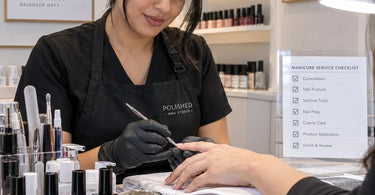
Certification checkpoints work beautifully here. Create a simple checklist for each core service. It covers the important elements: consultation, contraindications, product usage, timing, technique, aftercare recommendations. When a new provider can demonstrate competency on the checklist, they are certified. Until then, they shadow and practice.
This process also gives you a natural way to identify where your protocols need refinement. If every new hire struggles with the same step, the step itself might be the problem.
Use Visual Aids and Quick Reference Cards
Nobody memorizes everything perfectly. That is not a character flaw. It is being human. The solution is to make the information easily accessible.
Print your protocols. Laminate them. Put them at each station or in the treatment room. A quick reference card that outlines the key steps for your signature Hydrodermabrasion or Dermaplaning service saves everyone time and prevents small omissions that add up to big inconsistencies.
These cards do not need to be comprehensive. They need to be useful. A visual sequence. A checklist of products in order. A reminder of timing for each phase. A note about the aftercare recommendation that should always be given.
For waxing protocols, a card that shows the correct temperature range for your ItalWax - Wax and the proper application technique for hard versus strip wax can prevent a lot of errors and unhappy clients.
For lash and brow services, a quick reference for mapping and isolation techniques for Premium Lash Extensions & Supplies for Pros can make the difference between a beautiful set and a sticky mess.
Create a Shared Communication Standard
Consistency is not just about technique. It is about how your team communicates with clients. The consultation. The explanation of what is happening during the service. The aftercare recommendations. The product suggestions. The rebooking language.
When one provider recommends one aftercare routine and another recommends something completely different, the client gets confused. They may follow neither recommendation. They may start to doubt whether anyone on your team actually knows what they are talking about.
Develop approved talking points for each service. These are not scripts that must be delivered word-for-word. They are frameworks that ensure everyone delivers the same core information in their own natural style.
For example, after a waxing service, every client should receive consistent guidance about avoiding heat, friction, and certain activities for the next twenty-four hours. They should all get the same explanation about when to begin exfoliating and why Ingrown Hair Products matter. The specific words can vary. The information cannot.
After a facial, every client should leave knowing what products were used, what to do at home, and when to return. If one provider sends clients home with a detailed written plan and another just says "use moisturizer," the experience is not consistent, and neither is the retail opportunity.
Use a Skills Matrix to Track Competency
A simple spreadsheet or chart can transform how you manage your team's development. List your core services on one axis. List your providers on the other. Mark who is certified on what.
This visual tool does several things. It helps you schedule effectively, because you know who can handle what. It identifies training gaps. It gives new team members a clear roadmap for what they need to learn next. And it makes it obvious when someone needs a refresher on a service they have not performed in a while.
It also helps with client requests. If a client specifically wants a certain provider for their Microdermabrasion, you can quickly see who is certified and who is not. No more awkward moments of assigning a service to someone who has never been trained on it.
Schedule Regular Refresher Training
Skills drift. Habits form. Without periodic recalibration, even well-trained providers can slowly develop their own variations on your protocols. They are not doing it on purpose. It just happens.
Regular, short training sessions prevent this drift. They do not need to be elaborate. Fifteen minutes before opening. A quick demonstration of a technique that has been getting sloppy. A review of a product update. A discussion of a client concern that came up.
Rotate who leads these sessions. Give senior team members the opportunity to teach. It reinforces their own knowledge and builds leadership skills. It also signals that you trust them with the standards you have built together.
For waxing teams, a periodic review of application techniques for Professional Stripless Hard Wax and Soft Strip Wax for Effective Salon Hair Removal can catch bad habits before they become client complaints.
For skincare teams, a refresher on the proper use of Galvanic Machines or High Frequency Machines keeps both results and safety on track.
Gather Client Feedback and Use It
Your clients are your best quality control system. They notice inconsistency, even if they do not always articulate it clearly. A simple post-service survey or a follow-up conversation can reveal patterns.
If multiple clients mention that their facials feel different depending on the provider, that is your signal to dig into the protocols. Is the protocol unclear? Is training insufficient? Is someone not following the standard?
Do not punish providers for feedback. Use it as information. "We heard from some clients that the pressure during our Top Quality Massage Tables Chairs for Relaxation & Wellness services varies quite a bit. Let us do a quick calibration session on pressure and communication."
When clients know that their feedback leads to actual improvements, they become more engaged and more loyal. They feel like partners in maintaining the quality they have come to expect.
Lead With Consistency Yourself
This one is important. If you are the owner or manager, your team watches what you do. If you follow the protocols sometimes and ignore them when you are busy or when you feel like doing something different, they will do the same.
Consistency has to start at the top. When you perform services, follow the protocol. When you train, reference the protocol. When you give feedback, anchor it in the protocol. The document becomes a living, respected tool rather than a dusty binder that nobody opens.
This does not mean you cannot adjust or improve the protocol. It does mean that changes are deliberate and documented, not ad hoc decisions made in the moment. "Great idea. Let us try that for a week and then update the protocol if it works better."
The Bottom Line
Preventing different providers from performing the same service differently is not about eliminating individuality or turning your spa into a factory. It is about creating a foundation of consistency that clients can trust, that your team can execute confidently, and that you can build on.
When clients know that a signature facial is going to be a signature facial no matter who performs it, they relax. They stop worrying about getting "the good one." They just book the service they love and trust that the experience will deliver.
When your team has clear protocols and shared standards, they stop second-guessing themselves. They know what is expected. They know how to deliver it. They can focus their energy on connecting with the client instead of trying to remember whether the mask goes before or after the massage.
And when your business has consistent systems, you can grow without chaos. New hires can be trained efficiently. New locations can be launched with confidence. Your brand becomes known for a reliable, high-quality experience, not a gamble.
Start with one service. Document it. Train it. Certify it. Then move to the next. You do not have to overhaul everything at once. You just have to start.
Your clients will notice. Your team will thank you. And your revenue will follow.
