
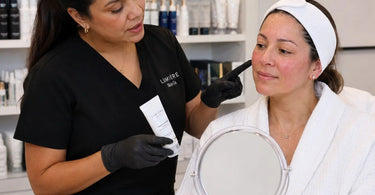
Your success is our priority... and let's be real, a huge part of that success is ensuring your clients leave your spa feeling like a million bucks, not like they just had a close encounter with a blowtorch. Temporary redness after a facial is as common as a client asking for 'a little off the top' and meaning something entirely different. It's a natural, healthy response to increased circulation and the amazing work you've just done. However, for the uninitiated, that post-facial flush can look less like a healthy glow and more like the starting line of a skin catastrophe. This guide is your new best friend for managing expectations, calming client nerves, and turning what could be a moment of panic into a testament to your expertise. After all, a little education goes a long way—and so does a well-timed joke about looking like a tomato for a few hours.
As a beauty professional, you know the drill. You've just performed a flawless facial—maybe using top-of-the-line advanced facial equipment and luxurious products—and your client's skin is glowing. But that glow sometimes comes with a crimson companion. Setting clear expectations for temporary redness isn't just about avoiding a panicked phone call the next day; it's about building trust and showcasing your professionalism. Let's dive into the art of managing the flush.
Why Does My Face Look Like a Strawberry? (The Science of the Flush)
First, let's get scientific for a hot second (pun intended). That rosy hue appearing on your client's cheeks is often a fantastic sign. When you perform a facial, especially one involving gentle warming from a Facial Steamer, exfoliation, or extractions, you're boosting blood circulation . This rush of oxygen and nutrients to the skin's surface is what gives that post-facial glow, but it also causes capillaries to dilate, resulting in temporary redness . Think of it as your skin doing a happy dance.
This is especially true after treatments designed to slough away dead skin cells like Microdermabrasion or a Hydrodermabrasion session. It means the treatment is working! However, for some clients, particularly those with sensitive or reactive skin, the flush can be a bit more pronounced or last a little longer . It's our job to differentiate between the normal, expected flush and a potential over-reaction, and to educate our clients accordingly.
Your Client's Guide: From 'Lobster' to 'Luminous'
This is the section you can practically read to your clients or turn into a handy handout. It's all about setting those expectations in a way that's informative, reassuring, and maybe a little bit funny.
1. The Normal Timeline: When Will This Fade?
So, how long will your client look like a sun-kissed cherub? Generally, mild to moderate redness after a standard facial will subside within a few hours . For more intensive treatments with heavy exfoliation or deep extractions, it can take up to a full day to settle down completely . The key word here is temporary. This is not a permanent condition; it's just your skin's way of saying, "Wow, that was a great workout!"
Severe redness or symptoms that last for more than a couple of days could be a sign of irritation or a reaction, and should be evaluated . But for the majority of clients, that rosy look will be a distant memory by the time they're ready for their next Netflix binge.
2. Immediate Post-Facial Care: Don't Sabotage the Glow!
The work doesn't end when the facial is over. How your client treats their skin in the next 24-72 hours can make or break their results. Here are the absolute must-follow rules:
- Hands Off! This is the golden rule. Professional Cotton Products are for your hands, not theirs. They must avoid touching, picking, or scrubbing their face to prevent transferring bacteria or causing scarring .
- Makeup-Free Zone: As much as they might want to cover up, applying makeup immediately after a facial can clog those freshly cleaned pores and lead to breakouts . Ideally, they should wait at least 24 hours, or use a gentle mineral formula if they absolutely must.
- Skip the Sweat: Strenuous exercise, hot yoga, saunas, and steam rooms are a big no-no for 24 hours . Sweat introduces bacteria to vulnerable skin and can exacerbate inflammation. They don't want to undo all your hard work for a spin class.
- Cool It: If the redness is uncomfortable, suggest a cool compress to soothe the skin. It helps constrict those blood vessels and provides instant relief . No ice packs directly on the skin, though—that can cause more harm than good.
3. Skincare Sabotage: What to Avoid After a Facial
We've already mentioned the importance of a gentle touch, but the products they use at home are equally critical. You've just spent time and expertise strengthening their skin barrier. The worst thing they can do is assault it with harsh actives.
- Bye-Bye, Exfoliants: This means scrubs, AHA/BHA acids, retinol, and peels for at least 3-5 days post-treatment . Their skin is already freshly exfoliated; adding more is just overkill.
- Keep it Simple: Advise them to stick to a gentle cleanser, a soothing Premium Skincare Products moisturizer, and that all-important sunscreen .
- SPF is Non-Negotiable: Freshly treated skin is more susceptible to sun damage and hyperpigmentation . They need a broad-spectrum sunscreen with SPF 30 or higher, every single day. A physical blocker like zinc oxide is a great choice for sensitive post-facial skin .
Purging vs. Breakouts: The Plot Thickens
One of the trickiest concepts to explain is the difference between a skin 'purge' and a 'breakout.' Your client might see a few new bumps a few days after their facial and immediately think they've had a bad reaction .
A purge is a normal, temporary event where your facial accelerates the skin's cell turnover, bringing hidden congestion to the surface faster than it normally would . These are often small, uniform bumps or whiteheads that clear up within a few weeks, leaving behind clearer, smoother skin . It's essentially a detox!
A breakout, on the other hand, is usually a sign of irritation, an allergic reaction, or clogged pores from using the wrong products post-facial. Breakouts often feel tender, inflamed, and linger for more than two weeks . If your client is concerned, remind them that if the 'purging' is severe or doesn't improve, it's always best to check in with their esthetician.
Equipping Your Practice for Flawless Facials
To deliver the best possible service and manage expectations effectively, having the right tools and products at your fingertips is essential. Pure Spa Direct offers everything you need to elevate your facial services, from essential machines to top-tier skincare. You can even take your client's experience to the next level with tools like a Oxygen Facial Machine for that extra, calming glow.
Remember, you are the expert. By educating your clients, setting clear expectations, and providing stellar service, you can transform the temporary redness from a source of anxiety into a badge of honor—proof of a job well done. And with Pure Spa Direct as your wholesale partner, you'll always have the best products and equipment to support your craft.
)