
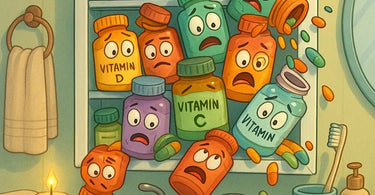
Proven results await you... and they might be hiding in your bathroom medicine cabinet right now, slowly losing their potency with every steamy shower your clients take. If you're selling premium vitamins and supplements to your wellness clients only to have them store these products in the worst possible environment, you're not just doing their skincare routine a disservice—you're literally watching your retail profits evaporate into the humid bathroom air. Let's face it: we've all seen those expensive vitamins perched proudly in medicine cabinets, right next to the toothpaste and mouthwash, completely unaware they're living in a tropical paradise that's systematically destroying their effectiveness. The good news? This storage disaster is completely preventable, and you're about to become the hero who saves your clients from wasting their wellness investments while boosting your retail credibility in the process.
As spa professionals, we spend countless hours curating the perfect product selections for our clients—from high-performance skincare lines to specialized supplements that complement our services. But what happens after those products leave our carefully controlled environments? If your clients are storing their vitamins in medicine cabinets (and let's be real, most are), those carefully selected products are degrading faster than a cheap gel polish in a chlorinated pool. Time to school our clients on proper product storage—because an educated client is a loyal client who keeps coming back for more of your expertise (and your products!).
The Science Behind Supplement Degradation: Why Humidity Is the Enemy
Imagine this: your client invests in a high-quality vitamin C supplement to boost their collagen production and enhance that post-facial glow. They proudly display it in their medicine cabinet, where steamy showers create a lovely sauna-like environment several times a day. Little do they know, each shower is systematically breaking down the very molecules they paid good money for. This process, known as deliquescence, causes water-soluble vitamins like Vitamin C and B complex to absorb moisture from the air, leading to chemical changes that reduce their potency and effectiveness.
The same goes for probiotics, enzymes, and even some herbal supplements—heat and humidity are like kryptonite to their stability. While they might not become dangerous (expired vitamins don't generally become toxic), they definitely become less effective, which means your clients aren't getting the results they paid for. And when supplements don't work, guess who they blame? Not the medicine cabinet—they blame the product, and by extension, you, the professional who recommended it.
Where SHOULD Vitamins Be Stored? (Spoiler: Not Near the Toilet)
If the medicine cabinet is the worst place for vitamins, where should your clients be storing them? The ideal storage location is in a cool, dry place away from direct sunlight. Think bedroom drawers, linen closets, or even a dedicated storage box in the pantry—anywhere that doesn't experience the temperature fluctuations and humidity spikes that bathrooms and kitchens do.
Here's a quick checklist to share with your clients for optimal vitamin storage:
- Cool and dry: Avoid areas near ovens, dishwashers, showers, or windows
- Consistent temperature: No wild swings from hot to cold
- Dark environment: Some vitamins degrade when exposed to light
- Original containers: Those dark bottles aren't just for looks—they protect contents from light damage
- Child-proof: Vitamins should be stored out of reach of children and pets
While we're talking about proper storage, let's not forget about your professional products too. Those massage oils, cuticle treatments, and facial serums in your treatment rooms also deserve proper storage conditions to maintain their effectiveness and shelf life.
The Retail Opportunity: Educating Clients Boosts Sales
Here's where the magic happens: when you position yourself as an expert who cares about client results beyond the treatment room, you build trust that translates into increased retail sales. Instead of just selling vitamins and sending clients on their merry way, take two extra minutes to explain proper storage techniques. This simple act demonstrates your expertise and genuine concern for their results—which makes them more likely to trust your recommendations and become repeat customers.
Consider creating a simple handout or digital guide that explains proper product storage for all the retail items you sell—not just vitamins. Include information about how to store gel polishes (away from UV light), essential oils (in dark, cool places), and even professional towel warmers (proper maintenance for longevity). This comprehensive approach positions you as the authority on all things beauty and wellness, not just services.
You can even turn this into a retail opportunity by offering stylish storage solutions as add-ons to vitamin purchases—think attractive airtight containers or decorative boxes that look beautiful on bedroom dressers. Because let's be honest: nobody wants to show off a medicine cabinet full of half-used products, but a beautiful wellness station in the bedroom? That's Instagram-worthy.
Beyond Vitamins: Other Products That Hate Humidity
While we're focused on vitamins, let's not forget about other products that suffer in humid environments. Your clients might not realize that many of their beauty favorites are also humidity-haters:
- Probiotics: These live organisms are particularly sensitive to heat and moisture
- Clay masks: Humidity can cause them to harden or become less effective
- Sea salt sprays: They might clump up in humid conditions
- Loose powders: From mineral makeup to setting powders, humidity causes clumping
- Certain serums: Some active ingredients degrade faster in warm, moist environments
This is another educational opportunity—when clients purchase these products from you, share quick storage tips that will help them get the most from their investment. Your attention to these details sets you apart from big box retailers and online stores that simply process transactions without providing personalized advice.
Creating a "Storage Sanctuary" in Your Spa
While we're talking about proper storage, let's take a quick look at your own professional environment. The same principles that apply to vitamin storage at home also apply to your professional products at the spa or salon. Those expensive wax products, lash adhesives, and disinfectants all have optimal storage conditions that maintain their effectiveness and shelf life.
Take a quick audit of your storage areas:
- Are your treatment products stored away from direct sunlight?
- Are your massage lotions and oils in a temperature-stable environment?
- Are your gel polishes standing upright with caps tightly closed?
- Are your pre-wax products stored according to manufacturer instructions?
Proper product storage isn't just about client education—it's about protecting your own investment in professional products and ensuring consistent results for every service you provide. Plus, when clients see your organized, professional storage systems, it reinforces your expertise and attention to detail.
The Conversation Starter: How to Bring Up Storage Without Sounding Preachy
Okay, so we know proper storage matters—but how do you bring this up with clients without sounding like you're criticizing their bathroom organization skills? Try these conversation starters:
"I'm so excited you're taking this vitamin to enhance your results! Just a quick tip—to make sure you get the maximum potency from each capsule, you'll want to store it in a cool, dry place like your bedroom drawer rather than the bathroom. The humidity from showers can actually reduce its effectiveness over time."
Or, when ringing up multiple products: "I've put together some quick storage tips for these products so you get the best results from each one—would you like me to email them to you?"
See? Helpful, not critical. Educational, not preachy. You're not questioning their life choices—you're enhancing their wellness journey with your professional expertise.
Beyond Storage: Other Vitamin Myths to Debunk
While we're on the topic of vitamin education, here are a few other common misconceptions you can help clarify for your clients:
- Expiration dates matter: While vitamins don't typically become dangerous after expiration, they do lose potency
- More isn't always better: Megadoses of certain vitamins can be unnecessary or even harmful
- Timing can impact effectiveness: Some vitamins are better absorbed with food, others on an empty stomach
- Quality varies widely: Not all vitamin brands are created equal—which is why you've carefully selected the ones you carry
Each of these talking points represents an opportunity to demonstrate your expertise and build trust with your clients. The more you educate, the more they'll see you as a wellness resource rather than just a service provider.
The Bottom Line: Better Storage = Better Results = Happy Clients
At the end of the day, our goal as wellness professionals is to deliver transformative results that keep clients coming back. When we pay attention to details like product storage—both in our facilities and in our clients' homes—we ensure that every product we recommend delivers on its promises. Happy clients who see results from their retail purchases become loyal clients who trust your recommendations and refer their friends.
So the next time you sell a bottle of vitamins or supplements, take that extra moment to explain proper storage. That simple act of education might seem small, but it could be the difference between a client who gets mediocre results and never buys again versus one who experiences transformative benefits and becomes a customer for life.
Now if you'll excuse me, I need to go move my own vitamins out of the medicine cabinet—because even wellness professionals need occasional reminders to practice what we preach!
)