
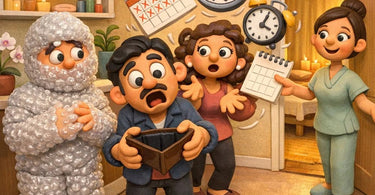
Enhance services with this pro favorite: the art of turning a client's hesitant "I can't" into a resounding "When can I book?" We hear them all the time in our industry—the well-meaning but totally mistaken reasons people give for skipping the massage therapy their body is screaming for. Maybe they think they're too ticklish, or they're worried about being unclothed, or they're convinced their busy schedule is an immovable barrier. As professionals, these objections aren't roadblocks; they're golden opportunities for education and connection. Think of them as free marketing content just waiting to be addressed! By proactively debunking these common myths on your website, social media, and in conversation, you don't just fill slots on your calendar; you build trust and position yourself as the knowledgeable, compassionate expert in your community. Let's dive into the top three massage myths and dismantle them with humor, facts, and a whole lot of "aha!" moments.
Picture this: a potential client is browsing your site, intrigued but on the fence. They land on a blog post that speaks directly to their secret worry. Suddenly, you're not just a service provider; you're a problem-solver who gets it. That's the power of objection-based content. It meets people where they are—in their uncertainty—and gently guides them toward the solution you offer. So, grab your favorite massage lotion, get cozy, and let's transform those pesky objections into your next fully booked week.
Objection #1: "I'm Too Ticklish/Too Sensitive/I Can't Handle Deep Pressure."
Ah, the classic. This objection often comes from a place of fearing the unknown or one bad experience with a practitioner who used a "one-pressure-fits-all" approach. The client imagines a session filled with either unbearable tickling or being pummeled into the table like pizza dough. Cue the dramatic music!
Here's your debunking script: "Let's set the record straight—a therapeutic massage is a collaboration, not an endurance test. Your comfort is the absolute priority." Explain that communication is key. A great therapist will always check in about pressure, using a scale of 1 to 10. The goal is "therapeutic pressure," which is the perfect balance of effective and comfortable. For ticklish clients, firmer, broader, slower strokes are usually the answer, avoiding light, feathery touches. For those with high sensitivity, modalities like aromatherapy or gentle myofascial release can work wonders. It's all about customization.
**Pro-Tip for Your Business:** Showcase this adaptability! In your marketing, highlight phrases like "fully customized sessions," "client-led pressure," and "gentle therapeutic options." Train your team to ask detailed questions during the intake. And stock your treatment room with tools that offer variety, like hot stone massage kits for soothing, broad heat or TheraTools for precise, controlled myofascial work. When a client realizes the session is in *their* control, the objection melts away faster than stress under a warm heated towel.
Objection #2: "I Don't Want to Get Undressed / I Feel Self-Conscious."
This is a huge one, and it speaks to vulnerability. The thought of lying nearly naked under a sheet can make even the most confident person a little anxious. They worry about body image, what the therapist is thinking, or just general modesty.
Your compassionate rebuttal: "Your privacy and comfort are non-negotiable, and you are *always* in charge of your clothing level." Clearly explain that they can undress to their level of comfort. Many therapeutic techniques can be performed over clothing or with discreet draping. The standard sheet drape is designed to only expose the area being worked on—the rest of you stays securely covered. Emphasize the professional, clinical nature of the environment. It's not about the body; it's about the muscles and fascia beneath it. A therapist's focus is on postural alignment and tension patterns, not judgement. You can even use a little humor: "We've seen it all, and we're far more focused on that knot in your shoulder that looks like a golf ball than anything else!"
**Pro-Tip for Your Business:** Build trust before they even arrive. Use photos of your serene, professional treatment rooms on your website. Have a clear "What to Expect" page that details the draping process. Invest in high-quality, opaque spa bedding and luxurious towels that feel secure. Consider offering modalities that are traditionally done clothed, like chair massage or cupping therapy (which can be done over light clothing), as a low-commitment introduction. When you normalize and address the anxiety upfront, you create a safe space that welcomes everyone.
Objection #3: "I Don't Have the Time or Money."
The granddaddy of all objections. People view massage as a luxury—a frivolous indulgence for when they've "earned it" or won the lottery. They see a 60-minute session as a huge time-suck and the cost as prohibitive. What they're missing is the investment perspective.
Time to reframe: "Let's think of massage not as a cost, but as an investment in your ability to *make* money and *enjoy* your time." Break it down. That one hour of massage can prevent days of pain-induced low productivity, missed workouts, or even costly medical interventions down the line. Ask them: "What is an hour of your pain-free, focused energy worth?" As for time, be flexible! Offer 30-minute targeted sessions for the neck and shoulders or feet. Promote "power hour" packages that combine a shorter massage with another service. Highlight the efficiency of regular maintenance—just like changing the oil in your car prevents engine failure, regular massage prevents major musculoskeletal breakdowns.
**Pro-Tip for Your Business:** Create service tiers to match different budgets and schedules. Offer express chair massage packages for corporate clients or lunch-break specials. Sell packaged series that lower the per-session cost and commit clients to their own wellness. Use your retail space to extend the treatment at home; a massage bolster for their office chair and a tube of Biotone massage cream can provide daily relief. Educate clients that consistency is cheaper than crisis management. Frame it as essential self-care, not a spa-day splurge.
Turning Debunking into Dynamic Content
Now that we've armed you with the arguments, how do you get this wisdom in front of the people who need it? Get creative! This isn't a one-and-done blog post (though this is a great start). Repurpose this core message across all your channels.
Create short, funny videos for Instagram or TikTok debunking one myth in 30 seconds. ("Myth: You have to be naked. Truth: You call the shots! #massagemyths #spalife"). Design beautiful graphics for Pinterest with quick facts. Use these topics as email newsletter themes: "Too Ticklish for Massage? Think Again!" Train your front desk staff to gently address these concerns when they hear them on the phone. Have a beautifully designed FAQ section on your website that covers these points. Every time you address an objection, you're removing a barrier between a potential client and the relief they deserve.
Remember, your expertise is your superpower. By listening to the hesitations and answering them with empathy and knowledge, you do more than book appointments—you become a trusted wellness partner. And that is the very best business model of all. Now, go forth and debunk! Your future clients (with their relaxed, knot-free shoulders) will thank you.
%22%20-%20And%20How%20to%20Turn%20Those%20'No's%20Into%20Booked%20Appointments)