
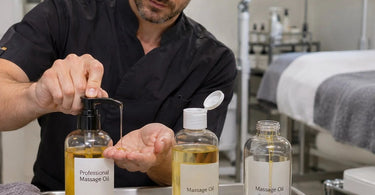
Take your results further... by giving that hardworking bottle of massage oil a little more attention. It might not be the glamorous star of your treatment room, but its design can make a surprising difference in how much product your business uses, spills, and throws away. A gorgeous massage oil can deliver an exceptional client experience, but if its bottle releases too much product, leaks between services, or traps the last few ounces, your profits could be slipping away one slippery drop at a time. And nobody opened a spa to watch expensive massage oil slowly decorate the countertop. Understanding why massage oil bottle design can affect product waste helps massage therapists and spa owners make smarter purchasing decisions without compromising the quality of their services.
The good news? Reducing massage oil waste does not require cutting corners on treatments or asking your therapists to perform miracles with three drops of oil. Often, small improvements in dispensing, bottle shape, pump compatibility, and daily handling can make product usage more predictable. Let's explore the bottle features that matter and how to turn better packaging decisions into a more efficient professional massage operation.
Why Massage Oil Bottle Design Matters More Than You Think
Massage oil packaging has a much bigger job than simply keeping the oil inside until someone needs it. In a busy treatment room, the bottle must allow convenient dispensing, withstand repeated handling, minimize accidental spills, and help therapists access the product they have already paid for.
Consider how many times a massage therapist reaches for oil during a full-body treatment. Every squeeze, pour, or pump creates another opportunity to dispense slightly more than necessary. Multiply those moments by several therapists, multiple treatment rooms, and a full appointment calendar, and even modest inconsistencies can become meaningful operating expenses.
Different bottle designs also influence how therapists work. A container that requires two hands, produces unpredictable splashes, or becomes slippery during services can interrupt the treatment flow. A dependable dispenser makes the process easier and helps the therapist maintain attention on the client rather than negotiating with an uncooperative plastic bottle.
For spa owners purchasing professional massage and wellness products, packaging deserves consideration alongside the oil's ingredients, texture, glide, and price.
1. Wide Bottle Openings Can Turn a Small Pour Into a Big Expense
One of the most common dispensing problems involves bottles with openings that release more oil than the therapist intended. A simple pour may seem convenient, but controlling the exact amount can be difficult, particularly when the bottle is full or the therapist is working quickly.
A small tilt might produce a modest portion. Another tilt at a slightly different angle could send significantly more oil into the therapist's palm. Suddenly, there is enough product for a massage, a second massage, and possibly a very enthusiastic slip-and-slide.
Excess oil does not automatically improve a massage. Different techniques and treatment styles require different amounts of glide, and dispensing more than the service needs can create unnecessary waste.
For professionals using pour bottles, a properly fitted dispensing cap or controlled-flow top may make portions easier to manage. The goal is not to restrict the therapist but to provide a predictable starting amount that can be adjusted throughout the service.
2. Pump Dispensers Make Portion Control Easier
A well-matched pump dispenser can be one of the simplest improvements to a professional massage setup. Instead of tipping a bottle and estimating the quantity, therapists can use measured, repeatable pump strokes to create a more consistent dispensing routine.
For example, a therapist might determine that a particular treatment commonly requires a certain number of pump strokes as a starting point. The precise amount will depend on the massage technique, treatment length, oil formulation, and individual client needs, but the dispensing process becomes easier to evaluate.
Pure Spa Direct carries dispensing accessories such as the Pump Only for 1 Gallon Bottle and the Pump for 128oz Gallon Oil and Lotion Bottles. These types of accessories can make dispensing from compatible bulk containers more convenient.
Before purchasing a replacement pump, check its stated container compatibility, neck fit, dip tube length, and suitability for the product's viscosity. A pump advertised for a gallon container is not automatically compatible with every gallon bottle.
Also, remember that pumps differ in the volume they dispense per stroke. Two pumps may look nearly identical while delivering noticeably different amounts. Testing a pump with the intended oil is a smart way to establish practical portion guidelines.
3. Pump Output Can Be Just as Important as Having a Pump
Not every pump is a portion-control superstar. Some release a tiny amount with each press, while others deliver a generous serving that might be excessive for a small treatment area.
If a pump dispenses too much product, therapists may release more oil than they can comfortably use. If it dispenses too little, they may need repeated presses, interrupting their rhythm and potentially encouraging inconsistent handling.
A practical pump should provide an amount that works with the treatments performed most frequently in your spa. A full-body relaxation massage and a focused neck-and-shoulder session may benefit from different dispensing approaches.
Evaluate pump performance by checking whether each full stroke produces a reasonably consistent amount. Pay attention to splattering, delayed drips, sticking mechanisms, and whether partial strokes produce predictable results.
A dispensing system that works smoothly helps therapists spend less time managing supplies and more time providing excellent service.
4. Bottle Shape Influences How Much Product You Can Actually Use
Have you ever reached the end of a massage oil bottle only to discover that there is still a frustrating amount of oil hiding inside? The pump has stopped working, but the bottle clearly has not received the memo that it is supposed to be empty.
Bottle shape can affect how much product remains difficult to access. Containers with broad shoulders, deep recesses, or unusual bottoms may collect residual oil in areas that dispensing equipment cannot easily reach.
The position and length of the pump's dip tube matter, too. A tube that does not reach the appropriate depth may stop drawing oil while usable product remains. A tube that bends awkwardly against the bottom can also interfere with dispensing.
Choose packaging and dispensing accessories designed to work together. Avoid altering pumps or dip tubes unless the manufacturer specifically permits those adjustments.
When comparing containers from the Bottles & Jars collection, look for practical shapes that are stable, convenient to handle, and compatible with your preferred dispensing method.
Recovering more usable product from each container can improve purchasing efficiency, particularly when your spa uses premium oils across a high volume of appointments.
5. Leaking Caps and Dripping Nozzles Create Hidden Waste
Sometimes the biggest problem is not how much oil leaves the bottle during a treatment. It is how much escapes when nobody is asking for it.
A loose cap, damaged seal, or dripping pump nozzle can create small but recurring losses. The bottle may leave oily rings on countertops, transfer residue onto nearby supplies, or make storage shelves difficult to maintain.
Even if each individual drip seems insignificant, frequent cleanup requires additional supplies and staff time. Oil on the outside of a bottle can also make it harder to grip safely.
During routine supply checks, inspect bottles for sticky collars, oil around the cap, cracks, damaged pump components, and unexplained residue beneath the container.
Replace faulty dispensing components rather than accepting constant leakage as part of normal spa life. Your massage oil belongs in the treatment, not underneath the bottle conducting its own unauthorized spa service.
6. Bottle Stability Can Help Prevent Expensive Spills
A bottle that tips over easily is a risk to both product inventory and treatment room cleanliness. Tall, narrow containers may be convenient to store, but their stability depends on the base, overall construction, fill level, and placement.
Massage treatment spaces often contain several essential items within reach, including towels, lotions, oils, and other professional supplies. A poorly positioned bottle can be knocked over during a busy session or while preparing the room for the next client.
Choose a stable dispensing setup and place containers on secure, level surfaces where they are unlikely to be bumped. Avoid balancing bottles near table edges, electrical equipment, or areas where an accidental spill could create a slipping hazard.
For professionals furnishing treatment rooms, appropriately arranged massage tables and chairs and accessible work surfaces can support a cleaner, more efficient layout.
A stable bottle might not be the most exciting purchase on your supply list, but neither is replacing an entire container of oil after it performs a dramatic dive onto the floor.
7. The Right Bottle Size Can Reduce Unnecessary Handling
Large containers are often practical for professional massage businesses because they allow bulk purchasing and can reduce the frequency of restocking. However, a heavy gallon bottle may not be ideal for direct use during every treatment.
Repeatedly lifting, tilting, and pouring from a large container can increase the possibility of overpouring or accidental spills. Smaller working bottles may be more manageable at the treatment station when paired with suitable dispensing caps or pumps.
One approach is to maintain properly stored bulk inventory and supply treatment rooms with appropriately sized working containers. The best configuration depends on the size of your operation, manufacturer instructions, and your sanitation procedures.
If transferring products between containers is permitted, use clean, compatible, appropriately labeled containers and follow the product manufacturer's handling and storage guidance. Do not mix different products or combine old residual product with new product simply to avoid washing a bottle.
Explore massage oils, lotions, and creams for therapists to compare professional product formats and determine what works best for your business.
8. Bottle Material and Visibility Affect Inventory Management
Packaging material can also influence how easily staff members monitor product levels and handle containers throughout the workday.
Transparent or translucent bottles can make it easier to see when supplies are running low. Opaque containers may require closer inventory checks, particularly when the remaining volume is difficult to estimate by weight.
However, visibility is not the only consideration. Some oil formulations require packaging that helps protect their contents from light or other environmental conditions. Always prioritize the manufacturer's packaging and storage recommendations over convenience.
The material should also be compatible with the oil, easy to handle, and suitable for routine professional use. Certain formulations may interact differently with different plastics, seals, or dispensing components.
For inventory management, establish a simple checking routine rather than relying on a therapist discovering an empty bottle halfway through an appointment.
Because apparently the most popular time for a massage oil bottle to run dry is precisely when everyone is fully booked.
9. Proper Dispensing Practices Support Product Hygiene
Reducing product waste is important, but cleanliness and appropriate product handling must remain the priority.
A dispenser should help minimize unnecessary contact with the contents of the bottle. Avoid touching a nozzle directly to a client's skin or allowing contaminated hands to contact dispensing surfaces.
Follow the manufacturer's instructions and applicable infection-control requirements for cleaning pumps, managing refillable containers, and dispensing products. If a container is intended for single use or is not suitable for refilling, do not reuse it.
For treatments that use individual portions, dispense the expected amount into a suitable clean container before beginning the service. Do not return leftover product from a used treatment dish to the original bottle.
Businesses can also stock appropriate professional cleaners and disinfectants for treatment surfaces, selecting and using products according to their labels and the surfaces being cleaned.
Waste reduction should always work alongside proper sanitation, never replace it.
10. How to Calculate Whether Your Massage Oil Bottles Are Costing You Money
You do not need an elaborate accounting system to evaluate how dispensing affects massage oil costs. Start by determining the purchase cost of your oil and estimating the amount used per treatment.
Imagine your spa purchases massage oil for $80 per gallon. Since a U.S. gallon contains 128 fluid ounces, the product cost is approximately $0.63 per fluid ounce.
If inefficient dispensing causes an average of half a fluid ounce of avoidable waste per service, that represents about $0.31 in wasted oil per appointment.
At 20 massage appointments per day, the estimated waste would be approximately $6.25 daily. Over 25 operating days, that becomes approximately $156.25 in unnecessary product expense.
Across a year of similar appointment volume, the total would approach $1,875.
These numbers are an illustration, not a prediction of what your spa will save. Actual results depend on product cost, bottle performance, treatment requirements, and whether the estimated waste can genuinely be eliminated.
The important takeaway is that small differences in dispensing can become financially meaningful at higher service volumes.
11. Create a Simple Massage Oil Waste Audit
Before replacing every bottle in your treatment rooms, try a short evaluation of your current dispensing practices.
Step 1: Identify your most frequently used oils. Focus on high-volume products first, since small improvements in their handling may have the greatest impact.
Step 2: Review the dispensing equipment. Check for inconsistent pump strokes, oversized openings, leaks, unstable bottles, and remaining oil that cannot be dispensed normally.
Step 3: Establish a treatment baseline. Measure typical oil usage for comparable services while allowing therapists to adjust product quantities to the needs of each client.
Step 4: Test an alternative setup. Compare your existing bottle with an appropriately matched pump or controlled dispensing container. Measure the actual quantity delivered rather than assuming one pump is automatically more economical.
Step 5: Track results. Record product consumption, spill incidents, therapist feedback, and any changes in treatment workflow over several comparable service days.
Step 6: Standardize what works. If a dispensing method reduces unnecessary waste without affecting treatment quality or hygiene, incorporate it into staff training and purchasing decisions.
This type of evaluation can also reveal opportunities to improve how other spa body treatment products are dispensed.
12. Train Your Team Without Making Product Conservation Awkward
Therapists should feel empowered to use the amount of oil necessary for a comfortable, effective treatment. Nobody wants a massage where every drop is monitored as though it were liquid gold.
Instead of setting unrealistic limits, provide practical dispensing guidelines. Explain how the chosen pumps work, demonstrate a reasonable starting quantity, and encourage therapists to add more oil when the treatment requires it.
Different massage modalities require different levels of friction and glide. Deep tissue work, relaxation massage, and other techniques may not use identical quantities of product.
Ask your team for feedback. Therapists are often the first to notice when a pump sticks, a bottle leaks, or a container becomes difficult to use near the end.
Standardizing equipment can also make training easier. When treatment rooms use similar compatible dispensers, therapists can develop more predictable routines instead of adjusting to a completely different bottle in every room.
Simple, sensible procedures encourage consistency without making the treatment experience feel restrictive.
13. Look Beyond the Bottle Price When Choosing Massage Oil Packaging
The least expensive container is not necessarily the most economical option over time. A bottle that costs less initially but routinely leaks, spills, or leaves significant residual product may create expenses that outweigh its purchase-price advantage.
When evaluating packaging, consider dispensing consistency, replacement pump availability, stability, ease of cleaning, compatibility with the oil, and how effectively the contents can be accessed.
Also consider how much labor the design requires. A dispenser that frequently jams or needs repeated wiping adds small interruptions to an already busy workday.
Explore options from professional massage brands such as Bon Vital, Biotone, and Soothing Touch while comparing product formulations, packaging formats, and accessories that suit your specific services.
The goal is to find a practical combination of oil quality, dispensing performance, and long-term value.
14. Build a Treatment Room That Makes Waste Reduction Easy
Even an excellent bottle design works best when the rest of the treatment room supports efficient product handling.
Place massage oil where it is easy to reach without knocking over nearby items. Keep the dispenser clean according to the manufacturer's instructions, and provide adequate space for any portioning containers required by your service procedures.
Organize your spa essentials so therapists do not have to search through clutter while managing an oily bottle.
Maintain appropriate professional towels, treatment supplies, and cleaning materials to support smooth room turnover.
And if a bottle repeatedly becomes slippery or difficult to handle, investigate the dispensing setup rather than assuming your staff simply needs to be more careful.
Good equipment should make excellent habits easier, not turn every appointment into a test of hand-eye coordination.
Frequently Asked Questions About Massage Oil Bottles and Product Waste
Are pump bottles always better than pour bottles?
Not necessarily. Pumps can provide more consistent portions, but their effectiveness depends on pump output, compatibility, and product viscosity. A properly designed controlled-flow pour bottle may work well for certain treatments.
Can changing a massage oil bottle really save money?
Yes, potentially. If a new dispensing setup reduces spills, excessive portions, or inaccessible residual oil, it may lower product consumption. The actual savings should be measured against your existing usage and equipment costs.
Should every massage therapist use the same amount of oil?
No. Product needs vary by treatment technique, session length, skin characteristics, and client preferences. Consistent dispensing helps with measurement, but it should not replace professional judgment.
Can I use any replacement pump on a gallon bottle?
No. Verify neck compatibility, dip tube length, viscosity suitability, and manufacturer instructions before selecting a replacement.
Is it safe to refill massage oil bottles?
Only when the container is designed for refilling and the product manufacturer's instructions and applicable sanitation requirements allow it. Use appropriate cleaning, labeling, and handling procedures, and never return used product to a supply container.
What is the easiest way to identify massage oil waste?
Start by observing spills, dripping nozzles, inconsistent dispensing, and product remaining in containers that can no longer dispense normally. Then compare actual oil consumption across similar services.
Small Bottle Changes Can Make a Big Difference for Your Spa
Massage oil bottle design might seem like a tiny operational detail, but small details are often where busy spa businesses discover opportunities to improve efficiency. A suitable pump, stable container, controlled opening, and well-designed dispensing routine can help reduce avoidable waste while supporting a smooth professional treatment experience.
The objective is not to use the smallest possible amount of oil. It is to use the right amount for each service and prevent unnecessary losses before, during, and after treatment.
At Pure Spa Direct, we help spa and massage professionals shop for the products and supplies that support their businesses. Explore our selection of professional massage oils, lotions, and creams, browse bottles and jars, and discover additional salon and spa business supplies to build a more organized, efficient treatment room.
Because every drop of massage oil should have a purpose. Preferably one that involves a happy client, an excellent treatment, and absolutely no puddles on the counter.
