
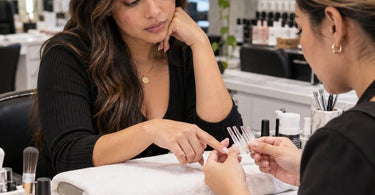
Efficiency drives success with this pick... and few things test a nail professional's efficiency quite like hearing, "Actually, can we go a little shorter?" after the service is already underway. Nail length can sound like a simple decision during consultation, but clients often do not fully understand how a requested length will look, feel, or function until they see it taking shape on their own hands. For professionals working with Professional Nail Care Collections, enhancements, manicures, and detailed nail art, that halfway-through change is not necessarily indecision gone rogue; it is often visual feedback arriving later than everyone would prefer.
A client may arrive absolutely convinced she wants long almond nails worthy of a glamorous weekend, only to remember halfway through the appointment that she also types fifty emails a day, opens contact lens cases, buttons tiny buttons, and occasionally attempts to retrieve a credit card from a flat countertop. Suddenly, practical reality has entered the chat.
Clients Often Cannot Picture Length Until They See It
Nail professionals work with length every day. Clients usually do not. Terms such as short, medium, long, active length, salon length, or extra long can mean completely different things to different people.
One client's "medium" may extend only slightly beyond the fingertip. Another client may consider anything shorter than a dramatic extension practically invisible. Even reference photos can create confusion because hand size, nail-bed proportions, camera angles, shapes, and perspective affect how long a nail appears.
This is why the consultation is more useful when length becomes visual instead of verbal. Showing the approximate free-edge length, comparing against an existing nail, or temporarily placing an extension tip can help clients understand what they are choosing before the service reaches the point of no return.
Keeping a variety of nail tips, forms, and professional enhancement supplies available can make these conversations easier because the technician can demonstrate possibilities instead of relying entirely on descriptions.
Shape Can Make the Same Length Look Completely Different
Length does not exist in isolation. Shape changes perception dramatically.
A medium square enhancement can feel visually substantial because of its straight sidewalls and defined corners. File that same general length into an almond or tapered shape and the nail may suddenly appear longer and more delicate. A client who originally asked for shorter nails may see the shaping begin and decide she actually loves the length. Another may see a tapered silhouette emerge and decide the set feels dramatically longer than she pictured.
This is one reason experienced professionals frequently confirm both length and shape before committing to extensive refinement. Quality Nail Files & Buffers give technicians precise control, but even the finest file cannot put length back after it has been removed. Nail professionals everywhere know the tiny internal scream that occurs when a client says, "Maybe longer?" immediately after ten nails were lovingly shortened.
The First Finished Nail Can Change Everything
Sometimes the smartest consultation happens twice: once before beginning and again when the client can see the concept taking form.
If the service allows it, completing or roughly shaping one representative nail can provide a useful visual checkpoint. The client can look at the hand from different angles, compare the extension against the fingertip, and imagine using her hands normally.
That small pause can prevent much larger adjustments later.
Professionals working with Acrylic Nail Supplies, builder gels, sculpting products, or other enhancement systems may find this especially useful because changing length after substantial product placement and shaping can affect the entire service workflow.
Real Life Frequently Appears Halfway Through the Appointment
People tend to choose nails with their eyes first and their daily routines second.
Then they sit in the chair long enough to remember that they cook, garden, lift weights, handle contact lenses, care for children, work with medical gloves, stock shelves, massage clients, use keyboards, play instruments, or perform some other task requiring their hands.
A technician can gently bring these realities into the original consultation by asking questions such as how the client uses her hands, whether she has worn this length before, and what she liked or disliked about previous sets.
The goal is not to talk a client out of the look she wants. The goal is to match the visual result with expectations about comfort and maintenance.
Color and Nail Art Can Make Length Feel Different
Another sneaky culprit is design.
A sheer neutral manicure can make an extension feel understated, while bold graphics, deep polish, chrome, rhinestones, or elaborate artwork can make the same dimensions feel more dramatic. Once the color or design begins appearing, a client may suddenly perceive the nails as longer or shorter than she did during shaping.
That is particularly relevant when services include Professional Gel Polish, Premium Nail Polish, or detailed Nail Art Supplies.
If the design is visually bold, discussing the interaction between length, shape, and artwork before application can reduce surprises. A dramatic design on dramatic nails can be fabulous. It can also produce the manicure equivalent of a client looking down and thinking, "Oh. We have arrived."
Longer Enhancements Are Also a Structural Decision
For enhancement services, changing length is not purely cosmetic. Length influences the architecture of the finished nail.
As extensions become longer, technicians may need to adjust product placement, balance, apex structure, sidewalls, and overall thickness according to the system being used and the client's natural nail. Simply adding more free edge without considering the rest of the enhancement is not the same as professionally designing a longer nail.
That is why a major request to increase length halfway through a sculpted service may require more than a quick tweak. Conversely, significant shortening can alter the proportions the technician originally built.
Professionals using builder gel, nail forms, acrylic, or other enhancement materials should evaluate whether the requested change affects structure, service time, or product requirements before proceeding.
Use Checkpoints Before Irreversible Steps
A practical salon workflow includes deliberate checkpoints. They do not need to turn a relaxing nail service into an airport security interview.
Before major filing, confirm the general length. After preliminary shaping, let the client view both hands from her normal perspective. Before detailed finishing, ask whether the shape and visible free edge still feel right.
This is particularly helpful before removing substantial length, because shortening is easy while reversing it may require rebuilding or extending.
A well-organized station with dependable Manicure Essentials and Nail Brushes & Tools also makes small adjustments less disruptive to service flow.
Make "Short" and "Long" More Specific
Salon teams can reduce confusion by developing consistent ways to discuss length. Some professionals use visual examples. Others describe how far the free edge extends beyond the fingertip. Photos of the technician's own completed work can also provide realistic salon-specific references.
The exact method matters less than consistency.
If one technician describes a certain length as medium while another calls it long, repeat clients may encounter unnecessary confusion. A simple internal reference system can help the entire team communicate more clearly.
It can also be useful to record strong preferences in client notes. If someone discovers that she loves a particular almond length after several rounds of adjustment, documenting that preference can make her next visit smoother.
Do Not Treat a Mid-Service Change Like a Client Crime
Yes, changing direction can add time. Yes, it can be frustrating when significant work has already been completed. And yes, somewhere in the universe a nail technician has definitely stared at a freshly perfected free edge while reconsidering every career choice that led to that exact moment.
Still, clients are often changing their request because they finally have enough visual information to make the decision confidently.
A calm response protects the client experience. The technician can explain what can reasonably be adjusted, whether additional time is required, and whether the change affects the service price.
Clear boundaries are completely professional. Frustration disguised as sarcasm is less helpful, particularly when the client did not understand the technical consequences of the change.
Explain Time and Pricing Before Making Major Changes
A tiny adjustment and a complete redesign are not the same thing.
If a client wants one more millimeter removed during shaping, that may be an easy correction. If she changes from long sculpted extensions to dramatically shorter nails after extensive product application and shaping, the service may require substantial additional work.
Similarly, asking for significantly more length after the planned structure has been built may require rebuilding nails or adding material.
Salons benefit from deciding in advance how they handle major mid-service changes. Team members should know when an adjustment is simply part of refining the service and when it becomes additional work that affects scheduling or pricing. Explaining that calmly before proceeding keeps everyone aligned.
Keep Professional Supplies Ready for Flexible Services
The easier a station is to work from, the easier it becomes to adapt without derailing the appointment. Stocking frequently used grits of files, buffers, enhancement products, tips, forms, brushes, and finishing supplies keeps the technician from turning a minor change into a scavenger hunt.
Pure Spa Direct supplies salon and spa professionals with products for professional services, including Professional Nail Care Collections, Dipping Powder Systems for Salons, Acrylic Nail Supplies, Nail Files & Buffers, and other manicure essentials used throughout the service process.
Having the right professional tools nearby will not prevent a client from changing her mind, but it can make adapting far easier when she does.
Better Consultations Reduce Redos Without Killing the Fun
The best takeaway is not that clients need to make an absolutely final decision before the first file touches a nail. Nail services are visual, and preferences sometimes become clear only as the finished look develops.
Instead, professionals can build a service process that anticipates those moments. Clarify what the client means by short, medium, or long. Discuss lifestyle and maintenance. Confirm shape. Use visual references. Create checkpoints before major filing or detailed finishing. Explain structural limitations when enhancements are involved. Document successful preferences for future visits.
These small habits can reduce major redos while still giving clients room to participate in the creative process.
Because sometimes "just a tiny bit shorter" really does mean a tiny bit shorter. And sometimes it means removing enough length to make the nail technician quietly wonder whether everyone involved has been using the same definition of the word "tiny."
Turn the Mid-Service Mind Change Into Useful Information
A changed nail-length request does not automatically signal a difficult client. Often, it reveals where the original consultation lacked a shared visual reference or where the client discovered something new about her own preferences.
Handled well, that information becomes valuable. The technician learns what the client considers comfortable, flattering, practical, and wearable. The client gains confidence in communicating what she wants. The next appointment becomes faster and easier.
That is the real professional win: not preventing every change of mind, but creating a service system flexible enough to handle one without turning a manicure appointment into a miniature emergency.
