
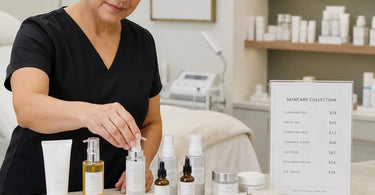
Stay efficient, stay successful... but let's be real, nothing kills efficiency faster than a client playing detective just to find out how much that miracle moisturizer costs. In the bustling world of spas, salons, and barber shops, time is money, and confusion is the enemy of a good sale. We know you pour your heart and soul into every service, from the perfect Brow Lamination to a relaxing hot stone massage. But when it comes to your retail shelf, making clients ask for prices is like hiding the remote control during the Super Bowl—it's just frustrating for everyone. As professionals, we know the value of our work and the products we recommend, from premium skincare to must-have massage oils. When we make prices a secret, we inadvertently tell our clients we have something to hide, and that is a very un-spa-like vibe to put out there. Let's talk about why putting your prices out there is not just a good idea; it's the secret weapon for building trust and boosting your bottom line, because honey, nobody has time for a game of 'guess the price' when they're trying to relax and glow up.
Think about the last time you went shopping and had to ask the salesperson for the price of every single item. Exhausting, right? That feeling of mild annoyance and suspicion is exactly what you are creating when you make your clients ask for pricing. In the beauty industry, trust is our currency. We ask clients to trust us with their skin, their hair, and their relaxation. Why would we jeopardize that trust by being opaque about something as fundamental as cost? A study from the Associated Skin Care Professionals highlights that clear pricing helps reduce financial anxiety and sets the tone for a relaxing visit . No one wants to be mid-facial and wondering if they can afford the serum you just used. By displaying prices clearly, you are telling your clients, "I value your time and your trust, and I'm confident in the value I provide."
The Psychology of Pricing: Why 'DM for Price' is a Turn-Off
Let's dissect the dreaded 'DM for price' culture that has taken over social media. It might feel like a luxury brand strategy, but for most of us, it reads as shady or, worse, like we are trying to figure out how much we can overcharge someone. According to marketing experts, this strategy creates friction and often backfires, turning serious buyers away because it implies a lack of transparency . Your potential clients are scrolling through social media with a short attention span. If they have to stop, slide into your DMs, and wait for a response just to find out if they can afford your lash tint service or that gorgeous nail art you just posted, they are likely to scroll right on to someone who already has their prices proudly displayed.
It's not just about convenience; it's about psychology. When you hide your prices, you are inadvertently signaling that you are not confident in your own value. A clear price tag, on the other hand, acts as a powerful filter. It attracts clients who are ready and willing to pay for your expertise and saves you the time and energy of having endless 'how much?' conversations that rarely convert. Salon pricing expert Andrea Simpson notes that many owners set prices from a place of fear, worried about losing clients or appearing too expensive . But the real fear should be losing a sale before you even get a chance to explain the value. By publishing your pricing, you show potential clients that you know your worth, which in turn attracts clients who will respect that worth. This isn't just about selling products; it's about curating a clientele that values your professional opinion and the premium products you recommend.
Transparency is the Foundation of Trust and Client Retention
Trust is the single most important ingredient in a successful beauty or wellness business. A client who trusts you is a client who will listen to your advice, pre-book their next appointment, and buy the retail products you recommend. But trust is built on a foundation of honesty and openness, and that includes pricing. When you are upfront about costs, you eliminate a major source of anxiety and awkwardness for your clients. They can focus on enjoying their service rather than worrying about how much it will cost. As highlighted in professional discussions, consistent and transparent pricing builds long-term trust, turning fair-weather clients into beloved regulars who keep your books steady .
Imagine this: a client comes in for a standard 60-minute massage but, during the session, you realize they would greatly benefit from a hot stone add-on or some aromatherapy to release tension . If your pricing is transparent and you have clearly listed these as add-ons, it's a simple, comfortable upsell. If your pricing is a secret, the conversation becomes awkward and you risk either not offering the beneficial upgrade at all, or surprising the client with a hefty fee at the end, which could sour their entire experience. By making pricing visible, you are not just selling a product; you are offering a choice and a pathway to an enhanced experience without the fear of 'sticker shock.' This proactive transparency can actually increase your average ticket price because clients feel in control and are more likely to say 'yes' to upgrades.
The Real Cost of Shady Pricing: Lost Revenue and Client Frustration
Let's talk numbers. Many salon and spa owners are leaking revenue without even realizing it, not by charging too little, but by making it too hard for clients to buy. This connects to the concept of 'phantom discounts'—the unspoken markdowns that happen when you round down a total, forget to charge for a product used, or fail to add a treatment upgrade to the bill because you didn't want to 'make it awkward' . These small, well-intentioned concessions add up to thousands of dollars in lost revenue each year. For a six-chair salon, phantom discounts could easily total over $29,000 annually . That's not a leak; that's a waterfall. When your retail prices are hidden or hard to find, it creates the same awkwardness that leads to these 'round-downs' and 'freebies.'
On the flip side, when prices are easy to see, you are establishing a clear boundary and a professional standard. It makes the transaction smooth and avoids the uncomfortable 'how much is this again?' question that can put both you and your client on the spot. This clarity also protects your team. When prices are clearly listed, your staff doesn't have to memorize everything or risk quoting the wrong price, which could lead to them giving away product to save face. It empowers them to focus on what they do best—delivering an amazing service and making genuine product recommendations, like a high-quality ItalWax Pre/Post product or a nourishing cuticle oil, without the friction of a pricing negotiation. This streamlines the checkout process, making it faster and more pleasant, which is always a win for everyone.
How to Implement Transparent Pricing in Your Business
So, how do you make the shift? First, ensure that every single product in your retail area has a clear price tag. And we mean clear—no stickers that are falling off, no fading ink, and no 'ask for price' signs. Use price tags that are easy to read and match the aesthetic of your brand. Whether it's a chic bottle of serum or a set of body brushes, the price should be the first thing your client sees, right next to the product's name and benefits. This removes barriers and allows them to browse comfortably.
Next, look at your service menu. This is just as important as your retail pricing. Don't use vague terms like 'starting at' or 'as low as' if you can avoid them. Instead, be specific about what's included. A transparent price list should clearly outline: the service cost and what's included, any optional add-ons or upgrades, and follow-up or complimentary services . If you offer different services like hard wax, soft wax, or sugaring, list the prices for each so clients can choose with confidence. And don't forget your online presence! Your website and social media are often the first point of contact. Make sure your menu with prices is easy to find, and consider posting specific promotions like bulk wax deals or new nail care collections with their prices clearly displayed.
Transparency Builds a Stronger Brand
Ultimately, transparent pricing is a reflection of your brand values. It says you are honest, confident, and that you respect your clients enough to give them the information they need to make a purchase. This is especially important for wholesale distributors like Pure Spa Direct. Our clients are professionals, and they need to know they're getting the best value. We're not playing games with our ItalWax or Berodin prices. By being transparent, we empower salon owners to make the best decisions for their businesses.
In a world where consumers are more skeptical and price-sensitive than ever, transparency isn't just a nice-to-have; it's a necessity. It's the ultimate professional flex that proves your business is trustworthy and client-focused. So, stop hiding the numbers and start boosting your sales and client confidence today! Remember, the only thing scarier than a client knowing the price is a client walking out the door because they were too afraid to ask.
)