
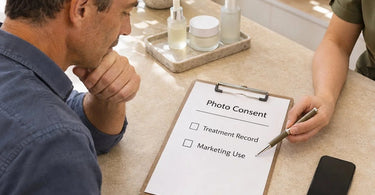
Stay ahead in a competitive world by making sure your treatment room photography is as professional as the services you provide. Understanding why treatment area photos require a clear consent process is essential for spa owners, estheticians, massage therapists, waxing specialists, nail technicians, and salon professionals who want to showcase their work without compromising client privacy. Beautiful before-and-after photos can attract new appointments, demonstrate your expertise, and give your marketing a serious glow-up. However, one photograph taken without proper permission can turn an otherwise wonderful client experience into a situation nobody wants to explain to their insurance company, attorney, or Google review audience.
In today's beauty and wellness industry, cameras are practically another piece of treatment room equipment. Professionals photograph skincare results, lash transformations, waxing outcomes, nail designs, treatment setups, and freshly organized spa spaces. These images can be incredibly valuable, but the treatment room is also a private environment where clients expect discretion, comfort, and respect. Creating a clear photography consent process helps protect those expectations while allowing businesses to document and promote their services responsibly.
Why Treatment Room Photography Deserves Special Attention
A treatment room is not the same as a retail display, reception desk, or beautifully arranged shelf of skincare products. Clients may be partially undressed, receiving intimate services, discussing personal concerns, or undergoing treatments that reveal sensitive information about their bodies. Even photographs that appear harmless can disclose details a client would prefer to keep private.
Consider a client receiving a facial. A photograph intended to capture the professional application of a skincare product might also reveal the client's identity, medical paperwork, appointment details, or another person reflected in a mirror. Similarly, a photograph taken during a waxing appointment may capture more of the client's body than the photographer originally intended.
These situations demonstrate why photographing treatment areas requires more than a quick verbal question or an assumption that a client will appreciate the publicity. A structured consent process establishes boundaries before a camera appears.
Understand the Difference Between Taking Photos and Publishing Them
One of the most important distinctions in professional photography policies is the difference between permission to capture an image and permission to use that image publicly.
A client may be comfortable having photographs taken to document treatment progress but may not want those images posted on social media, displayed on a website, or included in advertising materials.
For example, an esthetician providing a series of Advanced Facial Treatment Products for Salons & Spas services might photograph a client's skin at several appointments to compare visible changes. Those images may serve a legitimate documentation purpose within the business. Using the same photographs in a promotional campaign is a separate decision requiring appropriate permission.
A well-designed consent process should distinguish between photography for treatment documentation, internal professional training, educational presentations, portfolio use, social media, website galleries, paid advertisements, and third-party promotional materials.
Clients should understand exactly what they are agreeing to instead of discovering later that their forehead has become the unofficial spokesperson for the neighborhood facial studio.
What a Clear Photography Consent Form Should Include
A professional consent form does not need to resemble a complicated mortgage application. However, it should contain enough detail to establish informed permission and make expectations clear.
Consider incorporating the following elements into your photography authorization process:
- Client identification: Record the client's name and the date permission was granted.
- Photography purpose: Explain whether images will be taken for treatment records, education, professional portfolios, or marketing.
- Permitted uses: Identify the specific platforms or materials where images may appear.
- Image details: Clarify whether photographs may show the face, identifiable features, treatment area, or other personal characteristics.
- Permission choices: Allow clients to accept certain uses while declining others.
- Voluntary participation: Explain that declining optional promotional photography will not affect the quality of service.
- Withdrawal procedures: Describe how clients can withdraw permission and what limitations may apply to previously distributed materials.
- Authorization record: Include an appropriate signature, date, or documented electronic acknowledgment.
For businesses subject to specific healthcare privacy laws, an ordinary photography release may not satisfy applicable authorization requirements. Medical spas and healthcare providers should have their forms and procedures reviewed against the laws governing their operations.
Why Verbal Permission Is Not Always Enough
Imagine a technician asking whether she can take a photograph of a beautiful lash lift result. The client smiles and agrees. Two weeks later, the client discovers the picture in a paid social media advertisement and insists she never approved promotional use.
Both parties may remember the conversation differently. Without documented details, the business has difficulty establishing the actual scope of permission.
Written consent provides a more reliable record of what was discussed and approved. It also encourages professionals to explain photography policies before a misunderstanding develops.
Verbal permission can still play an important role in respectful communication. Even with a signed authorization, asking whether the client is comfortable before each photography session reinforces personal boundaries.
The goal is not to collect signatures and immediately unleash the camera. The goal is to make sure the client understands, agrees, and remains comfortable throughout the experience.
Special Considerations for Waxing, Massage, and Body Treatments
Some professional services require particularly careful photography practices because of the body areas involved or the level of personal exposure.
During waxing services, technicians may photograph visible results to demonstrate technique or document skin responses. Professionals working with Waxing Supplies for Professionals should develop photography policies that respect client modesty and prohibit unnecessary exposure.
For massage therapists, photographs involving a client on a treatment table require similar caution. Draping, positioning, and the presence of identifying features should be considered before capturing any image.
Even if a client authorizes photographs, the professional should avoid capturing more information than necessary. A close-up of a specific treatment area may communicate the intended result without revealing the client's face or surrounding body.
Businesses offering services with intimate exposure should generally favor carefully staged demonstrations, photographs of equipment, or consenting adult models when creating promotional content. Photography should never interrupt proper draping or compromise professional boundaries.
Simple images of an unoccupied treatment space featuring Salon & Spa Bedding, neatly arranged supplies, and professional equipment can often communicate the atmosphere of a service without involving clients at all.
Protect Client Information Hidden in the Background
Photography risks are not limited to the person appearing in the center of an image. The background can reveal confidential or personally identifying information.
Before taking photographs, check for appointment schedules, consultation forms, client names on product containers, computer screens, treatment notes, payment information, prescription labels, and personal belongings.
Reflections deserve special attention. Mirrors, windows, shiny equipment surfaces, and even polished fixtures can accidentally capture another client or employee.
Create a designated photography area whenever possible. Clear unnecessary paperwork, close appointment software, remove personal items, and position the camera to avoid unintended disclosures.
A properly organized treatment station also improves the final photograph. Professional Spa Tools & Implements, clean surfaces, and thoughtfully arranged supplies create a more polished image while reducing distracting background details.
One practical rule is simple: inspect the entire photograph before sharing it, not just the feature that made you reach for your phone.
Understand Privacy Rules Without Assuming Every Spa Is a Medical Facility
Privacy obligations vary depending on the business, services offered, location, and applicable regulations.
Not every salon, day spa, or beauty business is automatically subject to the federal Health Insurance Portability and Accountability Act, commonly known as HIPAA. However, certain healthcare providers and medical spas may operate within HIPAA requirements, depending on their activities and legal status.
For HIPAA-covered entities, using identifiable protected health information in promotional photography may require a valid written authorization that meets specific regulatory standards. Healthcare providers must also observe restrictions on allowing outside photographers or media personnel into areas where protected patient information could be accessible.
Separate state privacy laws, publicity rights, contractual obligations, licensing requirements, and consumer protection rules may also affect how images can be collected and used.
These legal distinctions are one reason businesses should avoid relying on a generic consent template without reviewing whether it fits their services and jurisdiction.
Even when a particular healthcare regulation does not apply, protecting client privacy remains an important professional responsibility. Clear consent is good business practice, regardless of whether the client is receiving a manicure, massage, or advanced aesthetic treatment.
Make Photography Consent Part of the Appointment Workflow
The easiest photography policies to follow are the ones integrated into existing procedures.
Instead of asking technicians to improvise while holding a phone in one hand and a treatment tool in the other, create a consistent workflow that every team member understands.
Before the appointment: Explain the business's photography policy during booking or intake. Provide clients with an opportunity to review applicable consent options without pressure.
Before taking photographs: Confirm that the required authorization is current, relevant to the intended images, and appropriate for the proposed use. Ask whether the client is still comfortable proceeding.
During photography: Maintain professional positioning, appropriate draping, and the smallest necessary photographic scope. Avoid capturing unrelated personal information.
After photography: Review the images for accidental disclosures and place approved photographs into the business's designated storage system.
Before publication: Verify that the proposed platform, caption, image, and intended promotional use fall within the permission granted.
This process works best when a designated manager or authorized team member is responsible for approving images before publication.
Train Employees on Personal Phones and Social Media Boundaries
One overlooked challenge is the temptation for team members to use personal phones for professional photography.
A technician may want to photograph an impressive set of Professional Gel Polish nails or the finished results of a brow enhancement service. However, personal devices may automatically upload photographs to private cloud accounts, synchronize them across multiple devices, or place them in galleries accessible through unrelated applications.
Businesses should establish clear policies addressing approved photography devices, authorized users, storage locations, image transfers, employee social media accounts, and deletion procedures.
Staff should understand that permission to photograph a client for the business does not automatically authorize posting the same photograph on an employee's personal page.
Training should also cover captions and client identification. Tagging a client, revealing an appointment date, or describing a personal condition can disclose information that the image itself does not reveal.
A beautiful treatment result deserves recognition. It does not require turning someone's private appointment into a surprise internet debut.
Use Professional Storage and Access Controls
Once photographs have been captured, businesses need procedures for protecting them.
Images should be stored in approved systems with appropriate security protections, including access restrictions, strong authentication, and secure transfer methods. Sensitive photographs should not be scattered among personal messaging applications, unsecured shared folders, or individual employee devices.
Consider organizing records by client, treatment date, consent status, and approved usage category. Access should be limited to employees who need the information for authorized professional purposes.
Establish a retention schedule based on applicable legal requirements and legitimate business needs. When photographs no longer need to be retained, dispose of them securely according to the business's documented policies.
For employees leaving the company, remove access to stored client photographs and business accounts as part of the normal offboarding process.
These administrative details may not be glamorous, but neither is explaining why sensitive treatment images are floating around in a former employee's personal photo library.
What Happens When a Client Changes Their Mind?
Client preferences can change, even after permission has been documented.
A person who initially approves a before-and-after photograph may later become uncomfortable with continued publication. Your business should have a clear procedure for receiving and evaluating withdrawal requests.
When a client withdraws permission, identify the relevant photographs, review the applicable authorization and legal requirements, and determine which uses must stop. Where required or appropriate, remove images from business-controlled websites, social media accounts, and promotional materials.
Be transparent about practical limitations. Previously printed materials, independently shared screenshots, and content distributed by third parties may not be completely retrievable. For certain legally regulated authorizations, revocation may also have specific rules and limitations.
Responding respectfully helps preserve relationships even when clients decide they no longer want their images displayed.
How to Create Beautiful Marketing Images Without Photographing Clients
A strong visual marketing strategy does not need to depend entirely on before-and-after photographs.
There are numerous opportunities to showcase professional services while minimizing privacy concerns.
Photograph the preparation of a facial treatment station featuring Premium Skincare Products for Spas and Salons. Capture beautifully organized lash supplies, freshly prepared waxing stations, or neatly arranged massage equipment.
For nail salons, focus on manicure stations, polish displays, and professional tools. For massage businesses, highlight inviting tables, folded linens, and carefully arranged Massage Oils, Lotions, and Creams for Therapists.
Professional photographers can also work with consenting adult models under appropriately reviewed releases. This approach gives the business greater control over lighting, styling, schedules, and approved image usage.
Photographing equipment and treatment environments has another advantage: it allows spa owners to demonstrate cleanliness, organization, and the welcoming experience clients can expect.
For many prospective customers, an inviting, immaculate treatment room is just as persuasive as a dramatic transformation photograph.
Build a Photography Policy That Works Across Every Service
Multi-service spas and salons should create a core photography policy that applies throughout the business while allowing additional safeguards for higher-sensitivity services.
The same basic principles should guide photography involving facials, Lash & Brow Enhancement Services for Professionals, nail treatments, hair services, waxing, body treatments, and massage.
However, permission for a manicure photograph should not automatically become permission to photograph a client during a body treatment. The intended use, degree of exposure, and applicable requirements may be very different.
Managers should review policies periodically, especially when introducing new services, hiring marketing staff, adopting photography software, or expanding advertising platforms.
Regular training is equally important. A consent policy that exists only in an employee handbook nobody has opened since orientation is unlikely to provide meaningful protection.
Why Clear Consent Can Strengthen Your Spa Brand
Professionalism is built through small, consistent experiences. Clients notice whether staff explain procedures, respect personal boundaries, maintain organized treatment rooms, and communicate clearly.
Photography consent is an extension of that same service philosophy.
When clients know their images will not be taken, stored, or shared casually, they may feel more comfortable discussing treatments and participating in appropriately documented photography.
Clear policies also benefit employees. Team members can work confidently because they understand which images are permitted, where photographs belong, and who approves publication.
That consistency supports a more trustworthy brand image and reduces the likelihood of disputes caused by assumptions or informal practices.
At Pure Spa Direct, we understand that professional spa and salon success depends on more than choosing the right equipment and supplies. As a distributor serving beauty and wellness professionals, we help businesses access products that support organized, comfortable, and professional service environments, from Luxury Spa Furniture to everyday Spa Essentials for Professionals.
Thoughtful photography procedures complement that professional environment by making client respect part of every service experience.
A Practical Photography Consent Checklist for Spa Owners
Before your next photo session, review these essential questions with your team:
- Has the client received a clear explanation of why photographs are being taken?
- Does the business have appropriate documented permission for the intended purpose?
- Does that permission cover the specific publication or promotional platform?
- Has the client had a genuine opportunity to decline optional photography?
- Are draping, positioning, and treatment boundaries being respected?
- Have identifying records, background details, and reflections been checked?
- Are photographs being captured using approved devices?
- Will images be transferred to secure, authorized storage?
- Is there a review process before posting images publicly?
- Does the business know how to respond to a withdrawal or removal request?
If your team cannot confidently answer these questions, revisit the photography procedure before capturing or publishing client images.
Final Thoughts: Make Consent as Routine as Preparing Your Treatment Room
Understanding why treatment area photos require a clear consent process is about much more than collecting signatures. It involves respecting privacy, distinguishing between documentation and marketing, protecting sensitive information, training employees, and ensuring clients understand how their images may be used.
For spa and salon owners, the most successful approach combines straightforward communication with consistent procedures. Clients should never have to wonder whether a treatment photograph might unexpectedly appear online.
Beautiful photography can absolutely help grow your business. Just make sure every image reflects the same professionalism, care, and attention to detail that your clients experience during their appointments.
After all, the best spa marketing captures beautiful results without creating an entirely new reason for someone to need a stress-relief massage.

