
Trust in tools that deliver… but also trust in the fascinating, slightly weird, and incredibly powerful mind of your client. Let’s talk about that moment when a client books your ‘Signature Diamond Infused Oxygen Facial’ for $180 instead of the perfectly lovely ‘Classic Facial’ for $85. Their logic might be ‘I want the best for my skin,’ but beneath the surface, a whole carnival of psychological fireworks is going off. The price tag itself is doing a lot of the heavy lifting before they’ve even laid back on your luxurious facial bed. Understanding this isn’t about trickery; it’s about aligning your premium service experience with the powerful expectations a higher price creates. It’s the secret sauce that turns a good facial into a transformative ritual clients swear by and happily pay for, again and again.
So, why does a more expensive facial often *feel* like it worked better, even if the core cleanser is from the same gallon jug? (Don’t worry, your secret is safe with us). It boils down to a few key psychological principles that are as reliable as a stubborn blackhead. Once you get them, you can design your services, your space, and your sales approach to make every treatment feel worth its weight in gold… or diamonds, or collagen, you get the idea.
The “Price Equals Quality” Heuristic: Our Brain’s Shortcut
Our brains are lazy in the best way possible. They love shortcuts (called heuristics) to make quick decisions without overanalyzing every detail. The “price equals quality” heuristic is one of the oldest in the book. We are culturally conditioned to believe that if something costs more, it *is* more: more effective, more luxurious, more exclusive. When a client books a premium facial, this script starts running immediately. They walk in *expecting* superior results. This expectation is powerful enough to influence their actual perception during and after the service. The fancy facial steamer that looks like it belongs on a starship isn’t just hydrating their skin; it’s confirming their bias. “Ah,” their brain says, “this advanced-looking tool justifies the price. My skin is in good (expensive) hands.”
The Placebo Effect: Expectation is the Original Anti-Aging Serum
Yes, the placebo effect is real in skincare and wellness! If a client believes a treatment will be more effective, their brain can actually contribute to that outcome. They might be more relaxed (lowering cortisol, good for skin), more attuned to subtle improvements (“My skin does feel bouncier!”), and more satisfied with the result. This isn’t imaginary; it’s psychodermatology. The ritual of a longer, more elaborate service—using a ultrasonic scrubber followed by a microcurrent lift and finished with a radio frequency zap—builds this expectation layer by layer. Each step whispers, “This is cutting-edge. This is working.”
The Experience Economy: You’re Selling a Journey, Not Just a Jar
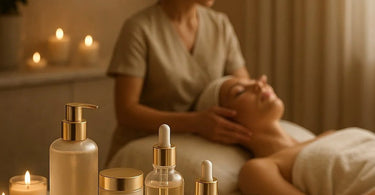
Clients aren’t just buying 60 minutes of product on skin. They’re buying an escape. The premium price tag buys them (and you) the time for a multi-sensory experience. This is where you can have fun and justify every penny. It’s the heated towel steamer providing a warm neck wrap. It’s the specific, calming playlist versus random radio. It’s the application of a sugar scrub with a gentle body brush during the arm massage. It’s the custom aromatherapy blend you chose just for them. It’s the silent, impressive glow of a professional LED lamp for your gel mask. Every detail says, “This is bespoke. This is care. This is worth it.”
How to Harness This Power (Without Being Sketchy)
Okay, so this psychology is cool. How do you use it ethically and profitably? By building genuine value that matches the price point. The cost should be a reflection of a truly elevated experience and outcome, not a random number. Here’s your game plan:
1. Differentiate With Technology & Advanced Techniques
Your premium menu should clearly feature tools and techniques your standard menu doesn’t. This gives a tangible reason for the upgrade. Think hydrodermabrasion, dermaplaning add-ons, or oxygen infusion. Source these from trusted brands like Silhouet-Tone or Equipro. The client can see and feel the difference. “This treatment includes our galvanic machine to drive serum 10 times deeper” is a powerful, justifiable statement.
2. Curate a Premium Product Story
Use professional, clinical, or ultra-luxury product lines for your top-tier services. Explain the key ingredients and their benefits. “For this facial, I’m using our Tuel Skincare line, which uses bio-available marine enzymes,” sounds and feels different than a generic cleanse. Have the beautiful bottles from lines like June Jacobs or Murad visible on your shelf. It builds credibility.
3. Amplify the Ritual and Extend the Time
Add steps that feel indulgent and time-consuming. A double cleanse. A longer, more targeted extractions session with a magnifying light. A detailed facial massage with a gua sha or hot/cold hammer tool. A layered mask application. A luxe hand and foot massage with a paraffin dip while the face mask sets. The client feels they are receiving more attention and care, which is a huge part of the value.
4. Create a Tiered Menu That Tells a Story
Structure your menu so the premium service is clearly an enhanced journey from the basic one. Use descriptive, benefit-driven names and bullet points that highlight the additions.
Classic Glow Facial ($85): Cleanse, exfoliate, extractions, mask, moisturize.
Platinum Revival Facial ($140): *All of the above, PLUS* a dermaplaning treatment, high-frequency treatment for acne bacteria, and a facial cupping massage for lymphatic drainage.
Diamond Age-Defying Facial ($195): *All of the above, PLUS* a microdermabrasion pass, RF therapy, and a collagen-boosting LED light session with our advanced peptide serum.
See the story? Each step up is logical and packed with value.
5. Train Your Team on the “Why”
Your estheticians need to be confident ambassadors of the premium service. They should believe in the added benefits and be able to communicate them effortlessly. Role-play how to suggest an upgrade: “For your concern with fine lines, the Diamond Facial would be perfect because the radio frequency step will specifically target that tightening you’re looking for, which we don’t get to in the classic package.”
The Retail Link: When the Expensive Facial Sells the Expensive Cream
This is the beautiful domino effect. A client who invests in a premium service is primed to invest in premium home care. Their belief in the service’s efficacy transfers to the products used. Your take-home recommendation isn’t a sales pitch; it’s a prescription to extend the “expensive facial feeling.” Suddenly, that $90 cuticle oil or $120 neck cream from Ayur-Medic seems like a necessary continuation of the results they just paid for and loved. Always have your retail products beautifully displayed and ready to go.
Ultimately, the psychology of price is about managing perception to match reality. Your job is to ensure the reality of your premium service—from the professional cotton you use, to the spa essentials in your room, to the skill of your touch—is so robust, wonderful, and effective that the price feels like a natural, even smart, conclusion for your client. They’re not just paying for your time and product; they’re paying for the transformation, the trust, and the sheer joy of feeling like they got something truly special. And that, my friends, is priceless (or, well, about $195). Now go design a facial that makes your clients’ brains and skin equally happy!
)