
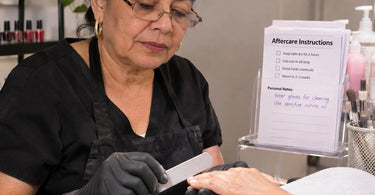
Boost client trust with this product that requires no electrical outlet, takes up almost no storage space, and might be one of the most underestimated tools in your entire treatment room: a thoughtfully designed aftercare handout. Whether your business specializes in professional waxing, advanced facial treatments, lash enhancements, nail services, or massage therapy, leaving dedicated space for individual notes can transform a generic instruction sheet into a personalized client care resource. Because even the most attentive client can forget half of your carefully explained recommendations somewhere between the treatment room and the parking lot. Add a buzzing phone, an upcoming appointment, and the eternal question of what to make for dinner, and suddenly your brilliant aftercare advice has vanished into thin air.
Professional aftercare handouts should do more than explain what generally happens after a service. They should help clients understand what they specifically need to do following their particular appointment. That distinction is where thoughtful personalization becomes an important part of the professional beauty experience.
Why Generic Aftercare Instructions Only Go So Far
Standardized aftercare instructions are an excellent starting point. They help ensure that every client receives consistent information about essential precautions, recommended maintenance, expected temporary responses, and appropriate follow-up care.
However, no two clients arrive at your treatment room with identical skin, hair, lifestyles, sensitivities, product routines, or service histories. A beautifully printed instruction sheet cannot automatically account for every individual consideration.
Consider two clients receiving the same facial treatment. One has an uncomplicated home skincare routine, while the other regularly uses multiple exfoliating products and active ingredients. Both need the standard aftercare information, but the second client may require additional guidance about which products to temporarily discontinue and when to resume them.
A dedicated notes section gives the esthetician room to address these differences without rewriting the entire handout. It also helps prevent important personalized recommendations from getting lost among general instructions.
Personalized Aftercare Makes Professional Expertise Visible
Clients cannot always see the professional decision-making that happens throughout a beauty or wellness service. They may not recognize why you selected a particular product, adjusted your technique, avoided a certain area, or recommended a different maintenance routine.
Individual aftercare notes make some of that expertise visible.
Writing down a specific recommendation demonstrates that you paid attention to the client as an individual. It reinforces the idea that their appointment was not simply another identical service on a busy schedule.
This matters particularly for businesses offering advanced facial treatments, customized skincare services, chemical hair treatments, and other services where home maintenance can influence comfort and cosmetic results.
The handwritten note may only take thirty seconds to complete, but it can communicate a level of attentiveness that a stack of identical brochures cannot.
What Should an Individual Aftercare Notes Section Include?
The most effective notes sections provide enough structure to guide the professional without restricting what can be written. Instead of leaving one tiny line at the bottom of the page, consider creating several clearly labeled spaces.
- Products to use: Identify recommended products, application areas, and appropriate frequency.
- Products to temporarily avoid: Record specific ingredients or products that should be paused according to the service protocol.
- Individual precautions: Document relevant activity restrictions or other personalized considerations.
- Important dates: Write down when the client can resume particular activities or products.
- Follow-up recommendations: Include the suggested timing of the next appointment or maintenance service.
- Additional instructions: Leave open space for recommendations that do not fit neatly into another category.
Not every section needs to be completed for every client. The purpose is to make personalization convenient, not to turn checkout into a paperwork marathon worthy of a mortgage application.
How Waxing Professionals Can Benefit From Individual Notes
Waxing clients frequently have questions about exfoliation, exercise, clothing, skincare products, and ingrown hair prevention. While your standard waxing aftercare sheet can address common precautions, individual notes can help clarify recommendations based on the treatment area, client sensitivity, and products used.
For example, a client receiving a Brazilian wax may need different practical guidance than someone receiving an eyebrow wax. A client who experiences recurring ingrown hairs may benefit from a personalized maintenance recommendation involving appropriate ingrown hair products once the skin has recovered sufficiently.
Professional recommendations should also reflect the instructions associated with your chosen pre- and post-waxing products. Avoid giving every client the same product restart schedule without considering the treatment performed and the condition of their skin.
Individual notes can also help prevent enthusiastic clients from overdoing their home maintenance. Someone who hears that exfoliation can help manage ingrown hairs might interpret that as permission to scrub immediately after waxing. A clearly written start date eliminates much of that ambiguity.
Aftercare Notes for Facial and Advanced Esthetic Services
Estheticians often provide some of the most detailed aftercare recommendations in the beauty industry. Services involving dermaplaning, microdermabrasion, chemical exfoliation, and hydrodermabrasion may require different maintenance instructions depending on the products, equipment, treatment intensity, and individual client considerations.
A personalized notes section can help identify which cleanser, moisturizer, or sunscreen is appropriate for the client, as well as which existing products should temporarily remain on the bathroom shelf.
When recommending professional skincare products, write down the exact product name and explain its role in the routine. Simply writing moisturizer may not be helpful to a client who owns six moisturizers, three facial oils, and a mysterious jar purchased during a late-night shopping adventure.
Always base recommendations on applicable professional protocols, manufacturer directions, your scope of practice, and the individual service performed. Personalized notes should supplement essential safety instructions rather than replace or contradict them.
Why Lash and Brow Aftercare Needs Room for Personalization
Clients receiving lash extensions, lash lifts, brow lamination, or tinting services may leave the appointment looking fabulous while still feeling uncertain about their home maintenance routine.
Professionals working with lash extension supplies or brow lamination products should ensure their aftercare recommendations align with the particular systems used during treatment.
Individual notes are useful for recording:
- The recommended cleansing method for the specific service.
- Any product-specific precautions involving water, steam, cosmetics, or skincare.
- The appropriate home conditioning or maintenance products.
- Recommended brushing or grooming techniques.
- Suggested maintenance appointment dates.
- Instructions for contacting the salon if irritation or an unexpected reaction develops.
Different professional systems can have different aftercare requirements. Your handout should not assume that every lash adhesive, lifting solution, or brow treatment follows an identical timeline.
A written personalized recommendation also gives clients something reliable to consult instead of relying on contradictory beauty advice from social media.
Personalized Notes for Nail Technicians and Pedicure Professionals
Nail aftercare instructions often focus on protecting enhancements, maintaining the surrounding skin, and avoiding activities that could contribute to premature damage.
Clients receiving professional gel polish, acrylic enhancements, or dipping powder services may have different maintenance needs depending on their nail condition, lifestyle, and the system applied.
A nail technician can use individual notes to recommend a specific cuticle oil, explain appropriate application frequency, identify maintenance dates, or remind the client not to pick or peel their enhancements.
Pedicure professionals can similarly personalize recommendations involving appropriate moisturization, footwear considerations, and cosmetic foot maintenance. Concerns suggesting infection, injury, or another medical condition should be referred to an appropriate healthcare professional rather than addressed through unsupported cosmetic treatment advice.
Written instructions are especially useful for clients who perform frequent manual work, spend considerable time washing their hands, or regularly expose their nails to activities that challenge enhancement durability.
Hair Salon Aftercare Should Reflect the Service Actually Performed
Hair professionals routinely adjust their recommendations based on porosity, previous chemical services, hair texture, color history, and the condition of the hair.
A generic hair color aftercare card can explain basic maintenance, but it cannot automatically tell an individual client which shampoo, conditioner, styling product, or treatment schedule is most appropriate.
Stylists offering services with professional hair color can use personalized notes to record maintenance recommendations specific to the color achieved and the condition of the hair.
Clients who have undergone significant lightening may require different home maintenance considerations than clients receiving a simple root refresh. Someone with fine hair may also need a different product application amount than someone with dense, textured hair.
Writing down recommendations for professional hair care products helps clients understand exactly what they should use rather than attempting to reconstruct the conversation from memory during their next shower.
Massage Therapists Can Use Notes Without Overcomplicating Aftercare
Massage aftercare does not necessarily require a lengthy instruction manual. Nevertheless, a short personalized section can be helpful for recording relevant comfort recommendations, suggested follow-up appointments, and appropriate self-care guidance within the therapist's scope of practice.
Therapists working with professional massage and wellness products may also recommend suitable home comfort products or explain how to use specific items safely.
When appropriate, recommendations involving hot and cold therapy products should include relevant precautions and usage instructions. Avoid unsupported promises about detoxification, medical treatment, or guaranteed outcomes.
The goal is to provide useful, realistic guidance that supports the client's comfort after the appointment without presenting routine massage aftercare as a substitute for medical evaluation.
Design Your Handout Around How Clients Actually Read
Aftercare sheets are rarely read under perfect conditions. Clients may review them while standing in their bathrooms, sitting in their cars before leaving the parking lot, or juggling several responsibilities at home.
This is why readability matters more than squeezing every possible instruction onto one beautifully decorated page.
Use a simple layout with clearly identifiable sections, short paragraphs, comfortable spacing, and an easily readable font. Keep critical safety information prominent rather than burying it beneath promotional messaging.
Make the individual notes section visually distinct with a heading such as Your Personalized Aftercare Instructions. Provide several generously spaced writing lines or separate boxes for different recommendations.
Avoid placing handwritten notes over decorative backgrounds, glossy surfaces, or tightly packed text. Your aftercare sheet should not require a magnifying lamp and exceptional handwriting skills to decipher.
Consider offering large-print or digital versions when needed. The information should remain accessible regardless of whether the client receives a printed sheet, an email, or a downloadable document.
Use Specific Dates Instead of Vague Time Frames
One of the simplest ways to improve aftercare communication is to replace ambiguous timing with specific dates and, when necessary, times.
Instructions such as resume your normal routine in a few days can leave clients guessing. Does that mean two days? Three days? The following Monday? After their weekend plans?
When the applicable service protocol provides a defined waiting period, write the corresponding date directly on the handout. This is particularly useful for recommendations involving the resumption of active skincare products, specific activities, or treatment maintenance.
Remember that the correct timing depends on the service and product system involved. Do not use personalized notes to arbitrarily shorten important safety restrictions.
A clearly written date can prevent unnecessary confusion while reducing the number of follow-up messages your team receives about routine aftercare questions.
Turn Aftercare Handouts Into Ethical Retail Support
A personalized aftercare sheet can also strengthen your professional retail program without making the client feel pressured to purchase something.
Rather than recommending an entire collection of products, identify the items that are genuinely relevant to the client's service and maintenance needs. Explain how they fit into the routine and why you selected them.
Businesses stocking professional spa retail products can use personalized handouts to connect treatment-room recommendations with practical home care.
For example, record the exact product name, recommended application method, and whether the client already owns a suitable alternative. When appropriate, distinguish essential maintenance recommendations from optional cosmetic enhancements.
This approach positions retail recommendations as an extension of professional service rather than an obligatory sales pitch. Clients should understand what they need, what they already have, and what is simply an optional addition to their routine.
Make Personalized Notes Part of Your Checkout Workflow
Even the best-designed aftercare sheet will accomplish very little if it remains untouched in a drawer beneath the reception desk.
Establish a simple workflow that makes completing individual notes a natural part of every appropriate service.
- Prepare service-specific handouts before the appointment.
- Review any relevant individual considerations during the consultation.
- Complete personalized recommendations immediately following the service.
- Verbally review the most important instructions with the client.
- Invite the client to explain key next steps in their own words so you can clarify misunderstandings.
- Provide the completed handout in an accessible format.
- Record relevant recommendations securely in the client's service record when appropriate.
This workflow helps ensure that important information is not forgotten during a busy transition between appointments. Keep handouts, pens, and other salon and spa business supplies conveniently located near the area where aftercare discussions take place.
What Should Stay Out of the Individual Notes Section?
Personalized aftercare handouts should contain practical information the client needs after leaving your business. They are not necessarily the appropriate place for detailed confidential consultation records.
Avoid recording unnecessary sensitive personal information, unrelated medical details, private observations, or other information that belongs in a securely maintained client record.
Also avoid vague warnings, unsupported health claims, overly technical terminology, or recommendations that extend beyond your professional qualifications.
Provide clear instructions about when the client should contact your business and when an unexpected response warrants medical attention. Serious symptoms such as difficulty breathing or rapidly progressing facial swelling require emergency medical attention, not a message left on the salon voicemail.
Keep the handout focused on safe, understandable, actionable information.
How Much Space Should You Leave for Individual Notes?
The appropriate amount of space depends on the complexity of the service. A straightforward manicure may only require several writing lines, while an advanced facial treatment or customized hair color service may benefit from a larger dedicated section.
As a practical design starting point, reserve approximately one-quarter of the usable page for individual recommendations when developing a single-page handout for services that frequently require customization.
This is a design suggestion rather than a universal professional requirement. Test your handout with your actual team and revise the layout if staff consistently run out of writing space.
If professionals regularly write instructions along the edges, between paragraphs, or on the back of the sheet, that is a fairly reliable indication that the current design needs improvement.
How to Know Whether Your Aftercare Handouts Are Working
Pay attention to the questions clients ask after appointments. Repeated confusion about when to resume a product, which item to purchase, or how to maintain a treatment may indicate that the written instructions need clarification.
Ask your team which recommendations they frequently add by hand. If the same note appears repeatedly for a particular service, consider incorporating it into the standard printed instructions while preserving room for individual exceptions.
You can also review recurring aftercare questions, maintenance-related concerns, and client feedback over time. These observations can help identify opportunities to improve both the handout and the verbal explanation that accompanies it.
The objective is not to eliminate every client question. Questions are a normal part of professional care. Instead, aim to reduce avoidable confusion and make it easier for clients to understand their next steps.
Small Spaces Can Make a Big Difference in Client Care
Successful spas, salons, nail businesses, waxing studios, and wellness practices recognize that the client experience continues long after the appointment ends. Thoughtful aftercare communication is one way to extend the value of professional service into everyday life.
At Pure Spa Direct, we help beauty and wellness professionals source the professional spa essentials, treatment supplies, retail products, and equipment that support exceptional client experiences. As a distributor serving professional businesses, we understand that delivering quality service involves more than selecting the right treatment products. It also involves helping clients understand how to maintain their results and care for themselves afterward.
Give your aftercare handouts enough room to reflect the individual standing in front of you. Combine consistent printed instructions with specific, carefully considered recommendations that clients can easily reference at home.
After all, the best aftercare handout is not necessarily the one with the fanciest graphics or the most impressive amount of information. It is the one that helps your client understand exactly what to do next. Sometimes, achieving that goal begins with something as simple as leaving a little more blank space.
